When Was Itsukushima Shrine Built?
Itsukushima Shrine on Miyajima, in Hiroshima Bay, was first established in 593 and rebuilt in its present form in 1168. Here is the full dated history, plus hours, admission and access from Hiroshima.
Itsukushima Shrine on Miyajima, the sacred island in Hiroshima Bay about ten minutes by ferry from the mainland, was first established in 593, and the buildings standing over the water today date in their present form to 1168, when the warlord Taira no Kiyomori rebuilt the shrine. The shrine's own English admission page gives both dates plainly, and the Miyajima visitor chronology records the founding as 12 November 593 and the construction of a large shrine building similar to the current one in November 1168 under Taira clan patronage. Those two dates answer the question, but they also open a longer story of fires, rebuildings and a World Heritage inscription that this page sets out in order.
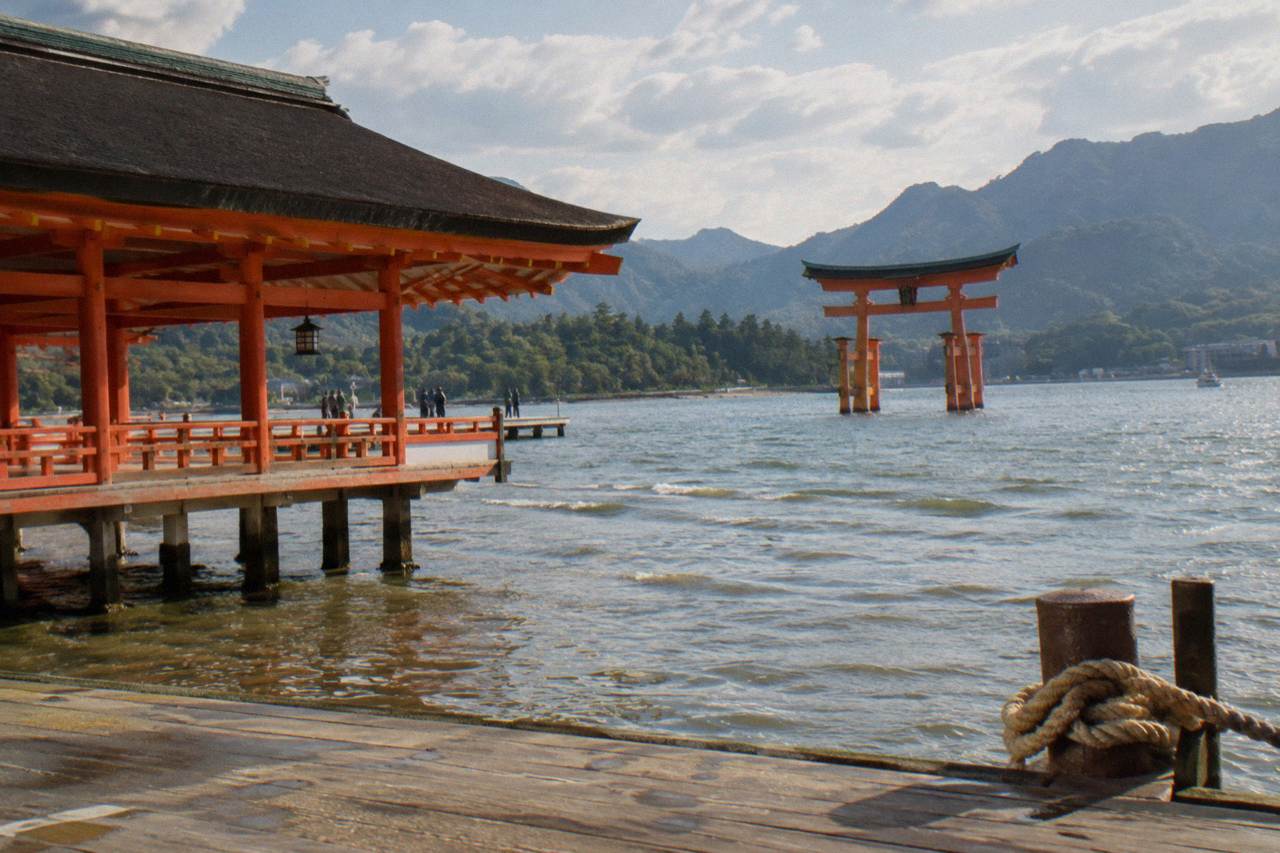
Itsukushima Shrine on Miyajima in Hiroshima Bay was established in the year 593, a date the shrine's own admission page states directly, and the present shrine buildings were built in 1168 by Taira no Kiyomori, the head of the Taira clan whose patronage the Miyajima chronology records for November of that year. The shrine enshrines three deities: Ichikishimahime-no-mikoto, Tagorihime-no-mikoto and Tagitsuhime-no-mikoto.
The founding date of 593 matters because it makes the site one of the old religious foundations of the Seto Inland Sea region, placed centuries before the castle towns and merchant ports that later shaped Hiroshima Prefecture. What stood on the shore in 593 was not the corridor-and-pier structure visitors walk today. The shrine that people recognise, the one whose corridors stretch out over the tide at the foot of Mount Misen, is the 1168 rebuilding.
Taira no Kiyomori's role is the hinge of the site's history. Every later generation of the buildings descends from that layout, which is why 1168 is the date most often attached to the shrine people actually visit. The full attraction guide at Itsukushima Shrine and the Great Torii carries the practical detail for a visit, and this page stays with the timeline.
Who Rebuilt The Miyajima Shrine After 1168?
After the 1168 rebuilding, the shrine's main hall was renovated in 1571 by Mori Motonari, the five-story pagoda was erected in 1407, and Senjokaku hall was ordered built by Toyotomi Hideyoshi in 1587, all according to the Miyajima chronology published by the island's visitor association. The shrine was destroyed by fire on 3 July 1207 and again on 2 December 1223, and rebuilt after each fire.
That sequence of dates tells a visitor what the buildings in front of them actually are. Nothing on the water at Miyajima is a single untouched structure from one era. The pagoda above the shrine goes back to 1407. Senjokaku, the large plain hall on the hill beside the pagoda, exists because Toyotomi Hideyoshi ordered it built in 1587, and it now charges its own admission of 100 yen for adults and 50 yen for elementary and junior high school students, per the shrine's admission page.
The Great Torii out in the bay has its own line in this record. The chronology states that the O-torii Gate was reconstructed on 18 July 1875, and the island's visitor guides describe the gate standing today as the ninth on the site, about 16.6 meters tall and weighing about 60 tons. Its most recent restoration finished in December 2022. Some further work is reported to be under way: East Corridor reinforcement to December 2026 and five-story pagoda repair to 2027, with the shrine remaining open.
| Date | Event | Source Record |
|---|---|---|
| 593 | Shrine established, recorded as 12 November | Shrine admission page, Miyajima chronology |
| 1168 | Present-form shrine built under Taira no Kiyomori | Shrine admission page, Miyajima chronology |
| 1207 | Destroyed by fire, 3 July | Miyajima chronology |
| 1223 | Destroyed by fire again, 2 December | Miyajima chronology |
| 1407 | Five-story pagoda erected | Miyajima chronology |
| 1571 | Main hall renovated by Mori Motonari | Miyajima chronology |
| 1587 | Senjokaku ordered built by Toyotomi Hideyoshi | Miyajima chronology |
| 1875 | O-torii Gate reconstructed, 18 July | Miyajima chronology |
| 1996 | Registered as a World Cultural Heritage Site, December | Miyajima chronology |
What Are The Opening Hours And Admission At Itsukushima Shrine In Hiroshima Bay?
Itsukushima Shrine on Miyajima opens at 6:30 in the morning except on 1 January, and closes between 5:00 and 6:00 in the evening depending on the season, and admission is 300 yen for adults, 200 yen for high school students and 100 yen for elementary and junior high students, payable in cash only. A combined ticket for the shrine and the Treasure Hall costs 500 yen for adults.
The seasonal closing times come straight from the shrine's admission page. From 1 March to 14 October the shrine closes at 6:00 p.m. From 15 October to 30 November, and from 4 January to the end of February, it closes at 5:30 p.m. In December it closes at 5:00 p.m. The New Year period is different: the shrine opens at midnight on 1 January and closes at 6:30 p.m., and on 2 and 3 January it is open 6:30 a.m. to 6:30 p.m.
Two further buildings sit inside the same ticketing world. The Treasure Hall is open 8:00 a.m. to 5:00 p.m. year-round, with the same 300 yen adult admission as the shrine and a 500 yen combined adult ticket covering both. Senjokaku is open 8:30 a.m. to 4:30 p.m. year-round. Visitors planning a self-guided day can read the wider Miyajima day trip guide for the rest of the island, including the ropeway up Mount Misen, which costs 2,000 yen return for adults and runs 9:00 to 16:00 with a last descent at 16:30.
| Season | Opening Hours |
|---|---|
| 1 January | 0:00 to 18:30 |
| 2 to 3 January | 6:30 to 18:30 |
| 4 January to end of February | 6:30 to 17:30 |
| 1 March to 14 October | 6:30 to 18:00 |
| 15 October to 30 November | 6:30 to 17:30 |
| December | 6:30 to 17:00 |
How Do You Get From Hiroshima To Itsukushima Shrine?
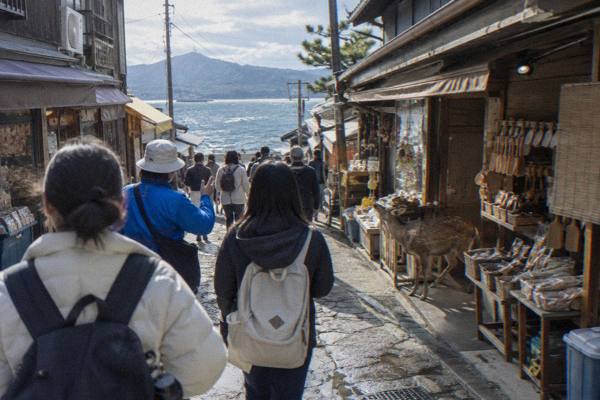
From Hiroshima Station, the Sanyo Line reaches Miyajimaguchi Station in about 28 to 30 minutes, and the JR ferry from Miyajimaguchi crosses to Miyajima in about 10 minutes, with the 100 yen Miyajima visitor tax charged separately on entering the island. From the Miyajima ferry pier it is a 10 to 15 minute walk along the shore to the shrine entrance.
Two ferry operators serve the crossing. The JR West Miyajima Ferry runs roughly every 15 minutes from 8:00 into the evening, with the first departure about 6:25 and the last about 22:00, and some daytime sailings pass close to the Great Torii. The Japan Rail Pass and JR-West rail passes are valid on the JR ferry, though the 100 yen Miyajima visitor tax is still payable, and preschool children are exempt from the tax. Matsudai Kisen runs its own service on a separate timetable, also about every 15 minutes, from 7:00 into the evening.
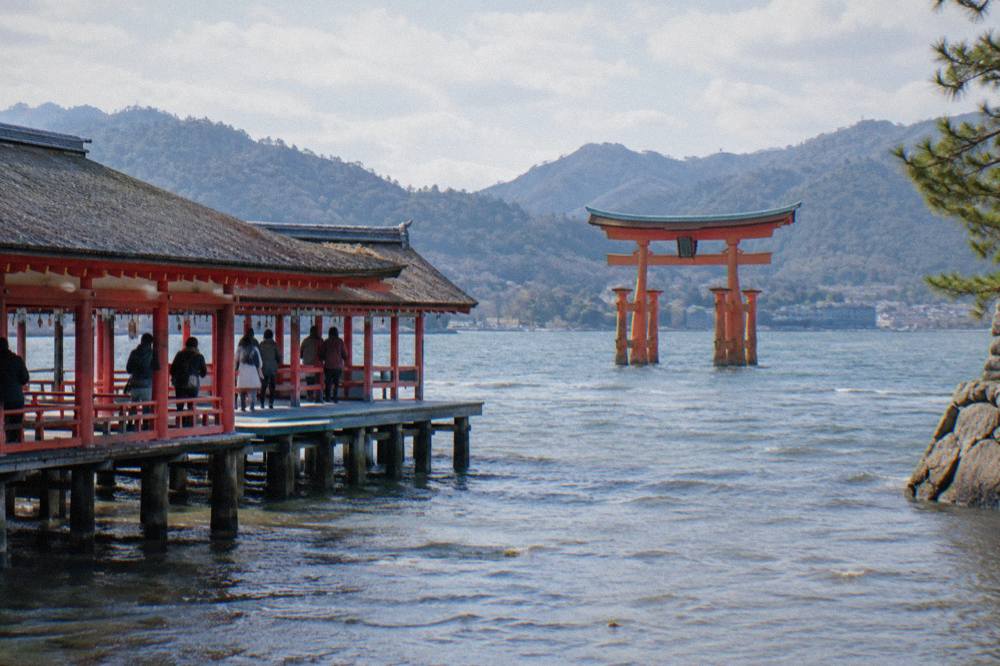
The tide shapes what the shrine looks like on arrival. Guide figures state the Great Torii can be walked out to when the tide level is below about 100 cm and appears to float when it rises above about 250 cm, so the same gate can be a short wade or a sea-standing silhouette within hours. The question of when low tide falls at Miyajima is handled on its own page rather than guessed here. After dark, the shrine and torii are illuminated from about 30 minutes after sunset until around 23:00, viewable from outside at no charge.
Why Is The 1168 Hiroshima-Area Shrine A World Heritage Site?
Itsukushima Shrine, together with the Great Torii, was registered as a UNESCO World Cultural Heritage Site in December 1996, with an inscribed area of 431.2 hectares and a buffer zone of 2,634.3 hectares, because the 1168 design survives into the present: the buildings are repaired rather than replaced wholesale, keeping the shrine one continuous structure rather than a break.
The inscription is the reason the shrine draws visitors from across the world to this corner of Hiroshima Bay, and it rests on the survival of the 1168 design into the present. The buildings are repaired rather than replaced wholesale: the fires of 1207 and 1223, the 1571 renovation, the 1875 torii reconstruction and the recent restoration work are all part of one continuous structure history rather than a break in it. That continuity is what a visitor is looking at from the ferry rail.
One practical note belongs here. The shrine's corridors have floorboard gaps designed to relieve pressure at high tide, and the admission page advises comfortable shoes for that reason. A typical walk through the corridors and main halls takes 45 to 60 minutes, per the island's visitor guide. Visitors weighing the island against the city can start with whether Hiroshima is worth visiting and how many days to allow, questions this site answers separately.
| Item | Detail |
|---|---|
| Shrine admission, adult | 300 yen |
| Shrine admission, high school | 200 yen |
| Shrine admission, elementary and junior high | 100 yen |
| Combined shrine and Treasure Hall, adult | 500 yen |
| Senjokaku admission, adult | 100 yen |
| Miyajima visitor tax | 100 yen, charged on entering the island |
| Mount Misen ropeway, adult return | 2,000 yen |
Common Questions About Itsukushima Shrine In Hiroshima
When Was Itsukushima Shrine Built?
Itsukushima Shrine on Miyajima in Hiroshima Bay was established in 593, and the present shrine buildings were built in 1168 by Taira no Kiyomori. The shrine's own admission page and the Miyajima visitor chronology both record these dates.
Who Built The Present Itsukushima Shrine Buildings?
Taira no Kiyomori built the present shrine in 1168 under Taira clan patronage. The main hall was later renovated by Mori Motonari in 1571, and Senjokaku hall was ordered built by Toyotomi Hideyoshi in 1587, all per the Miyajima chronology.
Was The Shrine Ever Destroyed?
Yes. The Miyajima chronology records that Itsukushima Shrine was destroyed by fire on 3 July 1207 and again on 2 December 1223, and rebuilt after each fire. The chronology also records the O-torii Gate reconstruction of 18 July 1875, and the island's visitor guides describe the gate standing today as the ninth on the site.
How Much Does Itsukushima Shrine Cost To Visit?
Admission is 300 yen for adults, 200 yen for high school students and 100 yen for elementary and junior high school students, payable in cash only. A combined ticket for the shrine and the Treasure Hall is 500 yen for adults.
Is The Great Torii Still Under Renovation?
The Great Torii's own restoration finished in December 2022. Repair work reported to be under way covers the shrine's East Corridor to December 2026 and the five-story pagoda to 2027, and the shrine remains open during this work.
How Old Is The Five-Story Pagoda At Miyajima?
The five-story pagoda at Itsukushima Shrine was erected in 1407, according to the Miyajima chronology published by the island's visitor association.
For anyone planning the crossing, a guided day that pairs the Hiroshima Peace Memorial with the shrine and the ferry ride can be booked in advance through the operator's live listing: Check availability. More on the island, the tide and the city is on the Hiroshima Travel Guide homepage.