Kintaikyo Bridge: Five Wooden Arches Over The Nishiki
The Kintaikyo Bridge at Iwakuni is a wooden bridge: five linked arches spanning the Nishiki River, first built in 1673 and last rebuilt in 1953. Here is what the bridge's own pages say about fees, hours, access and history.
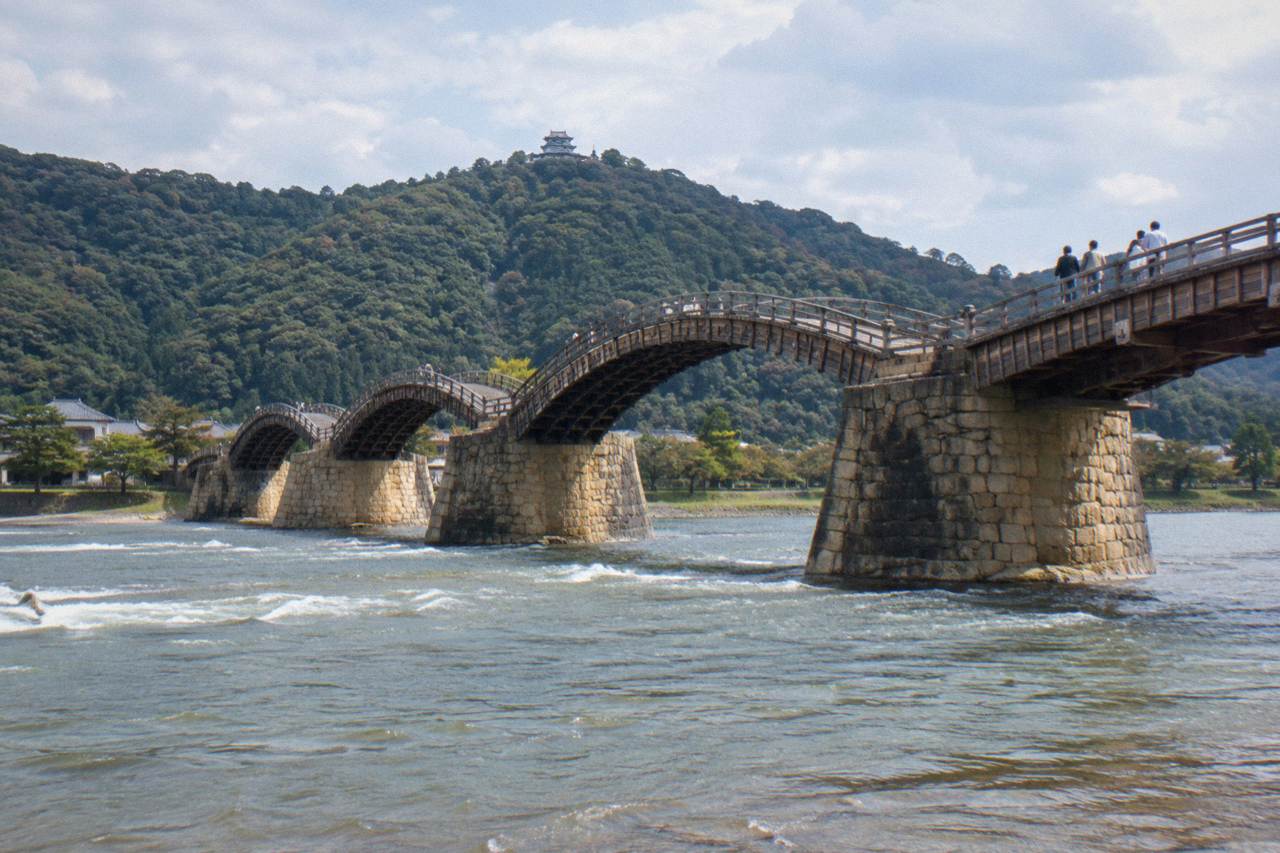
The Kintaikyo Bridge in Iwakuni, in the neighbouring Yamaguchi Prefecture, costs 500 yen for a round-trip adult crossing, is open 24 hours a day, and is reached from Hiroshima by Sanyo Line train to Iwakuni or Shin-Iwakuni and then a bus of about 15 to 20 minutes.
The bridge's own data page records the groundbreaking on June 28 in the lunar calendar of 1673 and the opening on October 3, and it records the floods, typhoons and rebuildings that followed.
What follows is a practical page about the bridge as the Hiroshima visitor meets it: the crossing fee, the hours, the buses, the history, the walking surface, and what sits around it in Kikko Park and on the hillside above. Every figure below comes from the bridge's own summary and data pages and from the site's transport pages.
How Much Does It Cost To Cross The Kintaikyo Bridge?
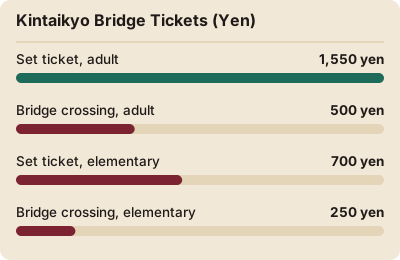
A round-trip crossing of the Kintaikyo Bridge costs 500 yen for adults, meaning junior high school age and above, and 250 yen for elementary school students, according to the bridge's own summary page. Groups of 15 or more pay 450 yen per adult and 200 yen per elementary student, and a set ticket combining the bridge, the Iwakuni Castle ropeway round trip and castle admission is 1,550 yen for adults and 700 yen for elementary students.
The set ticket is the number worth pausing on. Bought separately, the bridge, the ropeway and the castle each take their own fare, and the combined ticket prices the three together.
| Ticket | Adult (junior high and above) | Elementary student |
|---|---|---|
| Bridge crossing, round trip | 500 yen | 250 yen |
| Bridge crossing, group of 15+ | 450 yen | 200 yen |
| Set ticket: bridge, ropeway round trip, castle admission | 1,550 yen | 700 yen |
Ticket booths operate daily from 8:00 to 17:00, extended to 18:00 in the tourist season from mid-March to mid-September, and to 19:00 in summer from late July to the end of August. The bridge itself is accessible 24 hours a day. When the booths are unstaffed, payment goes into the night fee box. That detail matters for anyone timing a visit around the illumination described further down this page, because the lights stay on until 22:00, well past the last staffed window in the quieter months.
For context on local sightseeing costs in the wider region: Itsukushima Shrine on Miyajima charges 300 yen adult admission, with a combined shrine and Treasure Hall ticket at 500 yen for adults, Shukkeien garden in Hiroshima charges 350 yen, and the Peace Memorial Museum charges 200 yen, so the Kintaikyo crossing sits in the same few-hundred-yen band as the region's other headline sights. The Mount Misen ropeway on Miyajima charges 2,000 yen for an adult return trip, which makes the Iwakuni set ticket look modest next to the island's own hillside lift.
How Do You Get To The Kintaikyo Bridge From Hiroshima?
From Hiroshima, the route to the Kintaikyo Bridge is a train to JR Iwakuni Station or JR Shin-Iwakuni Station, then a bus to Kintaikyo Bus Center: about 20 minutes from Iwakuni Station with buses every 10 to 15 minutes, or about 15 minutes from Shin-Iwakuni Station with 1 to 2 buses an hour, according to the regional transport listing. The choice between the two stations is a trade between frequency and distance.
Travellers connecting through the region with a regional pass can read more in the week-long Hiroshima itinerary, which places Iwakuni inside a seven-day plan.
| From | To | Journey | Frequency |
|---|---|---|---|
| JR Iwakuni Station | Kintaikyo Bus Center | About 20 minutes by bus | Every 10 to 15 minutes |
| JR Shin-Iwakuni Station | Kintaikyo Bus Center | About 15 minutes by bus | 1 to 2 per hour |
Inside Hiroshima itself, the pieces are simple and cheap. The Hiroden tram runs a flat fare of 240 yen for adults and 120 yen for children on every line, and the tram has been reported to enter the Hiroshima Station building directly since August 2025, which makes the rail connection to Iwakuni straightforward. The airport limousine bus to Hiroshima Station takes about 50 minutes at 1,500 yen for anyone flying in. A guided day can also absorb the planning entirely. The Hiroshima & Miyajima guided tour with Itsukushima Shrine and ferry covers the city and the island in one organized day, and pairs naturally with a separate self-guided Iwakuni day; Check availability if that split appeals.
When Was The Kintaikyo Bridge Built?
The Kintaikyo Bridge was first constructed in 1673 by Kikkawa Hiroyoshi, lord of Iwakuni Domain, with groundbreaking on June 28 in the lunar calendar and the opening on October 3, according to the bridge's own history page. The original was washed away by flooding in 1674 and rebuilt the same year with reinforced piers, stood for 276 years, was destroyed by Typhoon Kezia on September 14, 1950, and was rebuilt in 1953 using traditional methods.
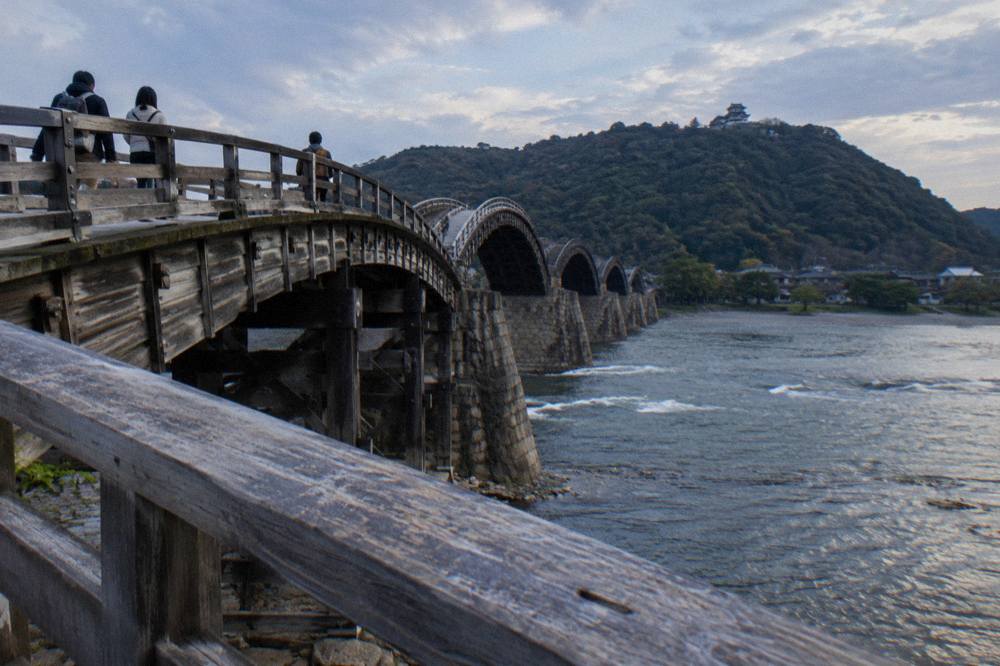
That sequence is the bridge's real story. A 276-year working life ended in a single typhoon, and the 1953 rebuilding chose traditional joinery over modern steel, which is why the structure crossing the Nishiki today still reads as the design of the original 1673 build. The five-arch form, with its series of linked spans, is the design that survived the river for nearly three centuries.
| Year | Event |
|---|---|
| 1673 | First construction by Kikkawa Hiroyoshi, lord of Iwakuni Domain; opened October 3 (lunar calendar) |
| 1674 | Original bridge washed away by flooding; rebuilt the same year with reinforced piers |
| 1950 | Destroyed by Typhoon Kezia on September 14 after 276 years |
| 1953 | Rebuilt using traditional methods |
Visitors who enjoy this kind of dated layering will find the same depth elsewhere in the region. Itsukushima Shrine on Miyajima was established in 593 and took its present form in 1168 under Taira no Kiyomori, and the Itsukushima Shrine page carries that timeline in full.
What Can You See Around The Kintaikyo Bridge?
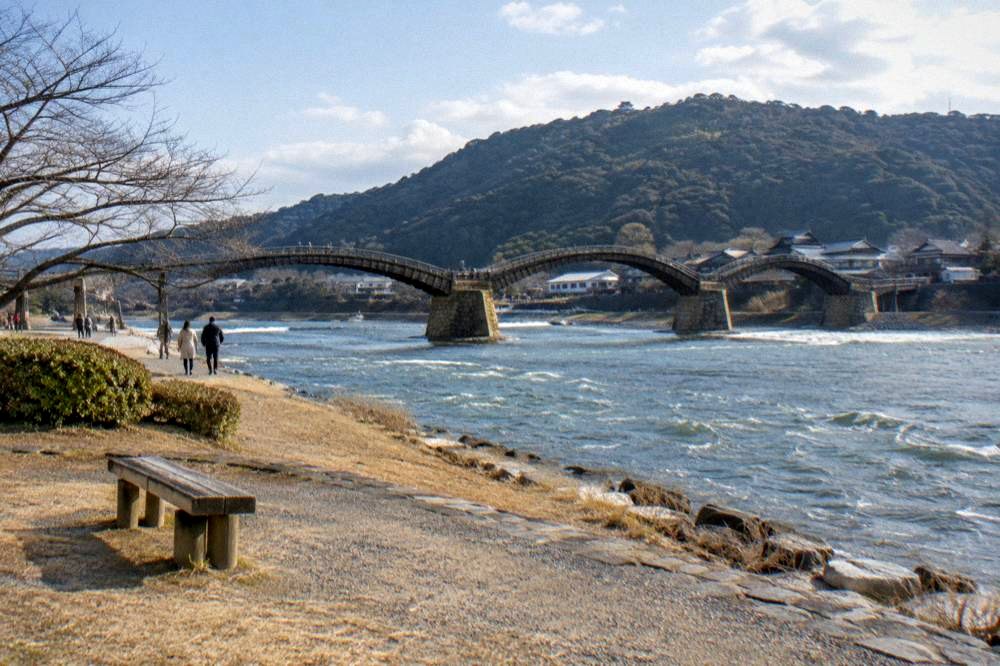
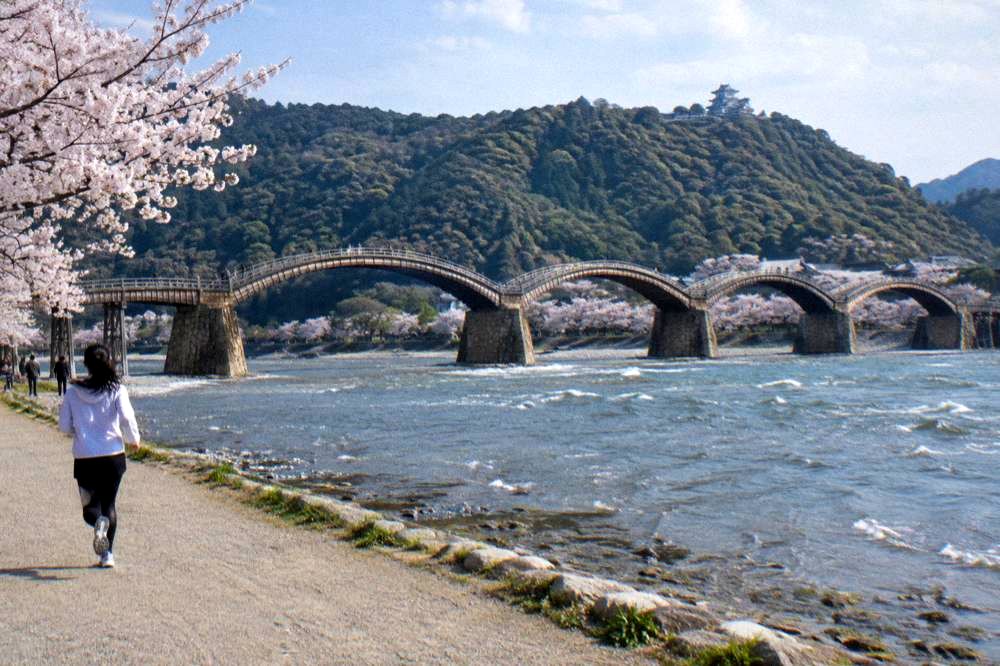
Around the Kintaikyo Bridge, the national tourism listing describes a river landscape on the Nishiki River, spanned by five linked arches, offering cherry blossoms in the bridge and Kikko Park area in spring, ukai fishing and fireworks on the river in summer, autumn leaves on the surrounding hills, and snow on the bridge and the river valley in winter.
The Nishiki River runs beneath all of it, spanned end to end by the five linked arches that give this page its title.
The seasonal calendar is the local framing for when to come. The tourism listing names four distinct scenes across the year, and unlike Hiroshima city's own calendar, which the Japan Meteorological Agency (JMA) station data for 1991-2020 shows as hot, wet summers with a July average rainfall of 279.8 mm and mild winters with January average lows of 2.0 degrees, Iwakuni's appeal here is tied to the visual seasons rather than the temperature curve. Everything else covered here is indexed on Hiroshima Travel Guide.
| Season | Scene around the bridge (per the national tourism listing) |
|---|---|
| Spring | Cherry blossoms in the bridge and Kikko Park area |
| Summer | Ukai fishing and fireworks on the Nishiki River |
| Autumn | Autumn leaves on the surrounding hills |
| Winter | Snow on the bridge and the river valley |
Is The Kintaikyo Bridge Easy To Walk Across?
The Kintaikyo Bridge features steep steps on each of its arches, is not fully barrier-free, and can be slippery in rain or snow, according to the bridge's own summary page. The crossing itself is short, a round trip over five arches and back, but the walking surface demands steady footing: each arch rises and falls in a stair-like timber profile rather than a smooth ramp.
This is the one honest caution the official page gives, and it deserves weight in trip planning. Wheelchair users and anyone with limited mobility will find the deck impassable at the arch steps, though the view of the bridge from either bank, and from Kikko Park in particular, needs no crossing at all. Footwear matters for everyone else: the timber treads, wet with rain or dusted with snow, are the hazard the page names.
The comparison with Miyajima's shrine corridors is instructive. The Itsukushima Shrine admission page notes that its corridor floorboards have deliberate gaps to relieve high-tide pressure and advises comfortable shoes; the Kintaikyo deck poses a different version of the same problem, a historic structure built to its period's standards rather than modern accessibility codes. Both reward attention to what is underfoot, and both are, in the end, short walks.
For visitors pairing the bridge with city sightseeing, the Peace Memorial Park and the Atomic Bomb Dome are flat, riverside and fully walkable, a contrast worth knowing if anyone in the party found the arch steps hard going.
What Are The Kintaikyo Bridge Opening Hours And Night Illumination?
The Kintaikyo Bridge is accessible 24 hours a day, with ticket booths staffed from 8:00 to 17:00 daily, extended to 18:00 in the tourist season from mid-March to mid-September and to 19:00 in summer from late July to the end of August, and the nighttime illumination is lit until 22:00, according to the bridge's summary page. Outside staffed hours, the crossing fee goes into the night fee box.
The illumination is the reason the 24-hour access matters. The same page notes that the bridge may close during high water, heavy rain or strong winds, a live judgement the operators make on the river's condition rather than a fixed calendar rule.
| Period | Ticket booth hours | Notes |
|---|---|---|
| Standard daily | 8:00 to 17:00 | Bridge open 24 hours |
| Tourist season, mid-March to mid-September | To 18:00 | Extended window |
| Summer, late July to end August | To 19:00 | Longest window |
| Any date, after booth closing | Night fee box | Illumination lit until 22:00 |
Evening visitors should also know the river can rise. The 1674 flood that took the original bridge and Typhoon Kezia in 1950 are the two headline events in the bridge's history, and the modern closure rule for high water is the direct descendant of that record. Checking conditions on a heavy-rain day is simple prudence, not caution for its own sake.
How Does A Kintaikyo Day Trip Fit A Hiroshima Itinerary?
A Kintaikyo day trip works as the third day of a Hiroshima-based itinerary, after a city day at the Peace Memorial Park, the 200 yen museum, and the A-Bomb Dome, and an island day on Miyajima with Itsukushima Shrine. Iwakuni sits at the western bookend, reached by Sanyo Line train plus a 15 to 20 minute bus ride, and can be a determined half-day.
The practical sequencing is straightforward. Hiroshima's own core, the Peace Memorial Park, the museum at 200 yen adult admission, and the A-Bomb Dome viewed from outside its fence, fills a day on its own. The museum opens 7:30 to 19:00 from March to July and September to November, 7:30 to 20:00 in August, and 7:30 to 18:00 from December to February, closing only 30 and 31 December and in mid-February for an exhibit change. Miyajima, with Itsukushima Shrine at 300 yen, the Mount Misen ropeway at 2,000 yen return for adults, and the 10-minute ferry crossing, fills another. Iwakuni and the Kintaikyo Bridge then take a third day or a determined half-day, and the things to do in Hiroshima overview lays out the full menu for anyone building the trip from scratch.
Budgeting the day in yen is easy because the components are few and fixed. The table below shows the cash costs of the Iwakuni day itself, using only the figures the bridge and transport pages give. Island days budget differently: Miyajima adds a 100 yen visitor tax on entering the island, charged separately with preschool children exempt, so the two day trips sit in the same modest cash band.
| Item on an Iwakuni day | Cost |
|---|---|
| Bridge crossing, adult round trip | 500 yen |
| Bridge crossing, elementary student round trip | 250 yen |
| Set ticket, bridge plus ropeway round trip plus castle, adult | 1,550 yen |
| Set ticket, bridge plus ropeway round trip plus castle, elementary | 700 yen |
| Night fee box crossing, adult | 500 yen |
Guided options can absorb either the city day or the island day. A Miyajima half-day small group tour from Hiroshima Station handles the ferry-and-shrine logistics in four hours, and the guided walks of the Peace Memorial Park cover the history the museum presents in a walkable two to four hours.
Common Questions About The Kintaikyo Bridge Near Hiroshima
How Much Does It Cost To Cross The Kintaikyo Bridge?
A round-trip adult crossing costs 500 yen, elementary students pay 250 yen, groups of 15 or more pay 450 yen per adult and 200 yen per elementary student, and a set ticket with the ropeway and castle is 1,550 yen adult.
What Are The Kintaikyo Bridge Opening Hours?
The bridge is accessible 24 hours a day. Ticket booths run 8:00 to 17:00, extended to 18:00 from mid-March to mid-September and to 19:00 in late July to end August, with a night fee box outside staffed hours.
How Do I Get To The Kintaikyo Bridge From Hiroshima?
From Iwakuni or Shin-Iwakuni, take a bus to Kintaikyo Bus Center: about 20 minutes from Iwakuni with buses every 10 to 15 minutes, or about 15 minutes from Shin-Iwakuni with 1 to 2 per hour.
When Was The Kintaikyo Bridge Built?
It was first constructed in 1673 by Kikkawa Hiroyoshi, lord of Iwakuni Domain, washed away in 1674 and rebuilt the same year, destroyed by Typhoon Kezia on September 14, 1950, and rebuilt in 1953 using traditional methods.
Is The Kintaikyo Bridge Illuminated At Night?
Yes. The nighttime illumination is lit until 22:00, and the bridge remains accessible around the clock, with the crossing fee paid into the night fee box when the booths are closed.
Is The Kintaikyo Bridge Accessible For Wheelchairs?
No. The bridge has steep steps on its arches, is not fully barrier-free and can be slippery in rain or snow, per the bridge's own summary page, though the structure can be viewed from both banks without crossing.
The Kintaikyo Bridge rewards exactly the kind of short, planned excursion Hiroshima makes easy: a train west, a bus to the riverbank, a 500 yen crossing over five timber arches first raised in 1673, and, if the set ticket is bought at the booth, a ropeway ride up to the castle above the Nishiki.