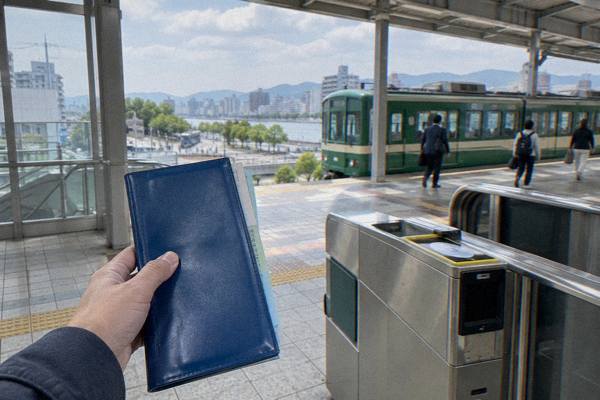
Five Days To A Week Based In Hiroshima: The Setouchi Loop
Hiroshima makes a practical base for a five day Seto Inland Sea loop: the Peace Park, Miyajima, Iwakuni, Onomichi and Kure all sit within a short train or ferry ride.
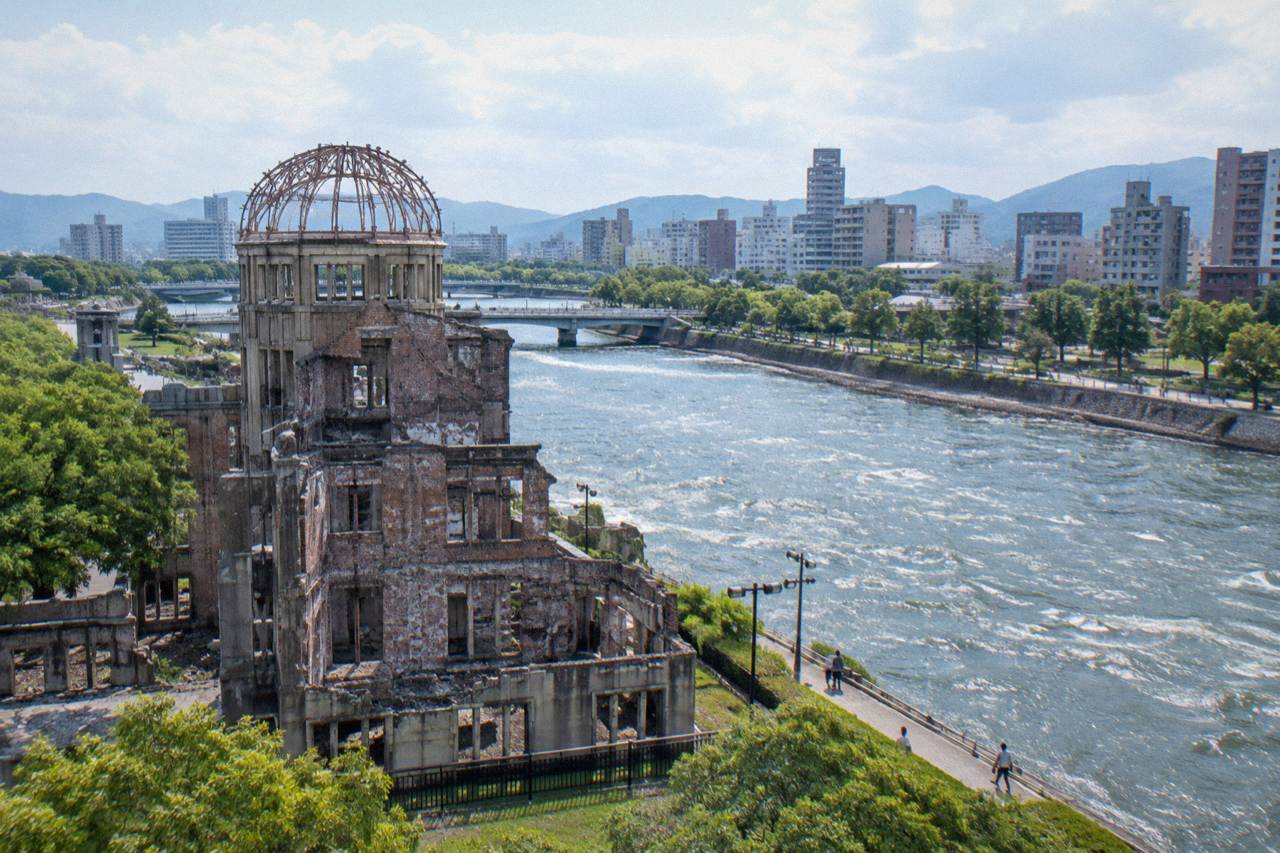
Five days is enough for Hiroshima city, a full Miyajima day and two further Setouchi day trips, with a regional pass covering the trains and ferries between them.
The city holds the Peace Memorial Park, the castle grounds and Shukkeien; Miyajima lies a short ferry ride south; and Iwakuni, Onomichi, Kure and the Matsuyama ferry routes spread west and east along the Seto Inland Sea. A five day loop with the exact fares the operators publish can stretch to a week. For a shorter stay, the two day Hiroshima plan covers the essentials in half the time.
Why Spend Five Days Based In Hiroshima?
Five days based in Hiroshima is enough to see the Peace Memorial Park and Museum, give Miyajima a full day, and add two further Seto Inland Sea day trips, because the regional rail network puts Iwakuni about 45 minutes away, Onomichi about 65 to 75 minutes away and Kure about 35 minutes away, all on direct lines from Hiroshima Station. The city itself is compact, with a flat 240 yen Hiroden streetcar fare on every line, so a single hotel works for the whole stay.
The economics favour staying put. A one way Sanyo Line ticket to Miyajimaguchi costs 420 yen and takes about 27 to 30 minutes; Kure is 510 yen and about 35 minutes; Iwakuni is 760 to 770 yen and roughly 45 to 50 minutes. Moving hotels between these towns would cost more time than the trips themselves. The Hiroshima Travel Guide covers each of these places in depth, and the three day itinerary is the shorter version of this same loop.
There is a second, quieter argument for the base-city approach. The Hiroden streetcar now enters the Hiroshima Station building itself, reported since 3 August 2025, which means a day tripper returning from Onomichi or Iwakuni steps off the train and straight onto a tram without leaving the building. Every evening of this itinerary ends the same way: a flat 240 yen ride back into the centre, with no repacking, no check-in desk and no luggage on a train platform.
Day 1 In Hiroshima: The Peace Memorial Park And Museum
Day 1 belongs to the Peace Memorial Park and the Peace Memorial Museum: the museum is open 7:30am to 7:00pm from March to July and September to November, closes at 8:00pm in August and 6:00pm from December to February, and charges 200 yen for adults, 100 yen for high school students and nothing for junior high students and younger. Early slots between 7:30 and 8:30 and evening slots require an online reservation.
The museum is closed 30 and 31 December and for about a week in mid February for exhibit changes, so check those dates against your Day 1. The A-Bomb Dome stands a short walk away and is viewable from outside its fence at any time with no fee. Spend the morning inside the museum rather than the afternoon, because the early reservation slots are the ones that need booking, and the walk through the park afterwards gives the day a natural order.
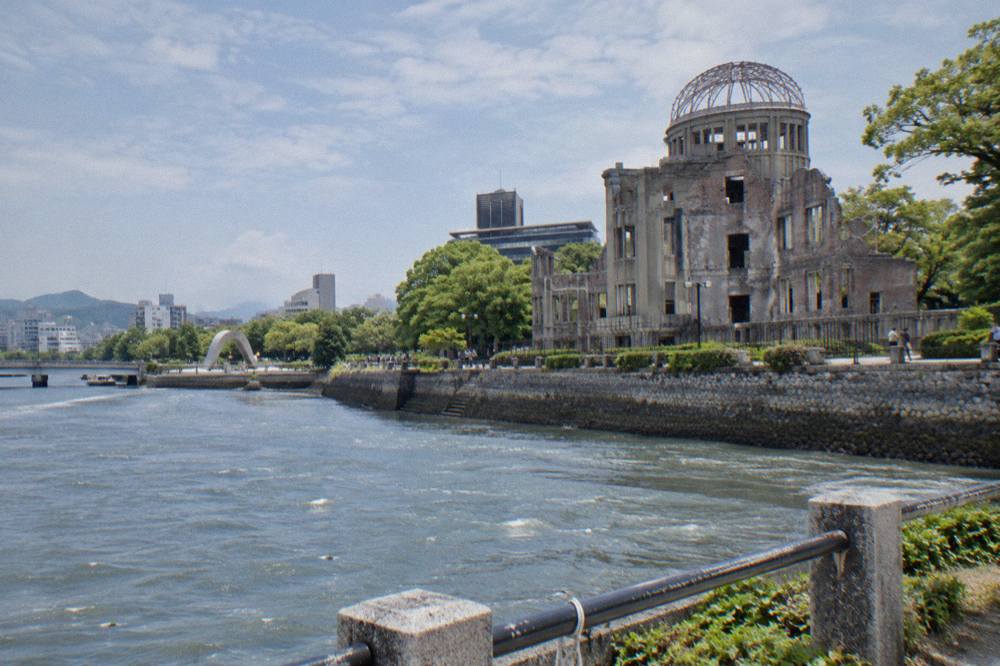
The Hiroshima Castle keep has been closed to visitors since 22 March 2026, so plan the castle as an exterior and grounds walk; a Sannomaru history museum is planned for 1 June 2027. The one day Hiroshima itinerary compresses all of this into a single day if your time is short.
Day 2: Miyajima, Itsukushima Shrine And Mount Misen
Day 2 is the Miyajima day: take the JR Sanyo Line from Hiroshima Station to Miyajimaguchi for 420 yen in about 27 to 30 minutes, then the 10 minute ferry, and pay the 100 yen Miyajima visitor tax collected with the ferry ticket on the way to the island. Itsukushima Shrine charges 300 yen for adults, 200 yen for high school students and 100 yen for elementary and junior high students, cash only.
The shrine opens at 6:30am and closes at 18:00 from 1 March to 14 October, 17:30 from 15 October to 30 November and from 4 January to the end of February, and 17:00 in December. The Great Torii's restoration finished in December 2022; corridor reinforcement and pagoda repair continue with the shrine open. The tide decides the view: the torii can be walked to at low tide and appears to float at high tide, so the live Hiroshima Bay tide block on the Miyajima itinerary is worth a check before you set out.
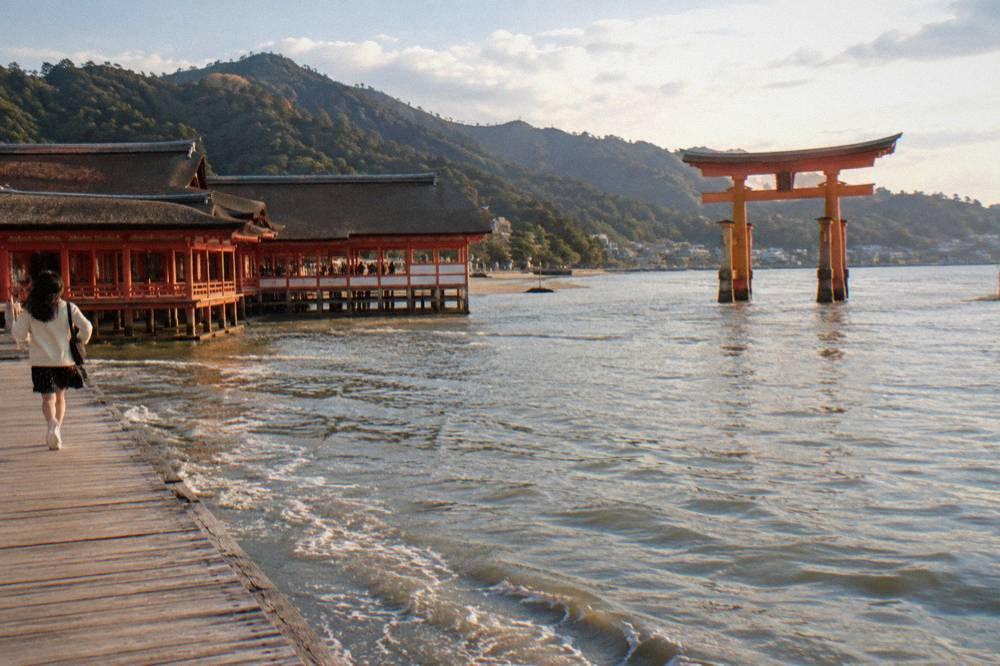
For the afternoon, the Mount Misen ropeway costs 2,000 yen return for adults, runs 9:00 to 16:00 with last descent at 16:30. Some JR ferry sailings between 9:10 and 16:10 from Miyajimaguchi take the Great Torii route past the gate, which makes the outbound crossing the better one to time. The shrine's corridor floorboards have gaps left for high tide pressure, so comfortable shoes are the practical choice. The Miyajima overnight guide explains the case for staying on the island instead.
The train is not the only way to reach the ferry. The Hiroden streetcar network charges a flat 240 yen for adults and 120 yen for children on every line it runs, the Miyajima line included, under a fare structure in place since February 1, 2025. From Miyajimaguchi, JR boats depart roughly every 15 minutes from 8:00 to 18:00 and beyond, with the first sailing of the day at about 6:25 and the last at about 22:00, so a dawn start or a late return after dark are both realistic. A second operator, Matsudai Kisen, runs its own boats on a similar rhythm, leaving about every 15 minutes from around 7:00 in the morning. Both operators publish their timetables online, so pairing a sailing with the tide is straightforward. Holders of a Japan Rail Pass or a JR-West rail pass should note that both passes are accepted on the JR ferry, so the crossing adds nothing to their costs. Larger parties also come out ahead: groups of eight or more pay a group fare of 160 yen per adult each way. On arrival, the island's visitor tax does not apply to preschool children, so families pay nothing extra for the youngest.
To pair the city ride with the island crossing, book a bike and boat tour here.
Around the shrine, two add-ons are worth building into the schedule. The Treasure Hall, open 8:00 to 17:00, charges the same admission as the shrine itself, and a combined ticket covering both costs 500 yen for adults, 300 yen for high school students and 150 yen for elementary and junior high students, which beats buying the two separately. Senjokaku, open 8:30 to 16:30, closes earlier than the shrine does, so it is the one to fit in first on a tight day. New Year brings special hours: on January 1 the shrine is open from midnight to 18:30, and on January 2 and 3 it runs from 6:30 to 18:30. The building work visitors may notice also has an end in sight: reinforcement of the East Corridor is scheduled to run until December 2026, and the five-story pagoda repair is expected to continue into 2027. For tide planning, guides rely on two rough thresholds: the seabed around the Great Torii becomes walkable once the water level drops below about 100 centimeters, while the floating effect needs a level above roughly 250 centimeters.
Up on Mount Misen, one-way tickets sit alongside the return fare: adults pay 1,100 yen for a single ride, children 1,000 yen return or 550 yen one way. Timing matters as much as the ticket. A standard visit works out to about one hour for the round trip including sightseeing, and the walk at the summit adds roughly another hour, so the full outing deserves a window of at least two hours. Weather shapes the day nearly as much as the tide does. Hiroshima's climate normals show July with 279.8 millimeters of rain and a mean temperature of 27.2 degrees Celsius, and June with 226.5 millimeters. May records 210.8 hours of sunshine and a mean of 19.6 degrees, while April brings 141.0 millimeters of rain against a mean of 14.8 degrees. The late winter and early spring stretch runs drier, with 46.2 millimeters in January, 64.0 in February and 118.3 in March, though mean temperatures slide from 5.4 to 6.2 to 9.5 degrees. Checking those figures against the tide calendar is the surest way to protect the day's two headline views.
Day 3: Iwakuni And The Kintaikyo Bridge
Ride the JR Sanyo Line from Hiroshima Station about 50 minutes, 770 yen one way, to Iwakuni for the Kintaikyo Bridge and the castle ropeway. Crossing the bridge alone costs adults 500 yen, and the set ticket covering the bridge, ropeway round trip and castle keep is 1,550 yen, 200 yen less than buying separately. If a fifth day feels tight, Iwakuni is the day trip to cut first; Onomichi gives more per minute of train time. Anyone traveling with children may prefer to swap this day for the family itinerary, which keeps the whole party inside the city.
Day 4: Onomichi And The Shimanami Kaido
From Setoda Port on Ikuchijima the ferry back to Onomichi takes about 40 minutes, which makes a one way cycle across part of the Shimanami Kaido practical. That return shape is the reason this day works from a Hiroshima base: ride out along the islands in the morning, ferry back across the water at midday, and let the Shinkansen cover the last stretch before dinner.
Onomichi anchors one end of the Shimanami Kaido, a cycle route of about 60 km across a chain of islands to Imabari. A full crossing is a long day from a Hiroshima base, so the practical plan rides only part of the route and drops off at Setoda Port on Ikuchijima, where the ferry back to Onomichi takes about 40 minutes. The Shinkansen covers the last leg back to the city before dinner.
Onomichi anchors one end of the Shimanami Kaido, a cycle route of about 60 km across a chain of islands to Imabari. A full crossing is a long day from a Hiroshima base, which is why this day rides only part of the route and drops off at Setoda Port on Ikuchijima, where the ferry back to Onomichi takes about 40 minutes. The Shinkansen covers the last leg back to the city before dinner.
Day 5: Kure, Matsuyama Or A Slow Hiroshima Day
Day 5 can take three forms: Kure, Matsuyama, or a slow Hiroshima day, and all three end the trip inside the same flat 240 yen streetcar zone in the city. The in-city option suits anyone with a late train or flight, since the airport limousine bus reaches Hiroshima Station in about 50 minutes for 1,500 yen, with IC cards accepted.
The getting around Hiroshima guide breaks down every pass option, including the Meipuru-pu sightseeing loop bus, which completes a circuit in about 50 minutes with departures every 30 minutes from 9am to 5:30pm.
What Does Each Leg Of The Hiroshima Loop Cost?
Every journey in this itinerary runs on a published fare: the Miyajimaguchi train is 420 yen one way, the Kure train 510 yen, the Iwakuni train 760 to 770 yen, the Onomichi rapid approximately 1,490 to 1,520 yen, and the Miyajima ferry 200 yen plus a separate 100 yen visitor tax, so the day-by-day transport budget can be totted up exactly before the trip starts. Add the flat 240 yen Hiroden fare for movement inside the city on any day.
| Journey | Operator or line | One way time | One way adult fare |
|---|---|---|---|
| Hiroshima Station to Miyajimaguchi | JR Sanyo Line | about 27 to 30 minutes | 420 yen |
| Miyajimaguchi to Miyajima | JR West Miyajima Ferry | about 10 minutes | 200 yen, plus 100 yen visitor tax |
| Hiroshima to Kure | JR Kure Line | about 35 minutes | 510 yen |
| Hiroshima Station to Iwakuni Station | JR Sanyo Line | about 45 to 50 minutes | 760 to 770 yen |
| Hiroshima to Onomichi | JR Sanyo Line rapid | 65 to 75 minutes | about 1,490 to 1,520 yen |
| Hiroshima to Matsuyama | High speed ferry | 70 minutes | Covered by the JR Setouchi Area Pass |
| Hiroshima Airport to Hiroshima Station | Airport limousine bus | about 50 minutes | 1,500 yen |
The Hiroden one day streetcar pass costs 700 yen and pays off from the third ride; the streetcar and ferry version at 1,000 yen includes the Matsudai ferry and the visitor tax. The Visit Hiroshima Tourist Pass at 1,000 yen covers 24 hours of streetcars plus both Miyajima ferries. For the wider loop, the JR Setouchi Area Pass covers the Meipuru-pu bus in Hiroshima and selected ferries including Hiroshima to Matsuyama; it is valid only for foreign visitors on temporary visitor status, and a passport must be carried at all times.
| Pass | Adult price | What it covers |
|---|---|---|
| Hiroden 1-Day Streetcar Pass | 700 yen | Unlimited rides on all Hiroden lines |
| Hiroden 1-Day Streetcar and Ferry Pass | 1,000 yen | All Hiroden lines, Matsudai Kisen Miyajima ferry, 100 yen visitor tax |
| Visit Hiroshima Tourist Pass, 24 hours | 1,000 yen | All Hiroden streetcars plus both Miyajima ferries |
| JR Setouchi Area Pass | Regional pass | Trains in the Setouchi area, Meipuru-pu bus, ferries including Hiroshima to Matsuyama; passport required |
When Should You Do The Setouchi Loop?
The Japan Meteorological Agency 1991-2020 station normals for Hiroshima show July as the month with the highest rain total at 279.8 mm and January the lowest at 46.2 mm, with August holding the highest average daily high at 32.8 °C and January the lowest average daily low at 2.0 °C, so spring and autumn sit between the two extremes on both measures. No single month is "best" as a matter of fact; the numbers describe the trade.
| Month | Average high °C | Average low °C | Average rain mm |
|---|---|---|---|
| January | 9.9 | 2.0 | 46.2 |
| February | 10.9 | 2.4 | 64.0 |
| March | 14.5 | 5.1 | 118.3 |
| April | 19.8 | 10.1 | 141.0 |
| May | 24.4 | 15.1 | 169.8 |
| June | 27.2 | 19.8 | 226.5 |
| July | 30.9 | 24.1 | 279.8 |
| August | 32.8 | 25.1 | 131.4 |
| September | 29.1 | 21.1 | 162.7 |
| October | 23.7 | 14.9 | 109.2 |
| November | 17.7 | 8.9 | 69.3 |
| December | 12.1 | 4.0 | 54.0 |
Rain matters more on this loop than on a city-only trip, because Day 2 and Day 4 are outdoor days. August drops to 131.4 mm after July's 279.8 mm, but the average daily high of 32.8 °C is the year's warmest, and June's 226.5 mm sits close behind July's. A wet afternoon is not a lost afternoon either: the rainy day itinerary lists the indoor options, and the museum's 7:30am opening makes an early museum morning a workable swap for a forecast that turns.
How Do You Stretch Five Days Into A Week?
Add two extra day trips and return to the same Hiroshima hotel each night. Onomichi also chains eastward: local trains from Onomichi Station to Mihara or Fukuyama take 15 to 20 minutes, and the Shinkansen returns to Hiroshima in 20 to 30 minutes. The pattern stays the same: return to the same hotel each night.
Two extra days, two natural picks. The first is a second eastward day on the same Sanyo corridor as Onomichi: Mihara or Fukuyama sits a short local train ride from Onomichi Station, and the Shinkansen closes either city back to Hiroshima in minutes, so the eastern stops chain together with no backtracking. The second is a Takehara day: Okunoshima, the rabbit island inside Takehara City, is reached by the Omishima Ferry or Kyukamura boat from Tadanoumi Port, about 15 minutes across, and is home to several hundred semi-wild rabbits, though note the Mihara Port Rabbit Line boat is suspended. First time visitors weighing this loop against a first trip should also read the first time in Hiroshima guide, which orders the essentials.
Common Questions About Five Days In Hiroshima
How Many Days In Hiroshima Is Enough?
Two days cover the city and Miyajima; five days add Iwakuni, Onomichi and Kure on top. The full answer page breaks down the trade.
Is Five Days In Hiroshima Too Long?
No. Hiroshima city itself fills about two days, and the surrounding Seto Inland Sea loop absorbs the rest with direct trains and ferries, none longer than 75 minutes each way on this plan.
Can You Do Miyajima As A Day Trip From Hiroshima?
Yes. The Sanyo Line reaches Miyajimaguchi in about 27 to 30 minutes for 420 yen, and the ferry crosses in about 10 minutes for 200 yen plus the 100 yen visitor tax.
Is A Rail Pass Worth It For Five Days In Hiroshima?
It depends on your day trips. Pure city days cost only the flat 240 yen Hiroden fare, so a regional pass pays off only if the Iwakuni and Onomichi day trips are in the plan; Matsuyama needs the JR Setouchi Area Pass. Check availability before committing.
What Is The Rainiest Month In Hiroshima?
The JMA 1991-2020 station normals put July highest at 279.8 mm and January lowest at 46.2 mm. June follows July closely at 226.5 mm.
Can You Visit Hiroshima Castle On This Itinerary?
The grounds and exterior, yes, but the keep has been closed to visitors since 22 March 2026, so plan it as a walk with Shukkeien nearby.
Five days in Hiroshima, used this way, is less a stay in one city than a circuit of the Seto Inland Sea with a single suitcase waiting at the end of each day.