First Time In Hiroshima: The Order That Works
Hiroshima rewards a specific order: the Peace Memorial Park first, the city districts second, Miyajima on its own day. This guide lays out that sequence with the fares, hours and passes a first visit actually needs.
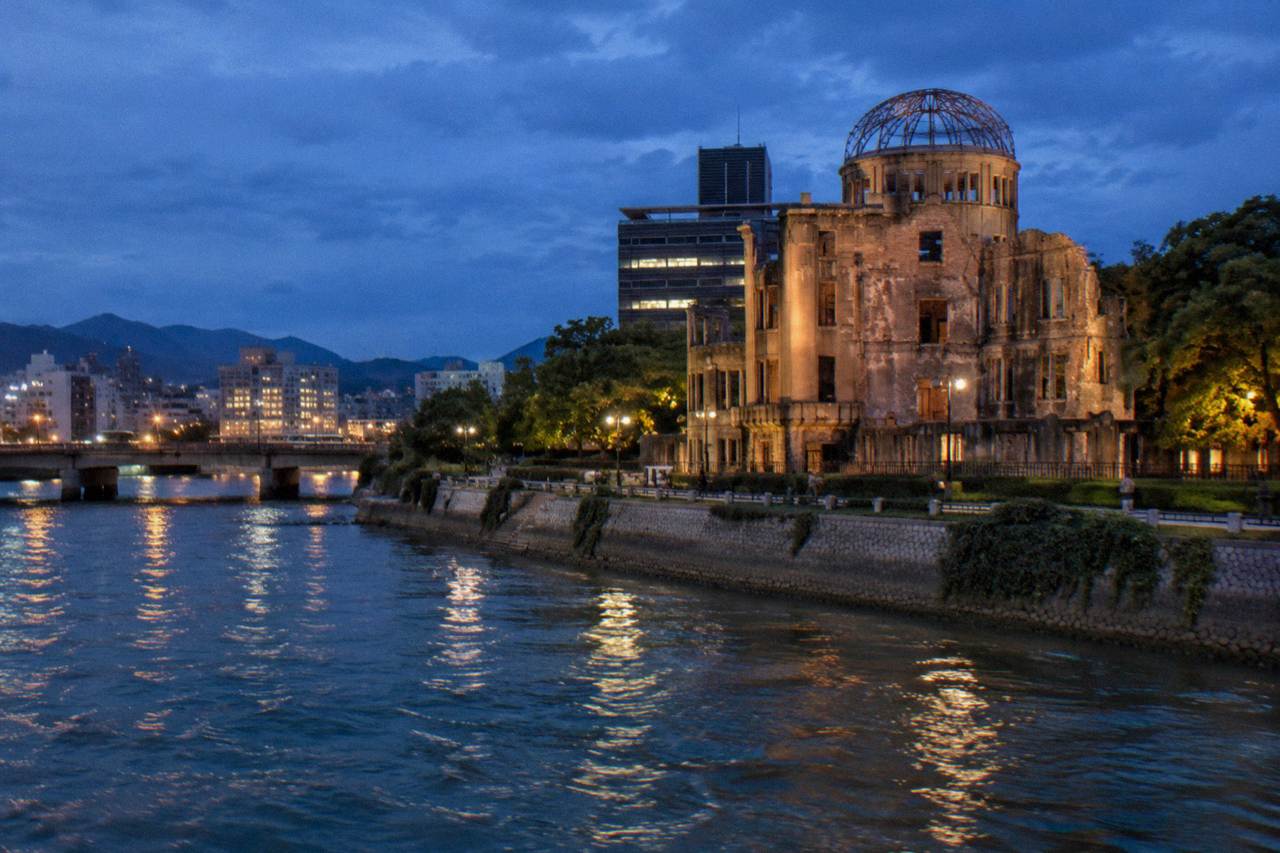
Spend your first day on the Peace Memorial Park, the A-Bomb Dome and the Hiroshima Peace Memorial Museum, your second on the castle grounds, Shukkeien and the food districts, and give Miyajima a full day of its own. The Hiroden streetcar at a flat 240 yen, or a 700 yen day pass, connects all of it.
This page sets out the sequence, the fares and the hours that the city's own pages publish, so the first trip runs on facts rather than guesswork.
What Order Should A First-Time Visitor Do Hiroshima In?
The order that works is Peace Memorial Park and the A-Bomb Dome on the first morning, the Hiroshima Peace Memorial Museum immediately after, then Hiroshima Castle's grounds and Shukkeien on the second morning, Okonomimura and the downtown districts on the second evening, and Miyajima as a dedicated third day reached by streetcar and ferry. The reasoning is simple: the museum and the park sit together on one site, the castle and garden sit together on another, and Miyajima sits across Hiroshima Bay with its own tide clock, ferry timetable and walking routes that punish a rushed half-day itinerary.
The A-Bomb Dome is viewed from outside the perimeter fence, entry beyond is prohibited, and the city's own page confirms there is no fee. Streetcar Line 2 or 6 from JR Hiroshima Station's South Entrance to the Genbaku-dome-mae stop takes approximately 20 minutes, at a flat fare of 240 yen for adults and 120 yen for children on every Hiroden line.
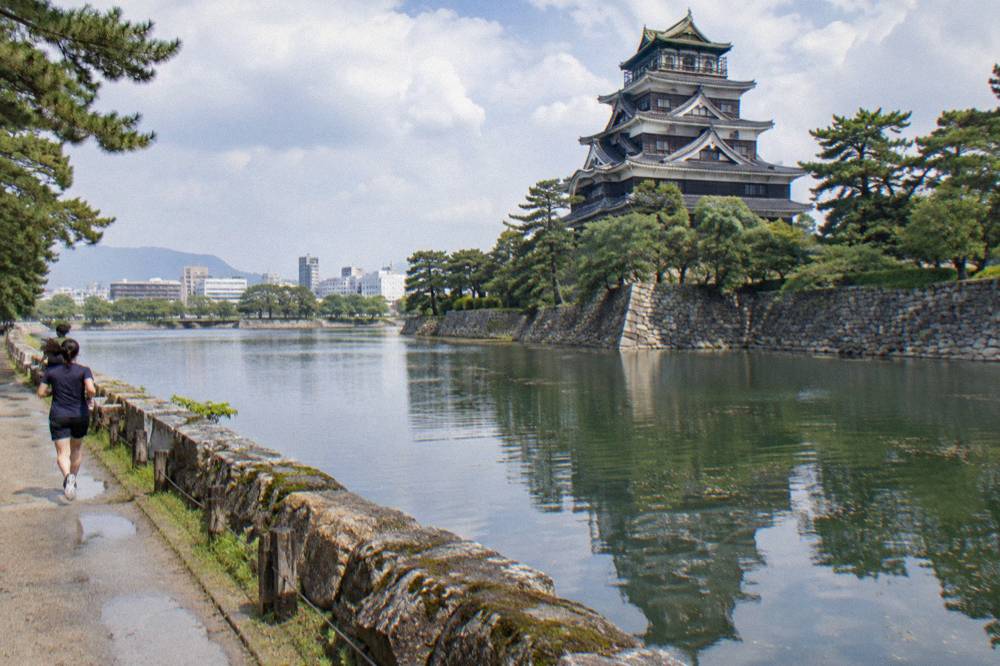
Day two stays inside the streetcar ring. Hiroshima Castle's keep has been closed to visitors since 22 March 2026, so the castle is now an exterior and grounds visit, with a Sannomaru history museum planned for 1 June 2027. Evenings belong to the food: Okonomimura for okonomiyaki, the Hondori and Shintenchi arcades, and the Nagarekawa and Yagenbori bar streets.
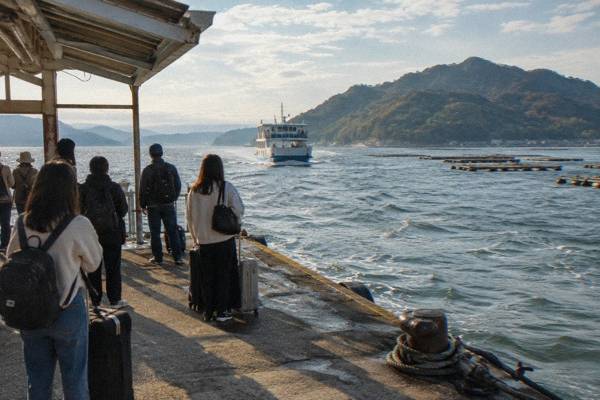
Day three is Miyajima. The streetcar on Line 2 from Hiroshima Station to Miyajimaguchi takes 66 minutes end to end, and the JR ferry crossing runs about 10 minutes with departures roughly every 15 minutes through the daytime. The island's tide cycle decides whether the Great Torii is walkable or floating, and that alone argues for a full day rather than a truncated afternoon.
For readers weighing how many days to allocate at all, how many days in Hiroshima is enough breaks down the trade-offs, and the deeper site-by-site route lives in things to do in Hiroshima.
How Do You Get From Hiroshima Station To The Peace Park?
From JR Hiroshima Station, take Hiroden streetcar Line 2 or Line 6 from the South Entrance to the Genbaku-dome-mae stop, a ride of approximately 20 minutes at the flat fare of 240 yen for an adult or 120 yen for a child, and the Peace Memorial Park spreads along the river immediately south of the A-Bomb Dome. The Hiroden tram now enters the station building itself, reported since 3 August 2025, which shortens the transfer from the JR platforms to the streetcar platform to a level walk.
The alternative from the airport matters on arrival day. The Hiroshima Airport limousine bus to Hiroshima Station's Shinkansen gate takes approximately 45 to 50 minutes and costs 1,500 yen one way, while the bus to the Hiroshima Bus Center takes approximately 55 minutes for the same 1,500 yen, and the Bus Center stop puts you about a five-minute walk from the A-Bomb Dome, making the total airport-to-dome journey about one hour.
For a first trip that will use the streetcar repeatedly, the passes change the arithmetic. A 1-Day Streetcar Pass costs 700 yen for adults and 350 yen for children and covers unlimited Hiroden rides, and it is sold at the Hiroshima Station Transportation Information Center. Three rides at 240 yen already clear 700 yen, so any day with three or more boardings pays for the pass.
| Option | Route | Time | Adult fare |
|---|---|---|---|
| Hiroden Line 2 or 6 | Hiroshima Station South Entrance to Genbaku-dome-mae | about 20 minutes | 240 yen |
| Hiroden Line 2 | Hiroshima Station to Miyajimaguchi | 66 minutes end to end | 240 yen flat |
| Airport limousine bus | Hiroshima Airport to Hiroshima Station Shinkansen gate | about 45 to 50 minutes | 1,500 yen |
| Airport limousine bus | Hiroshima Airport to Hiroshima Bus Center | about 55 minutes | 1,500 yen |
| On foot from Bus Center | Hiroshima Bus Center to A-Bomb Dome | about 5 minutes | free |
Line 2 runs every 10 minutes toward Miyajimaguchi, with a first departure from Hiroshima Station at 6:25 and a last return toward the station at 22:50, so early starts and late returns both stay inside the timetable. The city's Station Tourist Information Center is open 6:00 am to 12:00 am year-round if a paper map or a pass purchase is needed on arrival.
The practical pattern for day one, then, is streetcar to the dome, the park on foot, the museum, and a streetcar back or onward to downtown. Visitors arriving from the Kansai side by Shinkansen can also consider the Hiroshima day trip from Osaka pattern, which compresses this same order into a single very full day.
What Does Day One In Hiroshima Look Like Hour By Hour?
Day one is the museum first, unhurried, not squeezed between lunch and a ferry: the Hiroshima Peace Memorial Museum opens at 7:30 and sets the emotional register for everything else in the city, with Peace Memorial Park and the A-Bomb Dome on the same ground, and the evening of day one has a natural finish in Hiroshima Kagura, the local masked dance-theater tradition.
The museum's hours are generous: 7:30 to 19:00 from March to July and September to November, 7:30 to 20:00 in August with hours to 21:00 on 5 and 6 August, and 7:30 to 18:00 from December to February. It closes on 30 and 31 December and for a mid-February exhibit change. Admission is 200 yen for adults at college level and up, 100 yen for high school students, free for junior high and younger, and 100 yen for visitors aged 65 and over with a passport. Some extended morning and evening slots require an online reservation.
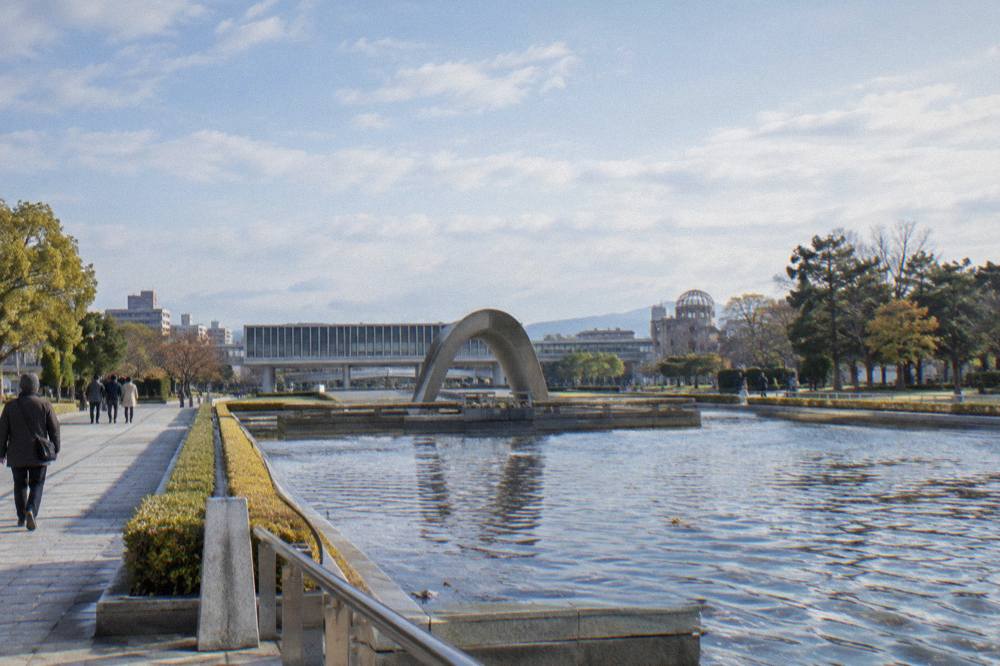
The Peace Memorial Park Tourist Information Center keeps hours of 8:30 am to 6:00 pm from 1 March to 30 November and 8:30 am to 5:00 pm from 1 December to the end of February, with August extensions to 8:00 pm on 5 and 6 August. The annual Peace Memorial Ceremony falls on 6 August from 8:00 to about 8:50 in the park, with about 7,000 seats plus about 2,200 indoor seats at the International Conference Center.
For the museum's deeper context, the dedicated Hiroshima Peace Memorial Museum page covers the collection and the practicalities, and the Hiroshima Peace Memorial Park and A-Bomb Dome pages cover the monuments and the dome's story. Readers who want a guide's framing on the same ground can compare the walking options in the Hiroshima peace park walking tour guide.
The evening of day one has a natural finish. Hiroshima Kagura, the local masked dance-theatre tradition, runs as a bookable performance in the city, and tickets are sold per person. It sits well after a heavy museum day precisely because it asks nothing of the legs. The entry can be secured through the operator's live listing: Check availability.
What Does Day Two In Hiroshima Look Like Hour By Hour?
Day two is the city day: Hiroshima Castle's exterior and grounds in the morning with the keep closed since 22 March 2026, Shukkeien garden from its 9:00 opening with a 350 yen adult ticket, Okonomimura for lunch, and the Hondori, Shintenchi, Nagarekawa and Yagenbori districts filling the afternoon and evening. None of these pieces is more than a short streetcar hop from another, so the day can absorb weather changes and long lunches without collapsing.
The castle needs recalibrated expectations. The keep closed permanently to visitors on 22 March 2026, and the city's page describes an exterior-and-grounds visit only, with a Sannomaru history museum planned for 1 June 2027. The Hiroshima Castle page keeps the current state of access in one place.
Shukkeien is a compact stroll garden with a pond circuit. Hours are 9:00 to 18:00 from 16 March to 15 September and 9:00 to 17:00 from 16 September to 15 March, with last entry 30 minutes before closing. Admission is 350 yen for adults, 150 yen for university students, and free for elementary through high school students, the pricing in force since 14 April 2025. The garden's own site publishes all three figures.
Food anchors the middle of the day. The Okonomimura page covers the building and how ordering works, and what to eat in Hiroshima widens the list past okonomiyaki to oysters, anago-meshi and tsukemen.
To taste the local food scene with a guide, book a food and culture walking tour here.
| Day two stop | Admission | Hours | Notes |
|---|---|---|---|
| Hiroshima Castle grounds | free entry to grounds | keep closed since 22 March 2026 | exterior and grounds only |
| Shukkeien garden | 350 yen adult, 150 yen university, free for school students | 9:00 to 18:00 mid-March to mid-September, 9:00 to 17:00 otherwise | last entry 30 minutes before close |
| Okonomimura | pay per meal | building of restaurants | Hiroshima-style okonomiyaki |
A different shape for day two swaps the castle and garden for the Saijo sake brewery district and the port city of Kure, east of Hiroshima. The Saijo sake district page covers the independent version for travellers who would rather ride the JR lines themselves.
How Do You Do Miyajima On Day Three?
Take Hiroden Line 2 from Hiroshima Station to Miyajimaguchi, a 66-minute ride, then the roughly 10-minute JR ferry to the island, paying the 100 yen Miyajima Visitor Tax with the ferry ticket on entry, and give the island from morning to evening so both tide states of the Great Torii land inside the visit. Miyajima is an island in Hiroshima Bay, not part of the open sea and not part of the Peace Park area, and it deserves the full day that its shrine, mountain and tide cycle demand.
The JR West Miyajima Ferry from Miyajimaguchi runs a first departure at 6:25 and a last at 22:42, with daytime departures roughly every 15 minutes and the crossing at about 10 minutes. Between 9:10 and 16:10 the boats follow the Great Torii route, passing close to the gate. The Japan Rail Pass and JR-West rail passes are accepted on this ferry. The Miyajima Visitor Tax is 100 yen per person per entry, collected with the ferry ticket, with preschool children exempt. More of these guides are collected on Hiroshima Travel Guide.
| Miyajima leg | Figure | Notes |
|---|---|---|
| Hiroden Line 2, Hiroshima Station to Miyajimaguchi | 66 minutes | flat 240 yen, every 10 minutes |
| JR ferry crossing | about 10 minutes | departures roughly every 15 minutes in the daytime |
| JR ferry first and last from Miyajimaguchi | 6:25 and 22:42 | Great Torii route sailings 9:10 to 16:10 |
| Miyajima Visitor Tax | 100 yen per entry | collected with ferry ticket, preschool children exempt |
| Itsukushima Shrine admission | 300 yen adult, 200 yen high school, 100 yen elementary and junior high | combined ticket with Treasure Hall 500/300/150 |
| Mount Misen ropeway | 2,000 yen adult return, 1,100 one way | 9:00 to 16:00, last descent 16:30 |
Itsukushima Shrine opens at 6:30 a.m. every day except 1 January, when it opens at midnight, with closing times of 18:00 from 1 March to 14 October, 17:30 from 15 October to 30 November and from 4 January to the end of February, and 17:00 in December. The shrine's corridor floorboards have deliberate gaps that let high-tide water pressure pass, so comfortable shoes are the shrine's own advice. The Great Torii's restoration finished in December 2022; the shrine reports that East Corridor reinforcement runs from April 2024 to December 2026 and five-storey pagoda repair continues to 2027, with the shrine open throughout.
The tide is the island's clock. The walk out to the Great Torii is possible when the tide level is below about 100 cm, and the gate appears to float when it is above about 250 cm. Never plan around a stated tide time from a guide: the live tide feed labelled Hiroshima Bay on this site carries the hourly prediction, and the answer to what is the best time to go to Miyajima folds in the tide logic. The question of when is low tide at Miyajima has its own page.
Mount Misen sits above the shrine. The ropeway costs 2,000 yen return or 1,100 yen one way for adults, 1,000 and 550 for children, and operates 9:00 to 16:00 with a last descent at 16:30; the ropeway's own page allows about an hour round trip including sightseeing, plus up to an hour more for the summit walk. On peak autumn dates, reported reservation days for the uphill ropeway in 2026 include 1, 7, 8, 14, 15, 21, 22, 23, 28 and 29 November. The Mount Misen page covers the hiking routes up, and Daisho-in temple sits on the walking approach.
Which Passes And Tickets Pay Off On A First Trip?
For a first trip, the 700 yen 1-Day Streetcar Pass pays off on any day with three or more Hiroden rides, the 1,000 yen 1-Day Streetcar and Ferry Pass adds the Matsudai ferry and the Miyajima Visitor Tax, and the 1,000 yen Visit Hiroshima Tourist Pass 1-day covers Hiroden streetcars, both Miyajima ferry operators and select buses, but no JR West trains. Choosing between them is arithmetic, not taste, and the sums are all published.
| Pass | Price | Covers | Does not cover |
|---|---|---|---|
| Hiroden 1-Day Streetcar Pass | 700 yen adult, 350 yen child | all Hiroden streetcar lines | ferries, JR trains |
| 1-Day Streetcar and Ferry Pass | 1,000 yen adult, 550 yen child | Hiroden lines, Matsudai ferry, Miyajima Visitor Tax | JR West trains, JR ferry |
| Visit Hiroshima Tourist Pass, 1-day | 1,000 yen | all Hiroden streetcars, Matsudai Kisen and JR West Miyajima ferries, select buses | JR West trains |
| Hiroden single fare | 240 yen adult, 120 yen child | one ride, any line including Miyajima Line | transfers |
The break-even on the 700 yen pass is three single rides at 240 yen, and a normal day one, station to dome, dome to downtown, downtown back, plus one more hop, clears it. The 1,000 yen passes break even the moment the Miyajima ferry enters the day, since the pass folds the crossing and, in the streetcar-and-ferry version, the 100 yen visitor tax into the price.
Two softeners sweeten any eligible pass. The Hiroshima o-motenashi pass, HOP, issues electronic coupons after the purchase of eligible 1-day transport passes at hotels or sales counters. And the JR West Miyajima Ferry accepts the Japan Rail Pass, so rail-pass holders crossing to Miyajima pay only the 100 yen visitor tax on that leg. The regional pass landscape, including the Hiroshima-Yamaguchi Area Pass at 15,000 yen for five consecutive days of JR West travel including some shinkansen segments, is unpacked in the JR pass for Hiroshima guide, and the city transport picture is in getting around Hiroshima.
When Should You Make Your First Trip To Hiroshima?
There is no single best month as a matter of fact, but the Japan Meteorological Agency's 1991-2020 station normals show Hiroshima with average daily highs of 9.9 °C in January against 32.8 °C in August, July the wettest month at 279.8 mm and January the driest at 46.2 mm, and the cherry bloom averages 25 March first bloom and 4 April full bloom. A first trip can be planned around those numbers rather than around vague seasonality.
| Month | Average high °C | Average low °C | Average rain mm |
|---|---|---|---|
| March | 14.5 | 5.1 | 118.3 |
| April | 19.8 | 10.1 | 141.0 |
| July | 30.9 | 24.1 | 279.8 |
| August | 32.8 | 25.1 | 131.4 |
| October | 23.7 | 14.9 | 109.2 |
| November | 17.7 | 8.9 | 69.3 |
Spring and autumn carry the two seasonal peaks. Cherry blossoms in Hiroshima averaged first bloom on 25 March and full bloom on 4 April over the 30-year JMA specimen record, and in 2026 the first bloom came on 19 March with full bloom on 30 March per JMA data. On Miyajima, cherry blossoms typically reach full bloom in early April, and the Momijidani Park autumn leaves typically peak mid to late November, around 10 to 30 November. The month-by-month detail, including the summer heat and the 6 August ceremony, is in the best time to visit Hiroshima, and the seasonal pages split it further across Hiroshima in spring, summer, autumn and winter.
August deserves a special note. The Peace Memorial Ceremony on 6 August runs 8:00 to about 8:50 in the park, and the museum extends its August hours to 20:00, and to 21:00 on 5 and 6 August.
What Mistakes Do First-Time Visitors Make In Hiroshima?
The five recurring mistakes are treating Miyajima as a two-hour add-on, expecting to enter Hiroshima Castle's keep, underestimating the Peace Museum's weight, arriving on Miyajima without checking the tide, and paying single streetcar fares all day when a 700 yen or 1,000 yen pass would have cost less. Each one is avoidable with a fact already on this page.
Miyajima is not a quick stop. The streetcar alone is 66 minutes to Miyajimaguchi, the Great Torii route sailings only run 9:10 to 16:10, the shrine closes between 17:00 and 18:00 depending on season, and the last ferry back is 22:42. A visit that lands at noon sees one tide state at most. The torii is walkable below about 100 cm and floating above about 250 cm, and both views are the point.
The castle keep is closed, permanently, since 22 March 2026. Itineraries and older guides that promise a view from the top are out of date. The grounds, moats and exterior remain worth the streetcar stop, and a Sannomaru history museum is planned for 1 June 2027, but nothing on this visit goes inside the keep.
The museum is heavy, and pacing it honestly beats racing it. The 7:30 opening allows an early start that leaves the whole afternoon free, and the 200 yen ticket is the smallest part of the cost.
Common Questions About A First Trip To Hiroshima
How Many Days Does A First Trip To Hiroshima Need?
Three days is the comfortable shape: one for the Peace Memorial Park and Museum, one for the castle grounds, Shukkeien and the food districts, and one for Miyajima. Two days work by pairing the park and museum with a compressed Miyajima afternoon, but the tide cycle makes the full day better.
Can You Do Hiroshima And Miyajima In One Day?
Yes, and the one-day pattern is common: the museum in the morning, the streetcar and ferry after lunch, Itsukushima Shrine and the Omotesando street, and the last ferries back at 22:42. The trade-off is seeing the torii in one tide state only.
Is The Hiroden Streetcar Pass Worth It For One Day?
The 700 yen 1-Day Streetcar Pass breaks even at three single rides of 240 yen, so any day with three or more boardings pays. A Miyajima day is better served by a 1,000 yen pass that folds in the ferry.
What Is The Cheapest Way From Hiroshima Airport To The City?
The limousine bus costs 1,500 yen one way, about 45 to 50 minutes to Hiroshima Station and about 55 minutes to the Hiroshima Bus Center, with IC cards accepted.
Do You Need Tickets For The Hiroshima Peace Memorial Museum?
Standard entry is 200 yen for adults, bought on site, though some extended morning and evening slots require an online reservation.
Can You Go Inside The Hiroshima Castle Keep?
No. The keep closed permanently to visitors on 22 March 2026, and the visit is now the exterior and grounds, with a Sannomaru history museum planned for 1 June 2027.
A first trip to Hiroshima, run in this order, spends its money on a 700 yen or 1,000 yen pass, a 200 yen museum ticket, a 350 yen garden and a 300 yen shrine, and spends its time where the city actually asks for it: an unhurried morning at the park, a full afternoon on the island, and an okonomiyaki griddle in between.