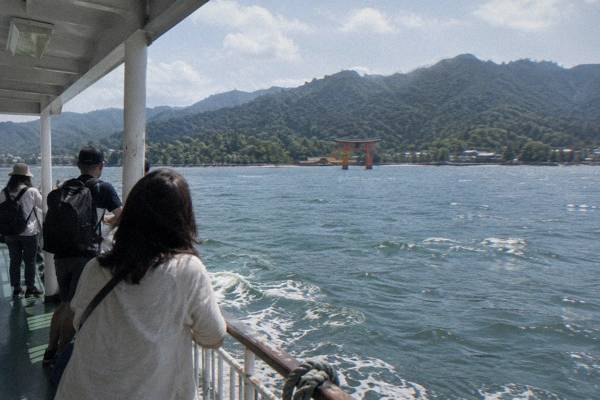
What Is The Best Time To Go To Miyajima?
Tide, seasons, ferry times and shrine hours decide the best time to go to Miyajima from Hiroshima. A planning guide to hours, weather and costs on the island.
The tide decides whether the Great Torii of Itsukushima Shrine stands in water you can walk out to, or appears to float above the bay. The seasons decide the maples, the cherry blossoms and the weather, which the Japan Meteorological Agency (JMA) station data for Hiroshima track as hot humid summers and mild dry winters. The shrine's own clock, opening at 6:30 except on 1 January, and closing between 17:00 and 18:00 depending on the season, sets the frame around all of it. This page puts those three rhythms side by side, so a day on the island can be planned around facts rather than guesswork.
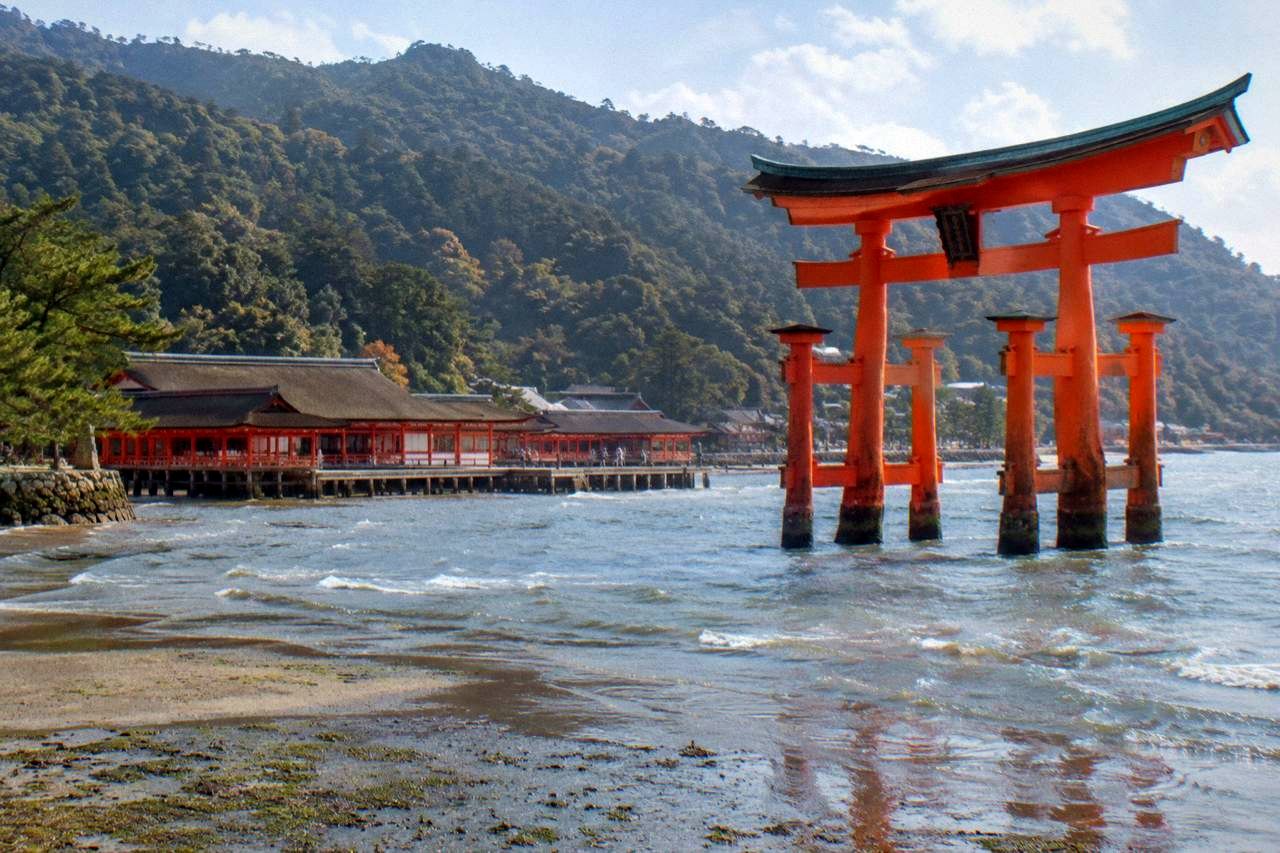
There is no single best month, because the island's two great draws pull in opposite directions: the tide that makes the Great Torii walkable or the shrine appear to float shifts about fifty minutes later every day, while the Momijidani maples typically peak in mid-to-late November.
Itsukushima Shrine opens at 6:30 except on 1 January, the ferry runs from early morning until late evening, and each season offers a different version of the island, so the best day is one picked for its tide window and its season together.
Timing a Miyajima visit starts with the tide rather than the calendar. The Miyajima Tourism Association publishes tide information for the island, and its guidance is simple: when the tide level falls to about 100 cm or lower, referenced to Hiroshima Port, visitors can walk out across the seabed to the base of the Great Torii. When the level rises above about 250 cm, the shrine and the gate look as if they are floating on the sea. Both states are worth seeing, and on many days both happen, since there are normally two high tides and two low tides, each shifting about fifty minutes later than the previous day. The details of reading that daily rhythm are covered on the page when low tide happens at Miyajima.
The seasonal calendar is the second half of the answer. Cherry blossoms on the island typically reach full bloom in early April, from late March to around 5 April. The autumn maples in Momijidani Park, a park of about 700 maple trees, typically peak around 10 to 30 November. Between those poles the weather moves from the mild, comparatively dry winter, with January averaging about 46.2 mm of rain, to the hot humid summer, with July averaging about 279.8 mm. None of that makes one month the winner as a matter of fact; it makes one month the right choice for one kind of visit.
What Time Of Day Works Best On Miyajima?
Itsukushima Shrine opens at 6:30 except on 1 January, the JR ferry from Miyajimaguchi runs roughly every fifteen minutes through the daytime with the first sailing at about 6:25 and the last at about 22:00, and the torii and shrine are illuminated from about half an hour after sunset until 23:00, so the island is reachable from very early morning to late at night.
A full day allows both a low-tide and a high-tide view of the torii, since the tide turns twice a day.
The ferry clock matters more on Miyajima than almost anywhere else in the Hiroshima area, because the crossing from Miyajimaguchi takes about ten minutes and daytime JR departures leave at the :10, :25, :40 and :55 of each hour between 9:10 and 16:10 on the route that passes close to the Great Torii. The Matsudai Kisen ferry runs its own parallel timetable from Miyajimaguchi, from about 7:15 in the morning until about 20:35 on weekdays. The Hiroden 1-Day Streetcar and Ferry Pass, at 1,000 yen for adults, covers the tram from Hiroshima plus the Matsudai Kisen ferry and the visitor tax in one ticket, which is one way to simplify the morning.
Early arrival has a structural advantage. The shrine's hours are seasonal, closing at 18:00 from 1 March to 14 October, at 17:30 from 15 October to 30 November and from 4 January to the end of February, and at 17:00 in December. An arrival soon after the 6:30 opening gives the longest possible window before the shrine's ticketed area closes. The illumination offers a different kind of visit at the other end of the day: the torii and shrine are lit from roughly thirty minutes after sunset until 23:00, while the shrine's own gates close much earlier, so an evening on the island is an outside view, not an interior one. Staying over is its own topic, covered on the Miyajima overnight itinerary.
How Does The Weather Around Hiroshima Shape A Miyajima Trip?
The Japan Meteorological Agency (JMA) 1991-2020 station normals for Hiroshima show an annual mean of about 16.5 °C, a July average daily high of about 30.9 °C with about 279.8 mm of rain, an August average high of about 32.8 °C with less rain, and a January average high of about 9.9 °C with only about 46.2 mm of rain, so summer is hot and humid and winter is mild and comparatively dry.
These are station normals measured in the city of Hiroshima, on the same bay as Miyajima, and they describe the climate the island sits in. The monthly picture is uneven in a way that matters for planning: the rain builds steadily from spring into July, then drops sharply in August, rises again somewhat in September, and then falls through a dry autumn and winter. August pairs the highest average daily high, about 32.8 °C, with a comparatively modest 131.4 mm of rain, while June combines heat with over 226.5 mm.
| Month | Avg High °C | Avg Low °C | Avg Rain Mm |
|---|---|---|---|
| Jan | 9.9 | 2.0 | 46.2 |
| Feb | 10.9 | 2.4 | 64.0 |
| Mar | 14.5 | 5.1 | 118.3 |
| Apr | 19.8 | 10.1 | 141.0 |
| May | 24.4 | 15.1 | 169.8 |
| Jun | 27.2 | 19.8 | 226.5 |
| Jul | 30.9 | 24.1 | 279.8 |
| Aug | 32.8 | 25.1 | 131.4 |
| Sep | 29.1 | 21.1 | 162.7 |
| Oct | 23.7 | 14.9 | 109.2 |
| Nov | 17.7 | 8.9 | 69.3 |
| Dec | 12.1 | 4.0 | 54.0 |
Figures are Japan Meteorological Agency (JMA) station data, 1991-2020 normals, and each one is an average. What the table cannot say is which month suits a given visitor, because that depends on what the visit is for. A ropeway trip to Mount Misen, where the adult return ticket is 2,000 yen and the last descent is at 16:30, reads differently in January than in August. For a wider view of the whole destination's calendar, the best time to visit Hiroshima guide carries the same normals for the city.
The Kansai Hiroshima Area Pass and similar rail products change the arithmetic of a day trip from further afield, and a guided day can also be booked end to end if the timing is left to an operator.
What Does Each Season Offer On Miyajima?
Spring brings cherry blossoms that typically reach full bloom in early April, from late March to about 5 April, with average highs near 19.8 °C; summer brings the heat of July and August with average highs above 30 °C; autumn brings the Momijidani maples, which typically peak around 10 to 30 November; and winter brings mild temperatures and the lowest rainfall of the year, so each season on Miyajima offers a different and defensible reason to go.
The two seasonal events most tied to the island's identity are the cherry blossoms and the maples. Momijidani Park holds about 700 maple trees, and its colour typically runs from about 10 to 30 November; the autumn guide for the island, Miyajima autumn leaves, goes into the detail, including the reported evening illumination of the maples at Daisho-in temple in the second half of November. The blossom side of the year is covered in the Hiroshima cherry blossom guide. A visit in either window needs the same tide discipline as any other day, because the torii's walkable and floating states follow the water, not the foliage.
Summer is the season the normals describe most sharply: hot, humid, and with July's rainfall at about 279.8 mm on average, though August's rainfall average drops to about 131.4 mm while its average daily high climbs to about 32.8 C. Winter is the mirror image, with January's average high near 9.9 °C and its average rainfall the lowest of the year at about 46.2 mm. Other pages covering the same trip are gathered on Hiroshima Travel Guide.
What Should A Day On Miyajima Cost At Any Time Of Year?
The fixed costs of a Miyajima day are stable across the calendar: the one-way adult ferry fare from Miyajimaguchi is 200 yen, the Miyajima visitor tax is 100 yen per person collected with the ferry ticket, Itsukushima Shrine admission is 300 yen for adults, 200 yen for high school students and 100 yen for elementary and junior high students, and the Mount Misen ropeway is 2,000 yen return for adults, so the season chosen changes the experience far more than the bill.
Preschool children are exempt from the visitor tax, and Japan Rail Pass holders ride the JR ferry without a separate fare but still pay the 100 yen tax. Cash is preferred at the shrine. None of these figures moves with the seasons; what moves is what the money buys, from a maple-lined Momijidani walk in November to a ropeway ride in August heat.
| Item | Adult | Child Or Reduced |
|---|---|---|
| JR ferry, one way | 200 yen | 100 yen |
| Miyajima visitor tax | 100 yen | Preschool children exempt |
| Itsukushima Shrine | 300 yen | 200 yen high school, 100 yen elementary and junior high |
| Shrine and Treasure Hall combined | 500 yen | 300 yen high school, 150 yen elementary and junior high |
| Senjokaku | 100 yen | Separate from shrine admission |
| Mount Misen ropeway, return | 2,000 yen | 1,000 yen child |
| Hiroden 1-Day Streetcar and Ferry Pass | 1,000 yen | Includes tram, Matsudai Kisen ferry and visitor tax |
How Do You Fit Miyajima Into A Hiroshima Itinerary?
The JR Sanyo Line from Hiroshima Station to Miyajimaguchi takes about 30 minutes and costs 420 yen, the ferry crossing adds about ten minutes, and the shrine's 6:30 opening plus ferries running until about 22:00 mean the island can be anything from a half-day visit to a full day inside a Hiroshima itinerary, including one that also covers the Peace Memorial Park and Museum.
The practical decision is whether Miyajima is the whole day or half of one. A combined plan is laid out step by step on the Hiroshima and Miyajima in one day itinerary, and the logistics of the crossing itself, tram to ferry to island, are on the Hiroshima to Miyajima page. Travelers with more time can spread the two destinations across the Hiroshima in 2 days or Hiroshima in 3 days plans.
One evening option belongs to the city rather than the island, but it pairs naturally with a Miyajima day. The Check availability link for the Hiroshima Kagura Performance Entry Ticket covers an hour of masked kagura dance in the city, a traditional performing art of the Hiroshima region that fills the hours after the last ferry back. The full range of guided island days is listed under Miyajima tours.
Common Questions About Timing A Miyajima Visit
What Is The Best Time To Go To Miyajima?
The best time is a day chosen for its tide window and season together: the torii is walkable when the tide falls below about 100 cm and appears to float above about 250 cm, the maples typically peak in mid-to-late November, and the cherry blossoms typically reach full bloom in early April.
What Time Does Itsukushima Shrine Open?
The shrine opens at 6:30 except on 1 January; on that day it is open from midnight. It closes at 18:00 from 1 March to 14 October, at 17:30 from 15 October to 30 November and from 4 January to the end of February, and at 17:00 in December.
When Can You Walk To The Great Torii?
When the tide level, referenced to Hiroshima Port, falls to about 100 cm or lower, visitors can walk out across the seabed to the base of the gate. Tides shift later by about fifty minutes each day, so the walkable window moves daily.
What Is The Wettest Month Around Hiroshima?
July, with an average of about 279.8 mm of rain in the Japan Meteorological Agency (JMA) 1991-2020 station normals for Hiroshima. January averages about 46.2 mm of rain.
How Late Do The Ferries To Miyajima Run?
The JR ferry's last departure from Miyajimaguchi is at about 22:00, with daytime sailings roughly every fifteen minutes, and the Matsudai Kisen ferry runs its own timetable from about 7:15 to about 20:35 on weekdays.
Is Miyajima Lit Up At Night?
Yes. The torii and the shrine are illuminated from about thirty minutes after sunset until 23:00, though the shrine's ticketed interior closes much earlier in the day.
With the tide table read, the season chosen and the last ferry noted, a day on Miyajima in Hiroshima Bay can be timed to show the island at both of its most famous states, walking out to the Great Torii at low water and watching it float at high tide before the illumination takes over after dark.