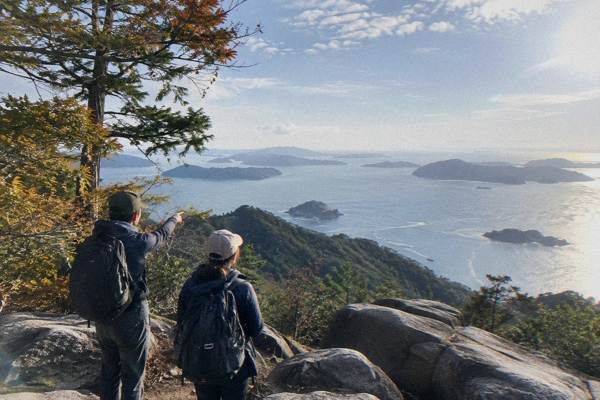
Mitaki-Dera: The Waterfall Temple In The Hills
Mitaki-dera is a Kannon temple in the hills of Nishi-ku, Hiroshima, founded, the temple's own account says, in 809, with waterfalls, Edo period halls and a walking trail circuit reached by a short ride on the JR Kabe Line.
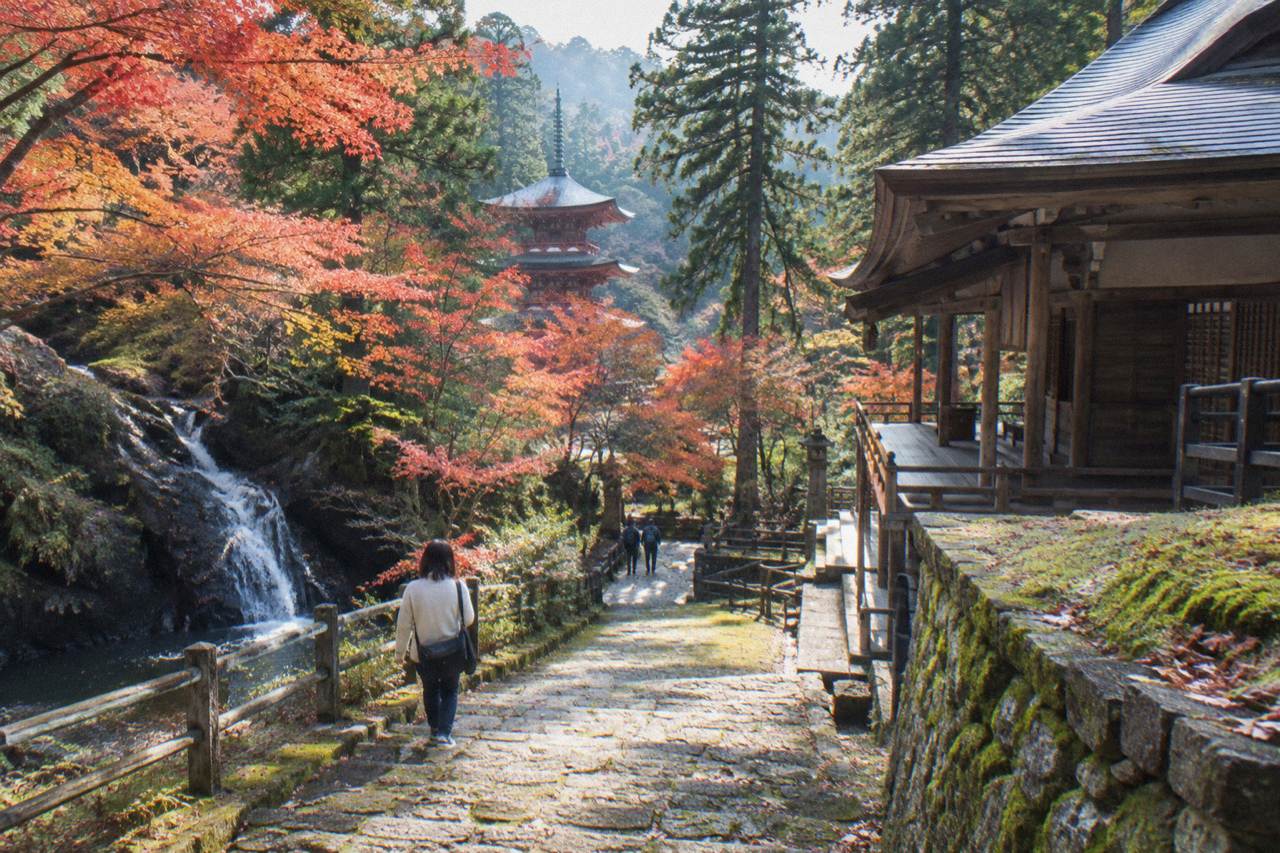
Mitaki-dera sits at 411 Mitakiyama, Nishi-ku, Hiroshima, about 15 to 20 minutes on foot uphill from Mitaki Station on the JR Kabe Line from Hiroshima Station. The grounds hold waterfalls, Edo and Meiji era halls registered as atomic-bombed buildings, and a trail circuit.
Mitaki-dera, also called Mitakiji or Santaki Kannon, is a temple in the western hills of Hiroshima city, at 411 Mitakiyama, Nishi-ku, Hiroshima 733-0805. The temple is said to have been founded in 809, the Daido 4 era year, by Kukai, also known as Kobo Daishi, and it holds the 13th position on the Chugoku 33 Kannon Pilgrimage and the 15th on the Hiroshima New Shikoku 88-Site Pilgrimage. This guide sets out what the sources say about getting there, what stands on the grounds, the temple's atomic bomb history, and how to plan a visit through the year.
What Is Mitaki-Dera In Hiroshima?
Mitaki-dera is a Buddhist Kannon temple in the Mitakiyama hills of Nishi-ku, Hiroshima city, said to have been founded in 809 by Kukai, and it is the 13th site of the Chugoku 33 Kannon Pilgrimage and the 15th site of the Hiroshima New Shikoku 88-Site Pilgrimage, so pilgrims visit it as part of two established routes rather than as a stand-alone sight.
The temple's alternate names, Mitakiji and Santaki Kannon, both point to the same place. The address is 411 Mitakiyama, Nishi-ku, Hiroshima-shi, and the phone number listed for the temple is 082-237-0811.
As a pilgrimage site it belongs to a category that shapes how it looks and feels. Kannon pilgrimage temples in the Chugoku region are numbered stations, and Mitaki-dera's 13th position on the Chugoku 33 circuit places it among the sites a completing pilgrim must reach. The Hiroshima New Shikoku 88-Site Pilgrimage, on which it holds the 15th position, is a regional replica of the Shikoku 88-temple circuit associated with Kukai, which fits the founding attribution to the same figure.
The founding attribution deserves its exact wording. The sources say the temple is said to have been founded in 809 by Kukai. The same figure, Kukai or Kobo Daishi, appears in the founding accounts of other regional temples, including Senkoji Temple in Onomichi, founded in 806, and Daisho-in on Miyajima, traditionally founded in 806 after ascetic training on Mount Misen. Mitaki-dera sits three years later in that same traditional chronology.
| Fact | Detail |
|---|---|
| Address | 411 Mitakiyama, Nishi-ku, Hiroshima-shi, Hiroshima 733-0805 |
| Phone | 082-237-0811 |
| Also called | Mitakiji, Santaki Kannon |
| Attributed founding | 809 (Daido 4), by Kukai (Kobo Daishi) |
| Chugoku 33 Kannon Pilgrimage | 13th site |
| Hiroshima New Shikoku 88-Site Pilgrimage | 15th site |
| Typical time on the grounds | 1 to 2 hours, or 2 to 3 hours for the full trail circuit |
How Do You Get To Mitaki-Dera From Hiroshima Station?
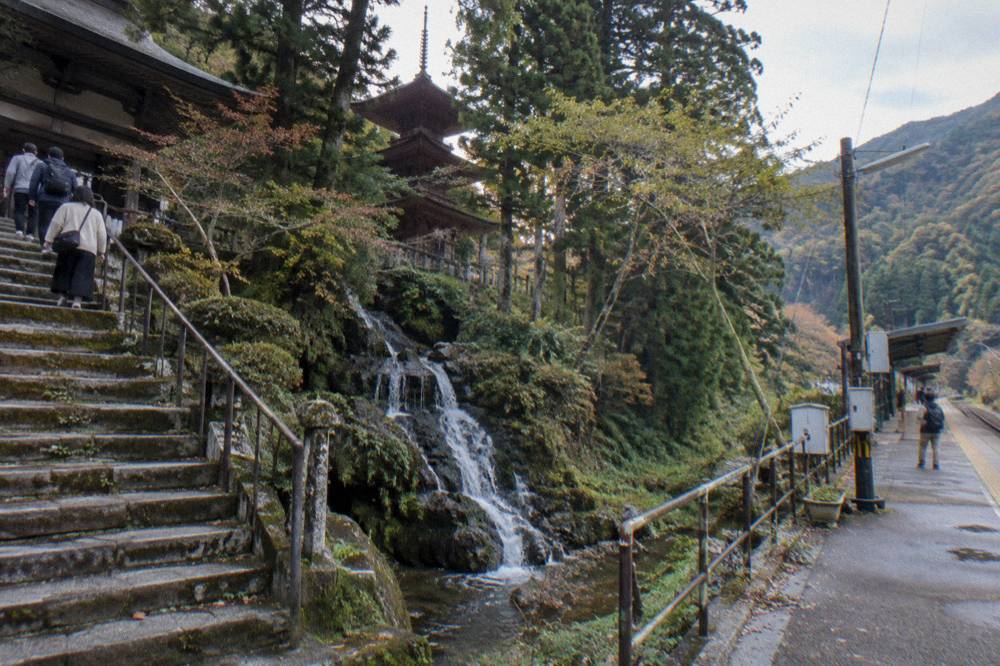
From JR Hiroshima Station or Yokogawa Station, take the JR Kabe Line to Mitaki Station, then walk about 15 to 20 minutes uphill to the temple entrance; the walk is part of the visit, and the sources describe the approach as stone steps that can be steep, mossy and slippery, so sturdy footwear is recommended.
Because the line is part of the JR network, rail passes valid on JR lines in the region cover the ride, which matters for visitors holding a regional pass. The station-to-temple walk is uphill in the direction of travel, which is worth knowing for the return: the descent back to the platform is the easier half.
Inside the grounds the same advice applies with more force. The approach paths include stone steps, and the descriptions of the terrain used by walking guides mention moss and slipperiness as ordinary conditions rather than exceptions. Where the Peace Park end of the city is served by the Hiroden tram at a flat 240 yen adult fare, the Mitaki-dera end belongs to the JR local network, so a day combining both runs on two separate fare systems.
| Leg | Method | Figure Given By Sources |
|---|---|---|
| Hiroshima Station to Mitaki Station | JR Kabe Line local train | Board at JR Hiroshima Station or Yokogawa Station |
| Mitaki Station to temple entrance | Walk | About 15 to 20 minutes, uphill |
| Entrance to main halls and waterfalls | Walk on grounds | 1 to 2 hours typical |
| Full trail circuit including steeper sections | Walk on grounds | 2 to 3 hours typical |
For a wider itinerary built around JR lines, Onomichi, with its temple walk and ropeway, is covered in the Onomichi day trip guide.
What Can You See On The Mitaki-Dera Grounds?
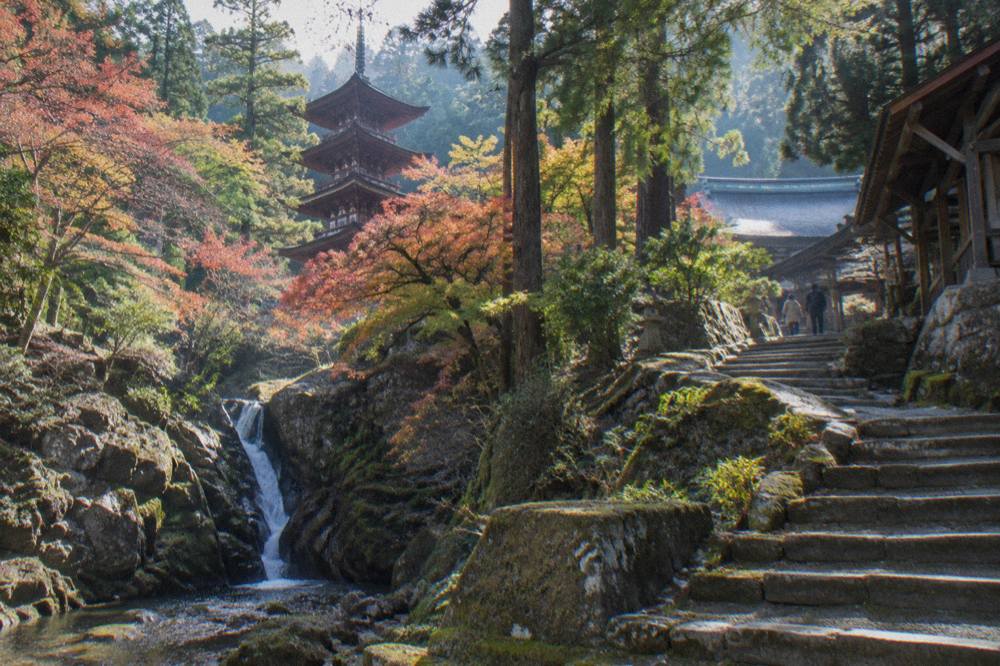
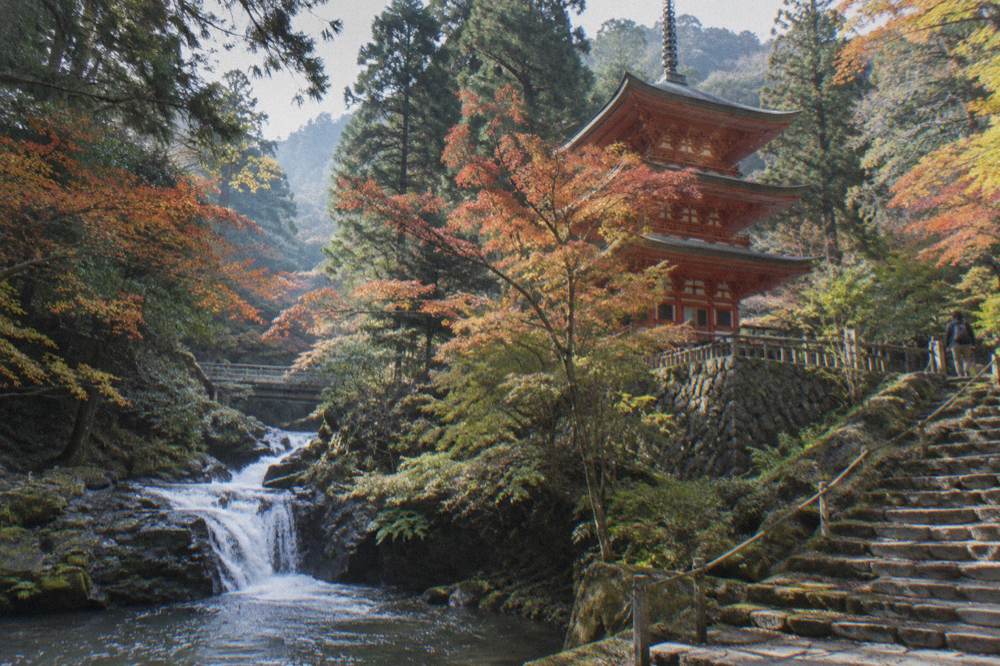
The grounds hold the main hall, the Soshin Kannon Hall, a bell tower, an Inari shrine, the Sanki Gongen Hall and the Chinjudo Hall, several of which date from the late Edo to early Meiji periods and are registered by Hiroshima City as atomic-bombed buildings, together with the waterfalls, mossy stone steps and the steeper upper trail that completes a 2 to 3 hour circuit.
The temple's buildings survived 1945 at varying degrees of damage. The main hall was rebuilt in 1968 after emergency repairs, and the set of wooden buildings listed as registered atomic-bombed buildings by the city includes the Soshin Kannon Hall, the bell tower, the Inari shrine, the Sanki Gongen Hall and the Chinjudo Hall, all dating from the late Edo to early Meiji periods. Registration as an atomic-bombed building is a formal status the city gives to structures that were inside the area affected by the bombing and still stand, and at Mitaki-dera that list covers much of the historic core.
The waterfalls are the organizing feature. The full circuit, including the steeper sections above the main halls, is the version described as taking 2 to 3 hours; the shorter visit of 1 to 2 hours covers the main halls, the waterfalls and the paths around them. A visitor with a train to catch later in the day therefore has a clean choice between the two budgets, and nothing in the access arrangement penalises either one.
| Building Or Feature | Period | Source |
|---|---|---|
| Main hall | Rebuilt 1968 | Rebuilt after emergency repairs |
| Soshin Kannon Hall | Late Edo to early Meiji | Registered atomic-bombed building |
| Bell tower | Late Edo to early Meiji | Registered atomic-bombed building |
| Inari shrine | Late Edo to early Meiji | Registered atomic-bombed building |
| Sanki Gongen Hall | Late Edo to early Meiji | Registered atomic-bombed building |
| Chinjudo Hall | Late Edo to early Meiji | Registered atomic-bombed building |
| Waterfalls and gorge paths | Landscape of the valley | Core of the 1 to 2 hour visit |
How Far Was Mitaki-Dera From The Atomic Bomb Hypocenter?
Mitaki-dera was approximately 3.18 to 3.30 km from the hypocenter of the 1945 atomic bombing; the blast damaged the temple's buildings, emergency repairs followed, and the main hall was rebuilt in 1968, while several other wooden buildings from the late Edo and early Meiji periods still stand and are registered by Hiroshima City as atomic-bombed buildings.
The distance figure is what places the temple in the physical story of 6 August 1945. The history is stated plainly: the blast damaged buildings, repairs were made, and the main hall seen today dates from 1968.
The city's registration scheme is the reason the older buildings matter to that record. For the central story of the bombing, the Hiroshima Peace Memorial Museum and the Peace Memorial Park hold the primary exhibits and memorials, and the A-Bomb Dome stands as the preserved ruin at the center. A visit that moves from those central sites to Mitaki-dera traces the same event outward from its center to its edge, which is a sequencing the city's own geography makes natural.
Is The Mitaki-Dera Walk Difficult?
The approach paths include stone steps that can be steep, mossy or slippery, and sources recommend sturdy footwear; the main halls and waterfalls take 1 to 2 hours to explore, while the full trail circuit, including the steeper sections, takes 2 to 3 hours, so the difficulty depends on which of those two visits a walker chooses.
Two levels of effort define the temple. The lower visit, the halls and the falls nearest the entrance, is the 1 to 2 hour version, and it still involves steps and slope. The upper circuit adds the steeper sections of the trail and doubles the time budget. Neither is described as requiring equipment, but the moss note appears in independent walking guides as a plain condition of a shaded valley in a region whose annual rainfall, per the Japan Meteorological Agency station data for 1991 to 2020, totals 1,572.2 mm across the year.
Rain timing is therefore a real planning input. The station normals put July at 279.8 mm of rain, June at 226.5 mm, and January at 46.2 mm. A mossy stone step after rain behaves the same in any season, so the footwear advice is not seasonal, but the chance of encountering wet steps on a given day tracks the rainfall table. The station walk of 15 to 20 minutes uphill should be counted in the same effort budget, since it comes at the start and again at the end of every visit.
When Should You Visit Mitaki-Dera In Hiroshima?
No month is certified best, and the temple serves as a local place of worship and relaxation year-round with no reported closures or major renovations noted for 2025 to 2026; the Japan Meteorological Agency 1991-2020 station normals for Hiroshima show mild winters with January average lows of 2.0 °C and hot humid summers with August average highs of 32.8 °C, so the choice comes down to heat, rain and daylight rather than any access restriction.
The year-round status is the practical headline. Unlike sights with seasonal closures, the temple's grounds are described as serving visitors through the year, which fits its role as a working pilgrimage station: the Chugoku 33 route does not pause for a temple in the middle of it. That makes the climate table the main planning tool.
| Month | Average High °C | Average Low °C | Rain Mm | Sunshine Hours |
|---|---|---|---|---|
| Jan | 9.9 | 2.0 | 46.2 | 138.6 |
| Feb | 10.9 | 2.4 | 64.0 | 140.1 |
| Mar | 14.5 | 5.1 | 118.3 | 176.7 |
| Apr | 19.8 | 10.1 | 141.0 | 191.9 |
| May | 24.4 | 15.1 | 169.8 | 210.8 |
| Jun | 27.2 | 19.8 | 226.5 | 154.6 |
| Jul | 30.9 | 24.1 | 279.8 | 173.4 |
| Aug | 32.8 | 25.1 | 131.4 | 207.3 |
| Sep | 29.1 | 21.1 | 162.7 | 167.3 |
| Oct | 23.7 | 14.9 | 109.2 | 178.6 |
| Nov | 17.7 | 8.9 | 69.3 | 153.3 |
| Dec | 12.1 | 4.0 | 54.0 | 140.6 |
| Planning Input | Figure (JMA 1991-2020 Station Normals) |
|---|---|
| January rainfall | 46.2 mm |
| Highest monthly rainfall | July, 279.8 mm |
| Lowest average daily low | January, 2.0 °C |
| Highest average daily high | August, 32.8 °C |
| Annual rainfall total | 1,572.2 mm |
| Summer character | Hot and humid |
| Winter character | Mild |
Read as a decision table, the normals suggest that a walker weighing the full 2 to 3 hour circuit against July's 279.8 mm of rain and August's 32.8 °C average highs has a different calculation from one visiting in October, at 23.7 °C and 109.2 mm. None of that restricts access; it only shapes what the walk feels like. Rainfall totals stand at 46.2 mm in January, 54.0 mm in December, 64.0 mm in February and 69.3 mm in November, with January's average highs at 9.9 C.
How Does Mitaki-Dera Fit Into A Hiroshima Itinerary?
Mitaki-dera, reached by the Kabe Line ride and a 15 to 20 minute uphill walk each way, pairs naturally with the flat central sights covered in the site's itinerary guides, from the Peace Park riverside to Hiroshima Castle's exterior grounds and Shukkeien garden, all reachable on the Hiroden tram network at a flat 240 yen adult fare.
The contrast is the reason to include it. Central Hiroshima, from the Peace Memorial Park through Hiroshima Castle to Shukkeien, is delta-flat and tram-served; Mitaki-dera is wooded, stepped and quiet. A morning in the hills followed by an afternoon along the riverside gives a visitor both textures of the city in one day. The one day in Hiroshima itinerary and the first time in Hiroshima guide set out the central sequencing in detail.
Visitors extending east have the wider region to draw on. The Onomichi temple walk, a 2.5 km route connecting 25 temples, makes a natural companion to a Kannon temple visit in Hiroshima itself, and the Seto Inland Sea islands sit beyond it. The things to do in Hiroshima page is the root overview for the whole destination. Visitors drawn to temple valleys specifically can also compare Mitaki-dera with Daisho-in on Miyajima, a Shingon temple with free grounds, a cave of 88 icons and its own hiking trail to the summit of Mount Misen: the two temples bookend a Hiroshima visit nicely, one in the city's hills and one on the island.
| Pairing | What It Adds | Where To Read |
|---|---|---|
| Peace Memorial Park and Museum | The central history, flat riverside ground | Peace Memorial Park and Museum |
| Hiroshima Castle grounds | Exterior and grounds, keep closed since 22 March 2026 | Hiroshima Castle grounds |
| Shukkeien | Stroll garden, 350 yen adult | Shukkeien |
| Onomichi temple walk | 25 temples over 2.5 km, plus ropeway | Onomichi temple walk |
| Daisho-in on Miyajima | Shingon temple | Daisho-in on Miyajima |
Common Questions About Mitaki-Dera
What Is Mitaki-Dera?
Mitaki-dera, also called Mitakiji or Santaki Kannon, is a Buddhist temple at 411 Mitakiyama, Nishi-ku, Hiroshima, said to have been founded in 809 by Kukai. It is the 13th site on the Chugoku 33 Kannon Pilgrimage and the 15th on the Hiroshima New Shikoku 88-Site Pilgrimage, and its valley holds waterfalls, stone step paths and halls from the late Edo and early Meiji periods.
How Do I Get To Mitaki-Dera?
Take the JR Kabe Line from JR Hiroshima Station or Yokogawa Station to Mitaki Station, then walk about 15 to 20 minutes uphill to the temple entrance. The approach paths include stone steps that can be steep, mossy or slippery, so sturdy footwear is recommended.
How Long Does A Visit To Mitaki-Dera Take?
Sources describe 1 to 2 hours for the main halls, the waterfalls and the paths around them, and 2 to 3 hours for the full trail circuit including the steeper upper sections.
Was Mitaki-Dera Affected By The Atomic Bombing?
Yes. The temple was approximately 3.18 to 3.30 km from the hypocenter, the blast damaged its buildings, and the main hall was rebuilt in 1968 after emergency repairs. Several late Edo and early Meiji buildings, including the Soshin Kannon Hall, bell tower, Inari shrine, Sanki Gongen Hall and Chinjudo Hall, are registered by Hiroshima City as atomic-bombed buildings.
Is Mitaki-Dera Open Year-Round?
The temple serves as a local place of worship and relaxation year-round, with no reported closures or major renovations noted for 2025 to 2026. Seasonal planning comes down to the weather: the JMA 1991-2020 station normals for Hiroshima show July rainfall at 279.8 mm and August as the warmest with average highs of 32.8 C.
Plan the footwear, check the rainfall column, and give the valley either half a day or a full circuit, as the Hiroshima Travel Guide coverage of the city's sights and itineraries makes it easy to pair with everything on the flat ground below.