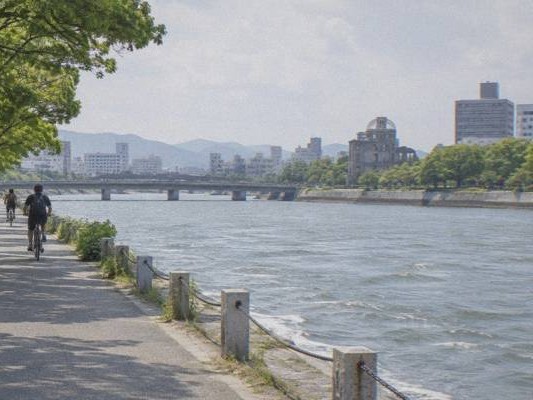
Hiroshima Today: What The City Is Like Now
Hiroshima today is a modern regional capital whose Peace Memorial Park, streetcar network and Miyajima ferry make it one of Japan's easiest major cities to visit.
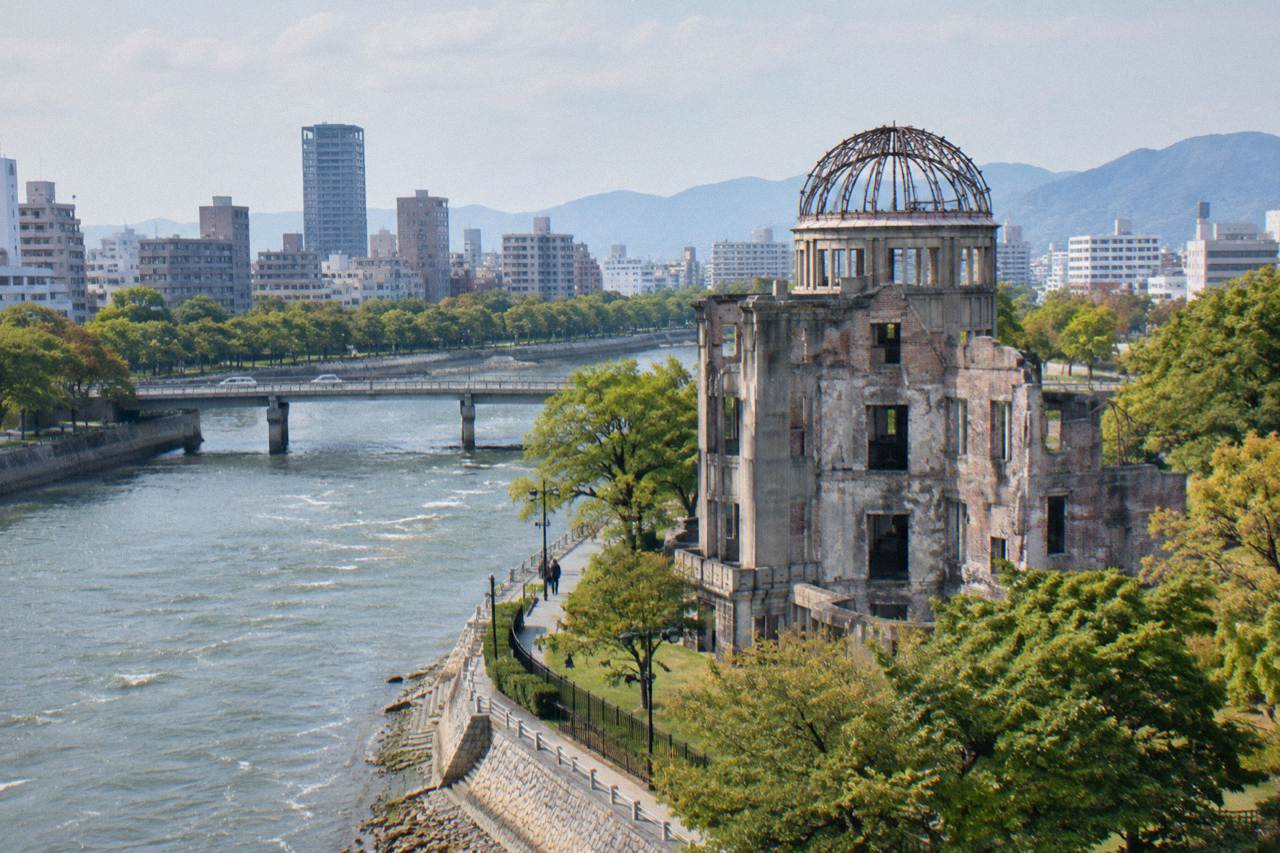
Hiroshima today is a rebuilt, thriving city of about 1.2 million in Hiroshima Prefecture on the Seto Inland Sea. The Peace Memorial Museum charges 200 yen for adults, the Hiroden streetcar flat fare is 240 yen, and Miyajima is a 10-minute ferry ride away.
This page is a portrait of the city as it is now, drawn from what the city government, the Hiroden railway company, the Japan Meteorological Agency and the sites themselves publish.
What Is Hiroshima Like Today?
Hiroshima today is a city on the Seto Inland Sea, where a flat-fare streetcar network, a covered downtown arcade and a bay-side ferry to Miyajima sit beside the Peace Memorial Park and Museum. It is not a ruin and not an island: it is a regional hub whose FY2025 museum count reached 2,580,926 visits.
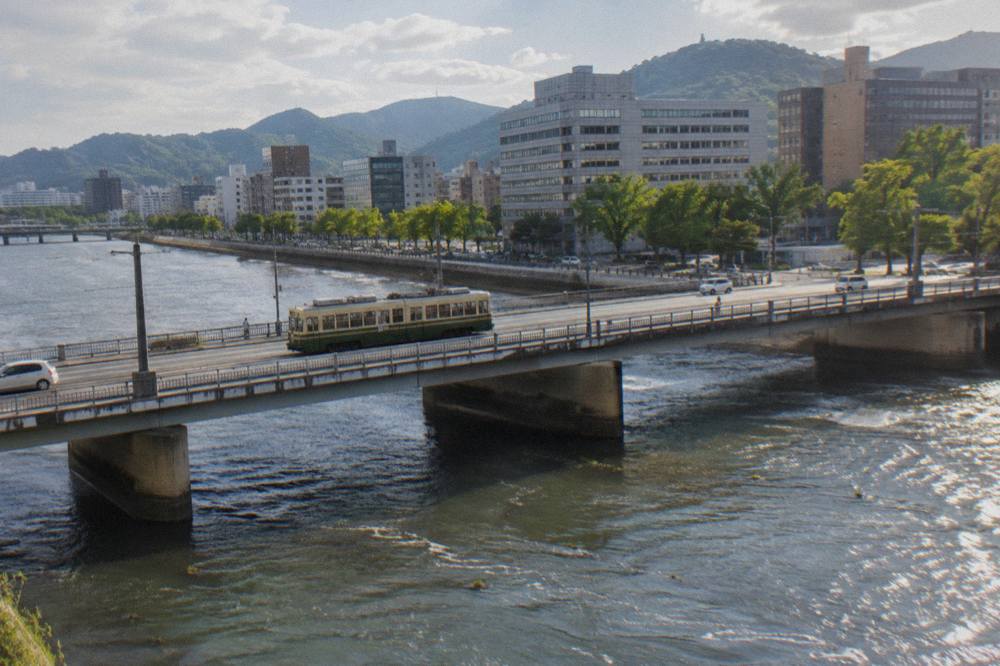
The practical tone of the city is set by its transport. The Hiroden streetcar network runs on a flat fare of 240 yen for adults and 120 yen for children on every line, including the Miyajima line out to the ferry pier, with payment made on exiting rather than on boarding. The Japan Meteorological Agency (JMA) 1991-2020 normals for Hiroshima show an annual average temperature of 16.5°C and 1572.2 mm of rain a year: hot, humid summers around a 28.5°C August mean, and mild winters around a 5.4°C January mean.
| Month | Mean °C | Mean high °C | Mean low °C | Rain mm |
|---|---|---|---|---|
| January | 5.4 | 9.9 | 2.0 | 46.2 |
| April | 14.8 | 19.8 | 10.1 | 141.0 |
| July | 27.2 | 30.9 | 24.1 | 279.8 |
| August | 28.5 | 32.8 | 25.1 | 131.4 |
| October | 18.8 | 23.7 | 14.9 | 109.2 |
| November | 12.9 | 17.7 | 8.9 | 69.3 |
These are Japan Meteorological Agency (JMA) station normals for 1991-2020. Season-by-season planning guidance, including cherry blossom and autumn leaf timing, is covered in Best Time To Visit Hiroshima and Hiroshima Weather By Month.
How Has Hiroshima Rebuilt Since The Bombing?
Hiroshima was rebuilt as a modern city around the preserved ruins of the Atomic Bomb Dome and the Peace Memorial Park laid out on the delta between the Motoyasu and Hon rivers, and the city today presents its history through the Peace Memorial Museum, which the city reports drew 2,580,926 visitors in FY2025, its third straight record year. The reconstruction is the city's own stated identity as a peace city.
The history is handled here the way the city handles it: factually. An atomic bomb was dropped on Hiroshima on 6 August, in the final year of the Second World War. The Peace Memorial Park was laid out on the delta between the Motoyasu and Hon rivers, and the annual Peace Memorial Ceremony is held there every 6 August from 8:00 to about 8:50, with about 7,000 seats plus about 2,200 indoor seats at the nearby International Conference Center.
To walk through that story with a guide, book a peace history walking tour here.
The Peace Memorial Museum anchors the site. Admission is 200 yen for adults, 100 yen for high school students and free for junior high school students and younger, with a 100 yen rate for visitors aged 65 and over showing a passport. Hours are seasonal: 7:30 to 19:00 from March to July and September to November, 7:30 to 20:00 in August, and 7:30 to 18:00 from December to February, with closures on 30 and 31 December and in mid-February for exhibit changes. Etiquette at the park and museum is a visitor topic in its own right: quiet, no loud behaviour and respectful photography, and the museum's own practical page governs any reservation questions.
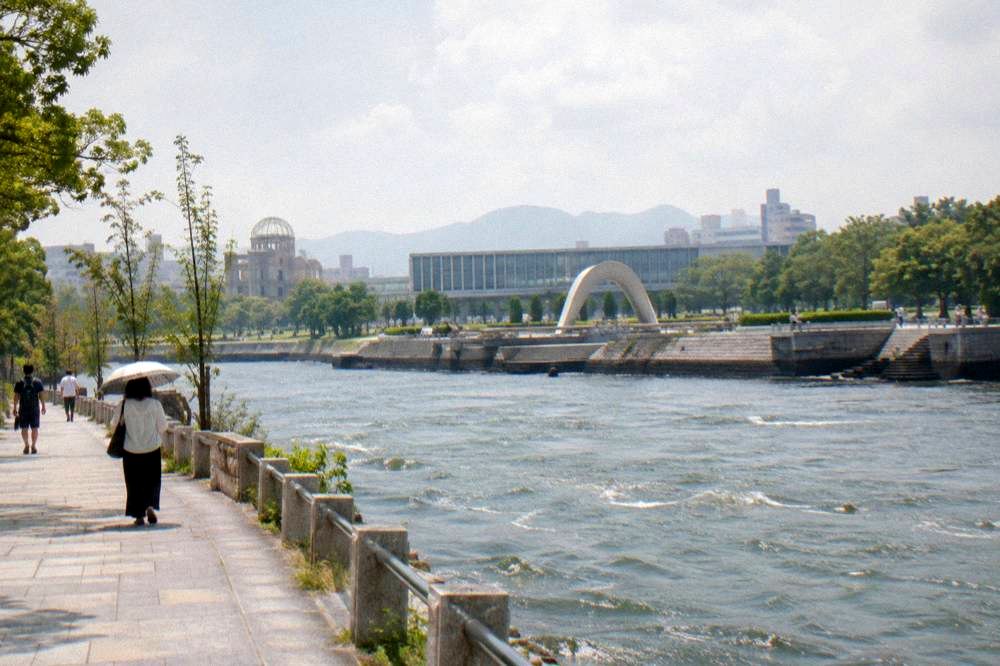
Deeper coverage of the sites and their history is in Hiroshima Peace Memorial Museum Guide, Walking The Peace Memorial Park and The Atomic Bomb Dome, and the ceremony itself in Hiroshima August 6 Peace Ceremony.
What Are The Main Things To See In Hiroshima Today?
Sights in Hiroshima include the Atomic Bomb Dome downtown; Hiroshima Castle's grounds and Shukkeien garden nearby; the Hondori and Shintenchi shopping districts and Okonomimura food building; and Miyajima island with Itsukushima Shrine, reached by a 10-minute JR ferry from Miyajimaguchi. The castle keep itself has been closed to visitors since 22 March 2026.
Two corrections matter here because many older guides are wrong. The Hiroshima Castle keep closed permanently to visitors on 22 March 2026, so the castle is an exterior and grounds visit, with a Sannomaru history museum planned for 1 June 2027. And Shukkeien garden's admission rose to 350 yen for adults, 150 yen for university students and free for school students from 14 April 2025; the garden is open 9:00 to 18:00 from 16 March to 15 September and 9:00 to 17:00 the rest of the year, with last entry 30 minutes before closing.
Beyond the peace sites, the city's daily texture is food and shopping. A guided option that ties the districts and the food together is the Food and Culture Guided Walking Tour with Dinner, a three-hour evening walk; Check availability if an escorted first evening appeals.
The full sight-by-sight list, with an itinerary logic for one, two and three days, is in Things To Do In Hiroshima.
How Do You Get Around Hiroshima Today?
Hiroshima is served today by a flat-fare Hiroden streetcar network at 240 yen per adult ride on all lines including the Miyajima line, by JR trains including the Sanyo Shinkansen at the rebuilt station, by an airport limousine bus at 1,500 yen adult to the station, and by the JR ferry to Miyajima. Five official tourist information centers with English-speaking staff cover arrivals.
The Hiroden network is the practical backbone. Fares are flat: 240 yen adult, 120 yen child, paid on exit, with no tickets sold on board. Day passes cost 700 yen for adults, or 1,000 yen including the Miyajima ferry crossing, and the city reports a Hiroshima Omotenashi Pass (HOP) scheme giving discounts at participating facilities when a qualifying day pass is bought. Line 2 runs from Hiroshima Station through Genbaku Dome-mae toward Hiroden-miyajima-guchi at 10-minute intervals, and the tram now enters the station building itself, reported since 3 August 2025.
| Transport | Fare | Notes |
|---|---|---|
| Hiroden streetcar, single ride | 240 yen adult / 120 yen child | Flat fare, all lines, pay on exit |
| Hiroden 1-day pass | 700 yen adult / 350 yen child | All Hiroden lines |
| Hiroden 1-day streetcar and ferry pass | 1,000 yen adult | Includes Miyajima Matsudai ferry and the 100 yen visitor tax |
| Airport limousine bus to Hiroshima Station | 1,500 yen adult / 750 yen child | About 50 minutes, IC cards accepted |
| JR ferry to Miyajima | 200 yen one way (group fare 160 yen, 8 or more) | Japan Rail Pass and JR-West passes valid |
The five official tourist information centers all have English-speaking staff, and their hours are published by the city: the station center is open 6 am to midnight year-round, the Peace Memorial Park Rest House center 8:30 am to 6 pm from March to November and to 5 pm in winter, with extended August hours up to 8 pm on 6 August, the port center 9 am to 4 pm, the Bus Center 9 am to 5 pm for bus information, and the Kamiyacho Shareo underground center 11 am to 5 pm. Around 50 privately operated street tourist information centers operate alongside them, and the city runs the free HIROSHIMA FREE Wi-Fi LAN service for visitors.
Getting around in more depth, including the pass mathematics, is in Getting Around Hiroshima, Hiroshima Tourist Pass Options and Hiroshima To Miyajima.
Where Do People Live, Shop And Go Out In Hiroshima Today?
Hiroshima's central districts include the Hondori covered arcade of about 577 meters, the Nagarekawa and Yagenbori nightlife lanes, and the station area on the eastern edge of the centre, with the Peace Park district on the delta islands west of the arcade. Each has a distinct character.
What About Miyajima Today?
Miyajima today offers a roughly 10-minute JR ferry ride from Miyajimaguchi, with departures about every 15 minutes from around 6:25 to about 22:00, a 100 yen visitor tax charged on entering the island, Itsukushima Shrine opening at 6:30 am except on 1 January (from 0:00), and a Mount Misen ropeway running 9:00 to 16:00 at 2,000 yen adult return.
Itsukushima Shrine charges 300 yen for adults, 200 yen for high school students and 100 yen for elementary and junior high students, with a combined ticket covering the Treasure Hall at 500 yen adult. Hours shift with the seasons, from 6:30 to 18:00 through the main season to 6:30 to 17:00 in December. The Great Torii's restoration finished in December 2022; the shrine reports that East Corridor reinforcement is under way until December 2026 and five-storey pagoda repair to 2027, with the shrine open throughout. The tides matter: the torii can be walked to at low tide and appears to float at high tide, so check the live Hiroshima Bay tide prediction rather than a printed time.
| Miyajima item | Figure |
|---|---|
| JR ferry crossing | About 10 minutes |
| Miyajima Visitor Tax | 100 yen, charged on entering the island, preschool children exempt |
| Itsukushima Shrine, adult | 300 yen |
| Combined shrine and Treasure Hall, adult | 500 yen |
| Mount Misen ropeway, adult return | 2,000 yen (one way 1,100 yen) |
| Ropeway hours | 9:00 to 16:00, last descent 16:30 |
Full coverage is in Itsukushima Shrine and Mount Misen.
What Has Changed Recently For Visitors To Hiroshima?
Several changes shape a visit to Hiroshima today: the Hiroden tram has entered the Hiroshima Station building (reported since 3 August 2025), streetcar fares rose to a flat 240 yen on 1 February 2025, Shukkeien admission rose to 350 yen on 14 April 2025, the Hiroshima Castle keep closed permanently on 22 March 2026, and some international flights at Hiroshima Airport are suspended from 25 October 2026 to 31 January 2027.
The airport suspensions affect Dalian, Beijing, Shanghai and Bangkok routes for that window, per the airport's own flight page, which also lists a Travelex currency exchange in the international arrival lobby. None of this changes the core logistics: the Sanyo Shinkansen puts Hiroshima about 80 to 85 minutes from Shin-Osaka and roughly 3 hours 45 minutes to 4 hours from Tokyo, and the two JR-West regional passes published for the area are the Kansai-Hiroshima Area Pass at 17,000 yen adult for 5 days, covering reserved Sanyo Shinkansen seats between Shin-Osaka and Hiroshima plus the JR Miyajima Ferry, and the Hiroshima-Yamaguchi Area Pass at 15,000 yen adult for 5 days.
| Change | Effective date | Detail |
|---|---|---|
| Hiroden flat fare 240 yen | 1 February 2025 | Adult flat fare, all lines, child 120 yen |
| Shukkeien fee revision | 14 April 2025 | Adult 350 yen, university 150 yen, school students free |
| Tram enters station building | Reported 3 August 2025 | Hiroden service to the station's 2nd floor |
| Castle keep closed | 22 March 2026 | Permanent; exterior and grounds only |
| Airport flight suspensions | 25 October 2026 to 31 January 2027 | Selected international routes |
Rail topics are expanded in JR Pass For Hiroshima, Tokyo To Hiroshima, Osaka To Hiroshima and Kyoto To Hiroshima.
Is Hiroshima A Good City For A First Visit Now?
Hiroshima today works well for a first visit: the sights cluster around a walkable central delta, the streetcar and JR lines reach everything else on a flat fare, the Peace Memorial Museum reported 945,618 foreign visitors within its FY2025 total of 2,580,926, and the city supports five English-staffed information centers plus a free municipal Wi-Fi service. Costs at the headline sights are low, 200 to 350 yen range at the main sites.
Budgeting is predictable. The Peace Memorial Museum at 200 yen, Shukkeien at 350 yen, Itsukushima Shrine at 300 yen and streetcar rides at 240 yen each mean the sightseeing base cost of a full day is modest, and the 700 yen streetcar day pass breaks even at three rides. Full cost modelling, including rail passes and food, is in Hiroshima Trip Cost, and safety questions in Is Hiroshima Safe?. First-time itineraries in every length are in First Time In Hiroshima, Hiroshima In One Day and Hiroshima In 2 Days.
The city also runs its own Peace Tourism programme, self-guided walking and bicycle routes past hibaku buildings that survived the atomic bombing, and publishes the Welcome to Hiroshima Guide Map in English, Chinese, Korean and other languages at its tourist centers. It is a city that has organised itself around explaining itself.
What Day Trips Work From Hiroshima Today?
The two JR West regional passes cover day trips in both directions: the Hiroshima-Yamaguchi Area Pass at 15,000 yen for 5 days covers Iwakuni and the other western destinations on JR West lines, and the Kansai-Hiroshima Area Pass at 17,000 yen for 5 days adds the Sanyo Shinkansen reserved seats eastward to Shin-Osaka.
Each destination has its own guide on this site, from Iwakuni and Kure to Onomichi, the Shimanami Kaido and Sandankyo Gorge.
What Does The Year Look Like In Hiroshima Today?
A year in Hiroshima today runs from a January averaging 5.4°C and 46.2 mm of rain, through cherry blossoms whose 30-year average first bloom is 25 March and full bloom 4 April, a hot August averaging 28.5°C that opens with the 6 August Peace Memorial Ceremony, and a mild November averaging 12.9°C when the Miyajima Momijidani Park autumn leaves typically peak mid-to-late November.
The Japan Meteorological Agency (JMA) 1991-2020 normals for Hiroshima shape the calendar. July averages 279.8 mm of rain, January sees 46.2 mm, and August carries the highest average daily high at 32.8°C. In 2026 the city's specimen cherries reached first bloom on 19 March and full bloom on 30 March per JMA data, close to the 30-year averages. Autumn brings a practical wrinkle: the Miyajima ropeway requires advance reservation on peak autumn dates, including 1, 7, 8, 14, 15, 21, 22, 23, 28 and 29 November in 2026.
| Season | Average conditions (JMA 1991-2020) | What it means |
|---|---|---|
| Spring (March to May) | March mean 9.5°C, April 14.8°C, May 19.6°C | Cherry blossoms, average full bloom 4 April |
| Summer (June to August) | July 27.2°C with 279.8 mm rain, August 28.5°C | Hot and humid; 6 August ceremony in the park |
| Autumn (September to November) | October 18.8°C, November 12.9°C | Momijidani leaves typically mid-to-late November |
| Winter (December to February) | January 5.4°C, February 6.2°C | Mild; museum hours shorten to 18:00 |
Season pages carry the detail: Hiroshima Cherry Blossom, Miyajima Autumn Leaves and Hiroshima Festivals And Events. This calendar is also what makes the Hiroshima Travel Guide work as a planning base: the city's year is legible, published and stable.
Common Questions About Hiroshima Today
Is Hiroshima A Big City Today?
Yes. Hiroshima is a modern regional capital whose downtown of office towers, covered arcades and streetcars spreads across the Ota River delta at the head of Hiroshima Bay on the Seto Inland Sea, with a bay-side ferry to Miyajima.
Is Hiroshima Still Damaged From The War?
No. The city was fully rebuilt, and the Atomic Bomb Dome is a deliberately preserved ruin viewed from outside its fence. The Peace Memorial Park and Museum sit beside a modern downtown of office towers, arcades and streetcars.
How Much Does The Peace Memorial Museum Cost Today?
Admission is 200 yen for adults, 100 yen for high school students, free for junior high school students and younger, and 100 yen for visitors aged 65 and over showing a passport.
Can You Go Inside Hiroshima Castle Now?
No. The castle keep closed permanently to visitors on 22 March 2026, and the castle is an exterior and grounds visit, with a Sannomaru history museum planned for 1 June 2027.
How Do You Get To Miyajima From Hiroshima Today?
Take the Hiroden Miyajima line or JR trains to Miyajimaguchi, then the JR ferry, a crossing of about 10 minutes with departures roughly every 15 minutes. A 100 yen visitor tax is charged separately on entering the island.
Does Hiroshima Have Good Public Transport For Visitors?
Yes. The Hiroden streetcar network runs a flat 240 yen adult fare on all lines including the Miyajima line, day passes cost 700 yen or 1,000 yen with the Miyajima ferry, and five official tourist information centers with English-speaking staff operate across the city.
Hiroshima today rewards exactly the kind of visit its own institutions have organised for: a flat-fare streetcar ride to the Peace Memorial Park in the morning, the museum's 200-yen exhibits through midday, Hondori and an okonomiyaki counter in the evening, and the Miyajima ferry whenever the tide table suits the torii. The figures above come from the city, the railway and the shrines themselves, and they are the working numbers of a living city rather than a memorial to one.