Sandankyo Gorge: The Long Hike North Of Hiroshima
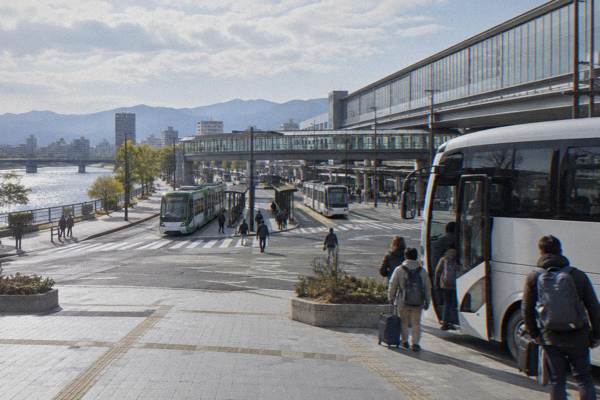
Sandankyo Gorge runs about 16 km along the Shibaki River in Akiota-cho, Hiroshima Prefecture, inside the Nishi-Chugoku-Sanchi Quasi-National Park, and express buses from Hiroshima Bus Center reach the trailhead in roughly 75 to 80 minutes.
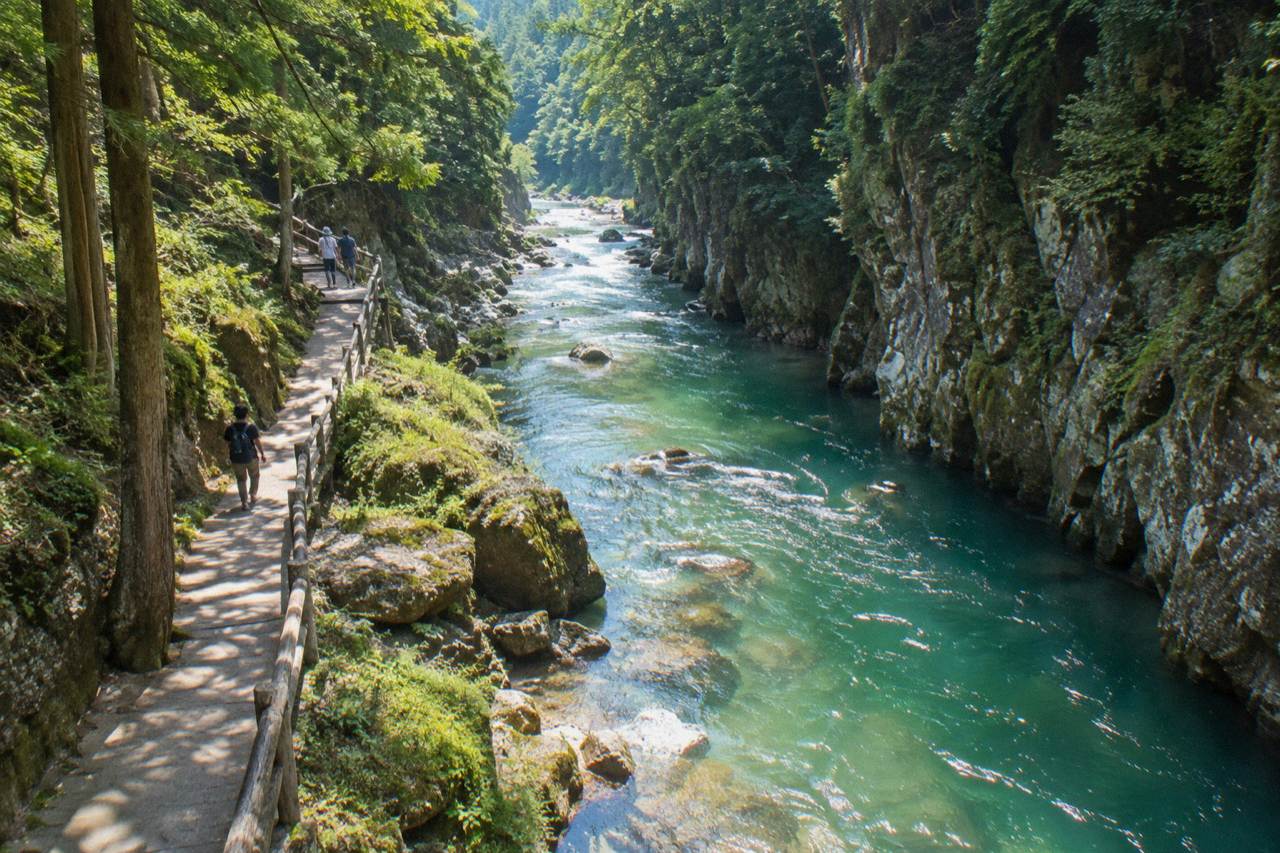
Sandankyo Gorge is a roughly 16 km gorge on the Shibaki River in Akiota-cho, Hiroshima Prefecture, about 75 to 80 minutes from Hiroshima Bus Center by express bus. The Kurobuchi Ferry runs seasonally from late April to late November at 500 yen return for adults and high school students.
Sandankyo Gorge stretches approximately 16 km along the Shibaki River in Akiota-cho, in the hills north of the city of Hiroshima, and forms part of the Nishi-Chugoku-Sanchi Quasi-National Park. It is one of the few Hiroshima-area destinations that the sandankyo-gorge.com site says received a three-star rating in the French Guide Bleu, matching Miyajima and the Atomic Bomb Dome. The official and destination pages state how to get there, where to park, what the Kurobuchi Ferry costs, what the trail holds, and when the autumn colour runs.
Where Is Sandankyo Gorge Relative To Hiroshima?
Sandankyo Gorge lies in Akiota-cho, Hiroshima Prefecture, about 16 km of gorge along the Shibaki River, north of the city of Hiroshima inside the Nishi-Chugoku-Sanchi Quasi-National Park. The gorge was discovered in 1917 by the photographer Kuma Nanpo and designated a Special Place of Scenic Beauty in 1953, per the official Sandankyo story page.
That 1917 date matters for what the gorge is: this is not a shrine precinct or a wartime site like the ones central Hiroshima is known for, but a landscape that entered the modern record through a photographer's expedition. The official story page at sandankyo.jp traces the name and the designation history, and the designation as a Special Place of Scenic Beauty in 1953 places it among the nationally recognised scenic monuments of Japan rather than merely local walking country.
The gorge lies within the Nishi-Chugoku-Sanchi Quasi-National Park, the protected upland area that spreads across the Chugoku mountains behind the city.
| Fact | Figure | Source Page |
|---|---|---|
| Length of gorge | about 16 km | dive-hiroshima.com |
| River | Shibaki River | dive-hiroshima.com |
| Municipality | Akiota-cho, Hiroshima Prefecture | dive-hiroshima.com |
| Protected area | Nishi-Chugoku-Sanchi Quasi-National Park | dive-hiroshima.com |
| Discovered | 1917, by photographer Kuma Nanpo | sandankyo.jp |
| Designation | Special Place of Scenic Beauty, 1953 | sandankyo.jp |
| Guide Bleu rating | three stars | sandankyo-gorge.com |
Within the wider set of Hiroshima day trips, Sandankyo stands as the mountain-and-water counterpart to the inland sea destinations south of the city.
How Do You Get To Sandankyo Gorge From Hiroshima?
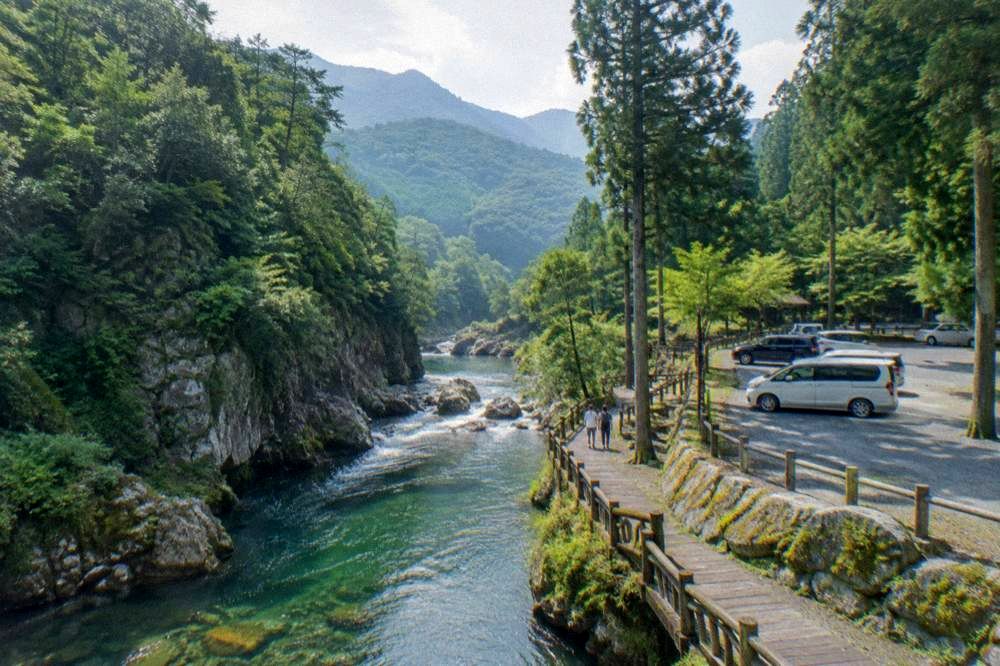
From Hiroshima Bus Center, express buses reach the Sandankyo stop in approximately 75 to 80 minutes, per the dive-hiroshima.com access page. By car, the route runs via the Chugoku Expressway to Togouchi IC, followed by Route 191 for about 15 minutes, and the main entrance parking lot holds 500 vehicles at 400 yen for regular cars.
Those two access figures, roughly 75 to 80 minutes by express bus and about 15 minutes from Togouchi IC along Route 191, are the only journey figures the destination pages state, and they should be read as exactly that: the bus time to the Sandankyo stop and the driving time from the expressway interchange. The bus option departs from Hiroshima Bus Center, the same terminal that serves other Hiroshima Prefecture destinations, so a gorge day can be planned without a car.
The driving route description comes from the same dive-hiroshima.com page: Chugoku Expressway to Togouchi IC, then Route 191. The total driving time from central Hiroshima is not specified.
| Access Method | Route | Figure | Source Page |
|---|---|---|---|
| Express bus | Hiroshima Bus Center to Sandankyo stop | about 75 to 80 minutes | dive-hiroshima.com |
| Car | Chugoku Expressway to Togouchi IC, then Route 191 | about 15 minutes from the IC | dive-hiroshima.com |
| Main entrance parking | regular car | 400 yen, 500 vehicles | sandankyo.jp |
| Mizunashi Gate parking | regular car | 500 yen, 200 vehicles | sandankyo.jp |
A two-day Hiroshima itinerary can pair a city day that includes a guided morning in the Peace Memorial Park with a nature day at the gorge. The Hiroshima Peace Memorial Park Historical Walking tour covers the park's monuments with a guide, and Check availability shows the operator's live dates and times.
What Does The Kurobuchi Ferry At Sandankyo Gorge Cost And When Does It Run?
The Kurobuchi Ferry operates seasonally from late April to late November, typically 10:00 to 16:00 on weekdays and 9:00 to 16:00 on weekends and holidays, subject to weather and water levels, per the dive-hiroshima.com page. The round-trip fare is 500 yen for high school students and adults, per the joyinhiroshima.com gorge page.
Because the service is seasonal and explicitly subject to weather and water levels, it should be treated as a fair-weather option within the late April to late November window rather than a guaranteed crossing. The two hours listed, 10:00 to 16:00 on weekdays and 9:00 to 16:00 on weekends and holidays, are the typical operating hours the destination page states.
The 500 yen round-trip fare applies to high school students and adults together. No one-way figure, child fare or group rate is quoted here. Payment methods are likewise unstated, and cash in yen is the safe assumption anywhere rural in Hiroshima Prefecture.
| Kurobuchi Ferry Item | Figure | Source Page |
|---|---|---|
| Season | late April to late November | dive-hiroshima.com |
| Weekday hours | typically 10:00 to 16:00 | dive-hiroshima.com |
| Weekend and holiday hours | typically 9:00 to 16:00 | dive-hiroshima.com |
| Round-trip fare, adults and high school students | 500 yen | joyinhiroshima.com |
| Operation conditions | subject to weather and water levels | dive-hiroshima.com |
Where Do You Park At Sandankyo Gorge And What Does It Cost?
Sandankyo Gorge has two stated parking lots: the main entrance lot with 500 vehicles at 400 yen for a regular car, and the Mizunashi Gate lot with 200 vehicles at 500 yen for a regular car, both per the official sandankyo.jp page. The two-lot structure gives drivers a genuine choice. Which one suits a given day depends on which end of the gorge the plan starts from, and the fee difference between them is small enough that capacity and convenience, not price, drive the decision.
Opening hours for the lots, payment machines, or bus parking rates remain unstated. What is stated is plain: 400 yen and 500 spaces at the main entrance, 500 yen and 200 spaces at Mizunashi Gate, both for regular cars.
What Are The Main Sights Along The Sandankyo Gorge Trail?
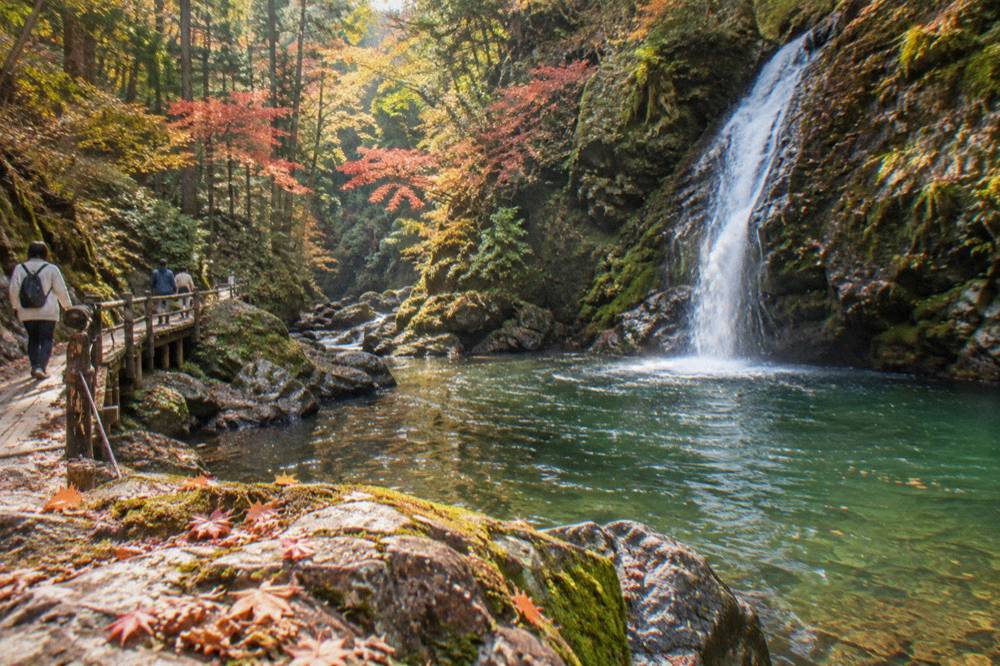
The gorge's stated highlights are Kurobuchi Pool, a deep pool crossed by the Kurobuchi Ferry from late April to late November; Sarutobi Rock, a named rock formation on the river path; and the waterfalls Nidantaki Falls and Sandantaki Falls, all strung along well-signposted walking paths that follow the river, per the japan.travel spot page for Sandankyo Gorge.
The japan.travel page is the source for the highlight list, and its phrase "well-signposted walking paths following the river" is the clearest statement about the trail itself.
Distances and walking times between these points are not published, so the planning frame stays simple: the sights are strung along the river, the paths are signposted, and the length of the day is the walker's choice. More of these guides are collected on Hiroshima Travel Guide.
| Highlight | What The Pages State |
|---|---|
| Kurobuchi Pool | deep pool crossed by the Kurobuchi Ferry, late April to late November |
| Sarutobi Rock | named rock formation on the river path |
| Nidantaki Falls | waterfall listed among the gorge highlights |
| Sandantaki Falls | waterfall listed among the gorge highlights |
| Walking paths | well-signposted, following the river |
Sections of the gorge including Kurobuchi to Mizunashiguchi have been subject to closure for bridge repairs, with reopening dates to be confirmed, per the Akiota-cho notice page. Before a gorge day, that notice is the place to check which stretches are open.
When Is Autumn Foliage Season At Sandankyo Gorge?
Autumn foliage viewing at Sandankyo Gorge runs from late October to late November, per the dive-hiroshima.com page. The Japan Meteorological Agency 1991-2020 station normals for Hiroshima show November averaging a high of 17.7 °C, a low of 8.9 °C and 69.3 mm of rain, against October's 23.7 °C, 14.9 °C and 109.2 mm.
The foliage window is the one seasonal statement the destination page makes, and it is a narrow one, about a month from late October to late November. The city normals give a sense of the cooling that drives it: October still averages a 23.7 °C high in Hiroshima, while November drops to 17.7 °C by day and 8.9 °C overnight. The gorge sits in the mountains north of the city, where temperatures run cooler than these station figures.
Rain is part of the same picture. October averages 109.2 mm across the month and November 69.3 mm at the Hiroshima station, and the Kurobuchi Ferry is explicitly subject to water levels, so a foliage-season plan carries both colour and weather risk in the same weeks.
| Month | Mean High °C | Mean Low °C | Rain mm | Note |
|---|---|---|---|---|
| September | 29.1 | 21.1 | 162.7 | ferry season |
| October | 23.7 | 14.9 | 109.2 | foliage from late October |
| November | 17.7 | 8.9 | 69.3 | foliage to late November, ferry to late November |
The Japan Meteorological Agency station data, 1991-2020, is the source for every figure in that table, and the foliage window itself comes from the destination page. Combining the two is the honest way to plan: colour in the hills, cooling temperatures, and a ferry whose season ends exactly as the foliage does.
How Does Sandankyo Gorge Compare With Other Hiroshima Day Trips?
Sandankyo Gorge is the mountain gorge option among Hiroshima day trips, pairing a Guide Bleu three-star rating with river walking, while destinations such as Miyajima, Iwakuni, Onomichi and the Shimanami Kaido sit on or near the Seto Inland Sea.
Every other headline day trip from Hiroshima trends toward water of a different kind. Miyajima is the island in Hiroshima Bay with Itsukushima Shrine and its great torii. Iwakuni is known for the Kintaikyo bridge. Onomichi is the hillside temple town on the strait, and the Shimanami Kaido is the island-hopping cycling route across the inland sea. Sandankyo alone runs inland and uphill, into the quasi-national park behind the city. The rating comparison is the sharpest tool for deciding. The sandankyo-gorge.com site states the gorge holds three Guide Bleu stars, the same rating it gives Miyajima and the Atomic Bomb Dome. A visitor with three days in Hiroshima could reasonably take one of those days for the coast and one for the gorge, and the Hiroshima in 3 days itinerary frames exactly that kind of split.
The coastal half of that split is well served by guided options. The Miyajima half-day small group tour from Hiroshima Station covers the island in a fixed half-day frame, which leaves the afternoon free for the city's peace sites or, on a longer trip, a second day in the hills.
What Should You Know Before A Day At Sandankyo Gorge?
The essentials from the official pages are: about 75 to 80 minutes by express bus from Hiroshima Bus Center, 400 or 500 yen parking at two lots, a seasonal Kurobuchi Ferry at 500 yen return, signposted riverside paths, and a foliage window from late October to late November, with the ferry always subject to weather and water levels.
Cash in yen covers every stated cost: 400 or 500 yen for parking, 500 yen for the ferry round trip. No card payment is stated anywhere, and rural Hiroshima Prefecture is not the place to assume one. The bus ride to Sandankyo takes roughly 75 to 80 minutes from Hiroshima Bus Center.
Timing decisions follow the ferry. Its season, late April to late November, sets the effective walking season for the lower gorge's crossing, and its hours, typically 10:00 to 16:00 on weekdays and 9:00 to 16:00 on weekends and holidays, set the shape of a full gorge day around a midday arrival. The foliage weeks of late October to late November land inside that season, which is why the destination page flags them.
| Planning Item | Figure | Applies To |
|---|---|---|
| Cash for parking | 400 yen main entrance, 500 yen Mizunashi Gate | regular car |
| Cash for ferry | 500 yen round trip | adults and high school students |
| Bus journey | about 75 to 80 minutes | Hiroshima Bus Center to Sandankyo stop |
| Ferry season | late April to late November | Kurobuchi Ferry |
| Foliage window | late October to late November | gorge overall |
Can You Visit Sandankyo Gorge And Hiroshima City On The Same Trip Day?
A same-day pairing is a stretch by the stated figures alone: the bus journey is about 75 to 80 minutes each way from Hiroshima Bus Center, so a gorge morning plus a full city afternoon leaves only fragments of each. The cleaner structure, on the stated ferry hours and bus times, is one gorge day and one city day within a wider Hiroshima itinerary.
The arithmetic is plain. Roughly 75 to 80 minutes each way by express bus means about two and a half hours of travel around any gorge visit, and the ferry's typical weekday hours, 10:00 to 16:00, place the natural gorge visit across the middle of the day. What remains in the city is an evening, which suits food and the night districts but not the Peace Memorial Museum, whose hours run 7:30 to 19:00 in the March to July and September to November seasons per the museum's own page.
The alternative structure is the standard one for a three-day Hiroshima stay: a first day for the Peace Memorial Park and museum, a second for Miyajima, and a third for the gorge. The Hiroshima in a week page extends the same logic for slower trips, and the best time to visit Hiroshima page places the foliage weeks in the wider year.
For the city half of any such trip, a licensed walk through the peace sites anchors the history. The peace memorial park walking tour page maps the route, and the evening half is covered by the city's food and bar districts, where the Hiroshima at night guide picks the areas that hold their energy after dark.
Why Does Sandankyo Gorge Carry A Guide Bleu Three-Star Rating?
The sandankyo-gorge.com site states that Sandankyo Gorge received a three-star rating in the French Guide Bleu, matching Hiroshima's Miyajima and Atomic Bomb Dome. The rating places the gorge, discovered in 1917 and designated a Special Place of Scenic Beauty in 1953, in the same guide's top tier as the two Hiroshima sites with global recognition.
That a river gorge in Akiota-cho, reachable by a 75 to 80 minute bus ride from Hiroshima Bus Center, sits in the same tier as Miyajima's shrine island is the single fact that most often moves the gorge onto a Hiroshima itinerary.
The rating also frames what kind of visit this is. Miyajima is a cultural landscape of shrine, torii and mountain; the Atomic Bomb Dome is a memorial site; Sandankyo is neither.
Common Questions About Sandankyo Gorge
How Long Is Sandankyo Gorge?
Sandankyo Gorge stretches approximately 16 km along the Shibaki River in Akiota-cho, Hiroshima Prefecture, per the dive-hiroshima.com destination page.
How Do I Get To Sandankyo Gorge From Hiroshima?
Express buses from Hiroshima Bus Center reach the Sandankyo stop in approximately 75 to 80 minutes. By car, the route is the Chugoku Expressway to Togouchi IC, then Route 191 for about 15 minutes.
How Much Is Parking At Sandankyo Gorge?
The main entrance parking lot charges 400 yen for a regular car and holds 500 vehicles. The Mizunashi Gate parking lot charges 500 yen for a regular car and holds 200 vehicles, per the official sandankyo.jp page.
How Much Does The Kurobuchi Ferry Cost?
The Kurobuchi Ferry round-trip fare is 500 yen for high school students and adults, per the joyinhiroshima.com gorge page. It operates seasonally from late April to late November, subject to weather and water levels.
When Is Autumn Foliage Season At Sandankyo Gorge?
Autumn foliage viewing is popular from late October to late November, per the dive-hiroshima.com page. November at the Hiroshima station averages a high of 17.7 °C and a low of 8.9 °C under the JMA 1991-2020 normals.
What Are The Main Sights On The Sandankyo Gorge Trail?
The japan.travel spot page lists Kurobuchi Pool, Sarutobi Rock, Nidantaki Falls and Sandantaki Falls as the highlights, along well-signposted walking paths that follow the river.
Sandankyo Gorge offers riverside paths between Kurobuchi Pool and the falls and a seasonal ferry across the deepest water, all inside a quasi-national park that the Guide Bleu rates alongside Miyajima itself, as this Hiroshima Travel Guide site's day-trip set makes plain.