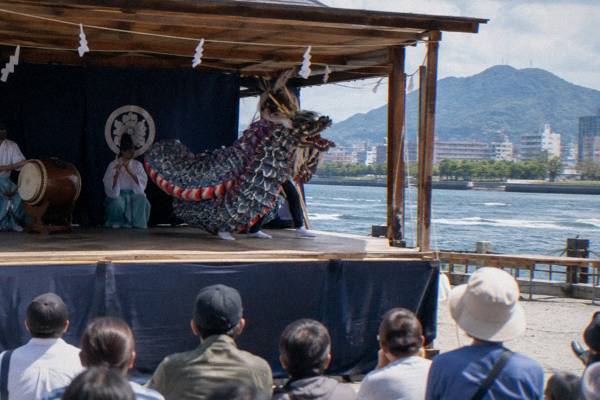
Hiroshima Festivals And Events Through The Year
Hiroshima's year runs from January's ekiden relay to December's torch fires on Miyajima, with the 6 August Peace Memorial Ceremony at its centre. Here is what happens, when, where and what it costs.
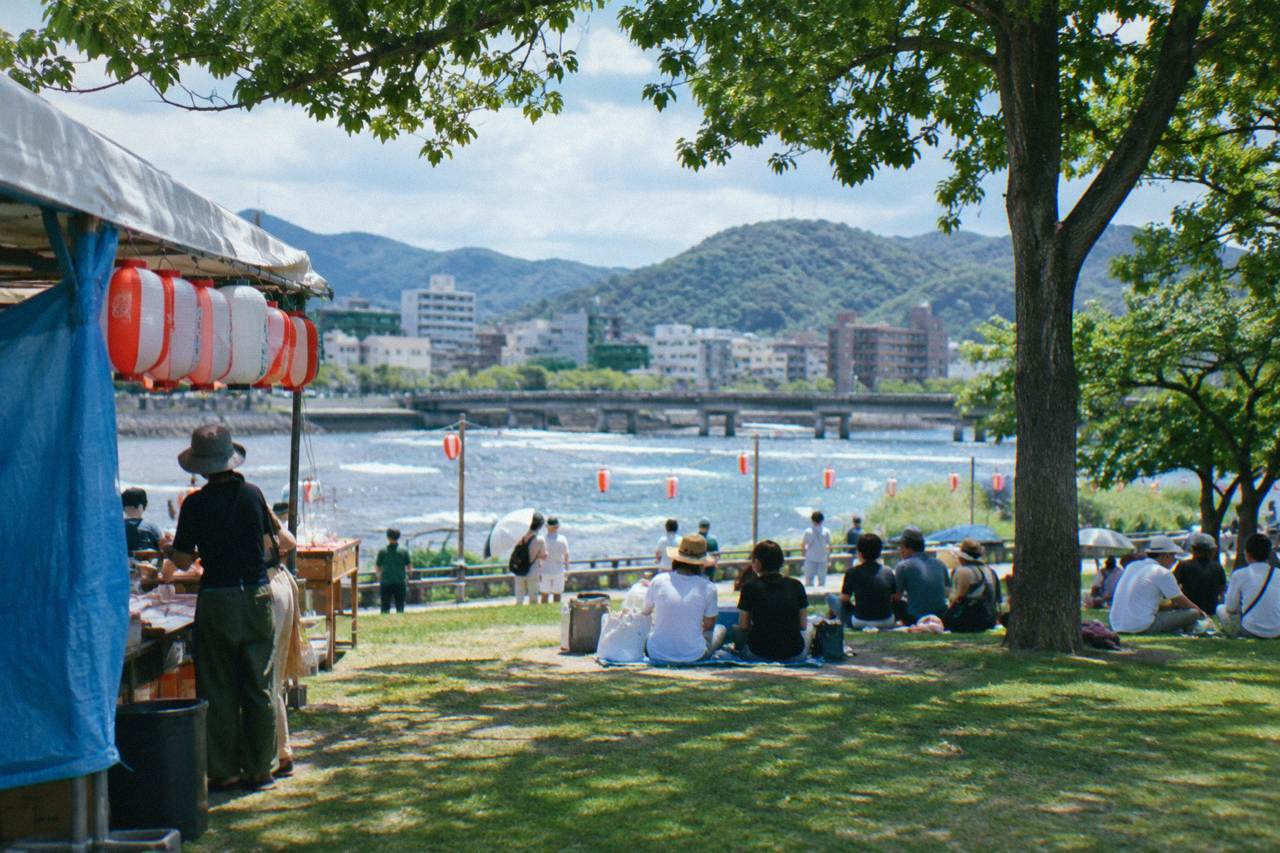
The biggest fixed date is the 6 August Peace Memorial Ceremony in Peace Memorial Park, 8:00 to about 8:50. Around it sit the Flower Festival in May, the Food Festival in late October and a run of Miyajima shrine rituals from October to New Year's Eve.
This page walks the calendar month by month, with the dates, venues and admissions the official pages report, plus the weather context from Japan Meteorological Agency (JMA) station data that decides which festival days are pleasant and which are wet.
What Are The Main Hiroshima Events Month By Month?
The Hiroshima calendar is anchored on 6 August, when the Peace Memorial Ceremony runs from 8:00 to about 8:50 at the Cenotaph for the A-bomb Victims in Peace Memorial Park, and it is ringed by major annual events in almost every month: an ekiden relay in January, cherry blossom events in April, the Flower Festival in May, a food festival in October and the Dream Illumination in December, with Miyajima shrine rituals stacked from October through New Year's Eve.
The city's own events listing places the Hiroshima Men's Ekiden relay race in January, the Sakura Matsuri at Hiroshima City Botanical Park in April, the Hiroshima Flower Festival in May, the Hiroshima Food Festival in October and the Hiroshima Dream Illumination in December as the fixed points of the year. August belongs to the Peace Memorial Ceremony and its surrounding programmes. Miyajima adds a second layer: the island's shrine calendar, published by the Miyajima tourism association, lists bugaku dance performances, fire rituals and torch ceremonies from mid-October to the end of December.
Put together, the year looks like this. The table records what the official pages report; times are as published for 2026.
| Month | Event | Venue | Reported Detail |
|---|---|---|---|
| January | Hiroshima Men's Ekiden | City streets | Listed as a major annual event |
| March | Hiroshima Minato Festa | Listed among major annual events | Port-area event |
| April | Sakura Matsuri | Hiroshima City Botanical Park | Cherry blossom season event |
| May | Hiroshima Flower Festival | Central Hiroshima | Listed as a major annual event |
| 1 August to 6 September | Hiroshima International Peace Culture Festival (Hirofes) | Venues across Hiroshima City | Music and media arts focus |
| 6 August | Peace Memorial Ceremony | Peace Memorial Park | 8:00 to about 8:50 |
| 15 October | Miyajima Chrysanthemum Festival (Kikka-sai) | Itsukushima Shrine | Bugaku from 17:00 to about 21:00 |
| 24 to 25 October | Hiroshima Food Festival | Hiroshima Castle square and nearby | 10:00 to 17:00, castle square to 20:00, free admission |
| 23 October | San-noh Shrine Festival | San-noh Shrine, Miyajima | Bugaku 10:00 to 11:00, free viewing |
| November | Fire rituals | Daiganji and Daisho-in temples, Miyajima | 3 and 15 November 2026 |
| 31 December | Chinka-sai | Mikasa-hama beach, Miyajima | About 1,000 torches, 18:00 to 18:30 |
| December | Hiroshima Dream Illumination | Central Hiroshima | Listed as a major annual event |
For the practical framing around these dates, the guides to getting around Hiroshima and where to stay in Hiroshima cover the tram network and the neighbourhood choices that decide how close you sleep to the main venues.
What Happens In Hiroshima In Spring?
Spring in Hiroshima brings the Sakura Matsuri at Hiroshima City Botanical Park in April and the Hiroshima Flower Festival in May, both listed by the city among its major annual events, and the season sits in the mildest weather window of the year: JMA 1991-2020 station normals give April a mean daily high of 19.8 °C and May 24.4 °C, with rain rising from 141.0 mm in April to 169.8 mm in May.
The fuller picture of blossom timing, viewing spots and the March-to-April spread across the city and Miyajima is covered in the dedicated Hiroshima cherry blossom guide. The Flower Festival follows in May, and the city lists it plainly as one of the major annual events on its calendar page.
Weather shapes how enjoyable these outdoor days are. The Japan Meteorological Agency (JMA) 1991-2020 normals for Hiroshima show the spring months like this.
| Month | Mean High °C | Mean Low °C | Rain mm |
|---|---|---|---|
| March | 14.5 | 5.1 | 118.3 |
| April | 19.8 | 10.1 | 141.0 |
| May | 24.4 | 15.1 | 169.8 |
Spring is also the comfortable walking season, and festival days cluster in the city centre, where the Peace Memorial Park, Hondori arcade and castle square are all within a compact radius. The things to do in Hiroshima overview maps that core. If a spring trip coincides with neither festival, the calendar's quiet months still carry the permanent sights, from the Peace Memorial Museum, whose adult admission is 200 yen, to Shukkeien garden at 350 yen for adults.
What Happens In Hiroshima In Summer?
Summer's defining event is the Peace Memorial Ceremony on 6 August, held from 8:00 to about 8:50 at the Cenotaph for the A-bomb Victims in Peace Memorial Park, and around it the city reports a Youth Peace Culture Event the same day from 9:00 to 17:00 at the Hiroshima International Conference Center with free admission, plus the third Hiroshima International Peace Culture Festival (Hirofes) running 1 August to 6 September 2026 across city venues.
The city page for 2026 gives the time window precisely, 8:00 to approximately 8:50, and the venue, the Cenotaph in Peace Memorial Park. The same-day Youth Peace Culture Event, reported by the city, runs 9:00 to 17:00 at the International Conference Center and parts of the Peace Memorial Museum inside the park, with free admission. Hirofes, reported for 2026 as its third edition, stretches the peace-themed programming across more than five weeks of music and media arts at venues in Hiroshima City and the wider urban area. The ceremony, its etiquette and its history have a page of their own: August 6 Peace Memorial Ceremony.
Summer heat is a real planning factor. The JMA 1991-2020 normals put July's mean daily high at 30.9 °C and August's at 32.8 °C, and July carries the year's heaviest rainfall at 279.8 mm. August, by contrast, drops to 131.4 mm of rain.
| Month | Mean High °C | Mean Low °C | Rain mm |
|---|---|---|---|
| June | 27.2 | 19.8 | 226.5 |
| July | 30.9 | 24.1 | 279.8 |
| August | 32.8 | 25.1 | 131.4 |
The Peace Memorial Museum extends its hours for the season: March to July it runs 7:30 to 19:00, August 7:30 to 20:00, and on 5 and 6 August to 21:00. Early-morning and evening slots require online reservation, per the museum's own information page. A guided walk through the park adds context that signboards cannot, and the Peace Memorial Park walking tour guide explains what a guided route covers.
Where Do Food And Autumn Events Fit In The Hiroshima Calendar?
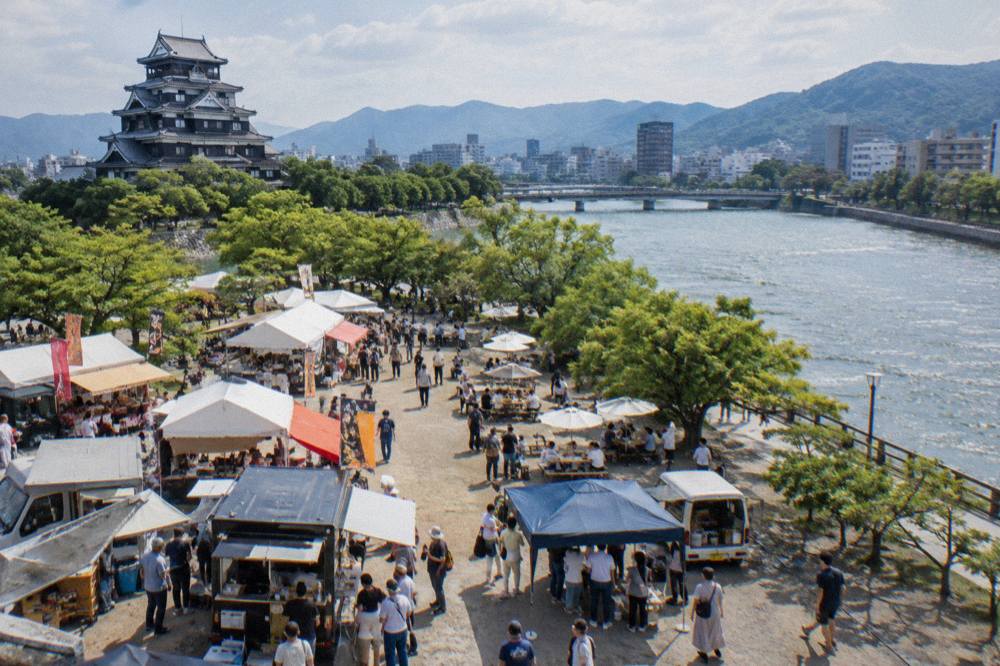
Autumn's headline is the Hiroshima Food Festival, reported for 24 to 25 October 2026 from 10:00 to 17:00, with the Hiroshima Castle square staying open to 20:00 and free admission across the castle and surrounding areas plus Hiroshimastadium Park, and it lands in the city's most temperate festival window: JMA normals give October a mean high of 23.7 °C and November 17.7 °C, with rain easing to 109.2 mm and 69.3 mm.
The Food Festival turns the castle district into an open-air tasting ground, and the city reports free admission, which makes it one of the genuinely free large events of the year. It also stands apart from the shrine calendar: no tickets, no ceremony schedule, just food stalls and evening hours at the castle square. The city lists the Food Festival among its major annual events, so the October slot recurs each year even as exact dates move.
Autumn is also the season when Miyajima's maple colour peaks, with Momijidani Park's roughly 700 maples typically turning between 10 and 30 November, and the autumn leaves at Momijidani guide tracks the illumination evenings that pair with it. The Japan Meteorological Agency (JMA) normals frame the season:
| Month | Mean High °C | Mean Low °C | Rain mm |
|---|---|---|---|
| September | 29.1 | 21.1 | 162.7 |
| October | 23.7 | 14.9 | 109.2 |
| November | 17.7 | 8.9 | 69.3 |
The related tour for this page, a private Hiroshima and Miyajima island day with a guide, can be booked for the quieter shoulder days around the festival weekend: Check availability.
What Miyajima Shrine Events Fill The Late Year?
Miyajima's shrine calendar reports the Chrysanthemum Festival (Kikka-sai) on 15 October with bugaku dance from 17:00 to about 21:00 at Itsukushima Shrine requiring the 300 yen shrine admission, the San-noh Shrine Festival on 23 October with free bugaku viewing from 10:00 to 11:00, a fire ritual at Daiganji Temple on 3 November from 13:30 to 15:30, and Daisho-in Temple's fire walking ceremony on 15 November starting at 11:00.
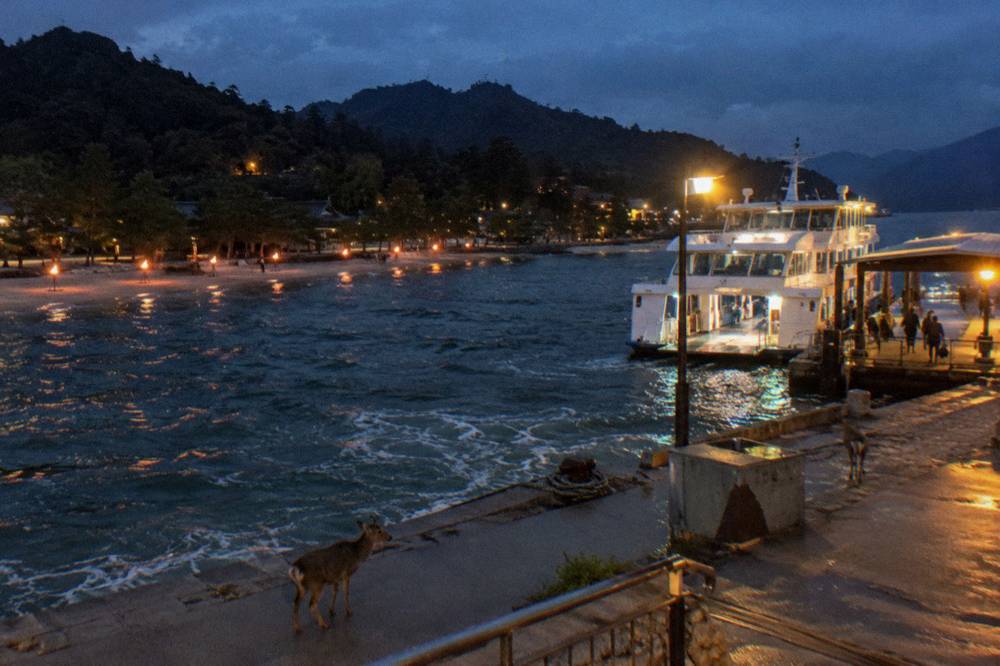
These are working religious rituals, not staged shows, and the Miyajima tourism association's English event calendar is the source for the times above. The 3 November Great Buddha Fudoh-myo-oh Goma fire ritual at Daiganji Temple is followed by a fire-walking ceremony, and Daisho-in Temple holds its own fire walking ceremony on 15 November. Two smaller shrine festivals, the Ara-ebisu Shrine Festival and the Nagahama Shrine Festival, both fall on 20 November, each from 11:00 to 12:00. The Chinka-sai fire-warding ritual closes the year on 31 December with about 1,000 torches lit from 18:00 to 18:30 at Mikasa-hama beach.
Admission and access are straightforward but not uniform. Itsukushima Shrine charges 300 yen for adults, 200 yen for high school students and 100 yen for elementary and junior high students; the San-noh Shrine bugaku viewing is free; the temple events carry the temples' own admission arrangements. Reaching the island means the ferry crossing from Miyajimaguchi, about 10 minutes, plus the 100 yen Miyajima visitor tax charged on entry, and the full route, train, tram and both ferry operators, is broken down in Hiroshima to Miyajima.
| Date (2026) | Event | Venue | Time | Admission |
|---|---|---|---|---|
| 15 October | Kikka-sai, bugaku | Itsukushima Shrine | 17:00 to about 21:00 | 300 yen shrine entry |
| 23 October | San-noh Shrine Festival, bugaku | San-noh Shrine | 10:00 to 11:00 | Free viewing |
| 3 November | Goma fire ritual and fire walking | Daiganji Temple | 13:30 to 15:30 | Not listed |
| 15 November | Fire walking ceremony | Daisho-in Temple | From 11:00 | Not listed |
| 20 November | Ara-ebisu and Nagahama shrine festivals | Respective shrines | 11:00 to 12:00 | Not listed |
| 31 December | Chinka-sai, about 1,000 torches | Mikasa-hama beach | 18:00 to 18:30 | Free |
One November note matters for anyone pairing the shrine rituals with the summit: the Miyajima ropeway, 2,000 yen return for adults, requires advance online reservation for the uphill ride on the peak-colour weekends of 1, 7, 8, 14, 15, 21, 22, 23, 28 and 29 November 2026. The ropeway runs 9:00 to 16:00 uphill with the last car down around 16:30.
What Winter And New Year Events Close The Hiroshima Year?
Winter in Hiroshima runs from the Dream Illumination, listed by the city among its major December events, through the Miyajima Chinka-sai torch ritual on 31 December and into the Hiroshima Men's Ekiden relay in January, and it is the dry, quiet end of the calendar: JMA 1991-2020 normals give December a mean high of 12.1 °C with 54.0 mm of rain and January 9.9 °C with 46.2 mm, the lowest monthly rainfall of the year.
Getting back depends on the ferry timetable; the JR ferry's last departure from Miyajima is 22:14 on a regular day, and Matsudai Kisen runs its own evening schedule. Staying on the island overnight, which the Miyajima overnight guide covers in the sibling set, removes the last-crossing question entirely.
Winter normals for context:
| Month | Mean High °C | Mean Low °C | Rain mm |
|---|---|---|---|
| December | 12.1 | 4.0 | 54.0 |
| January | 9.9 | 2.0 | 46.2 |
| February | 10.9 | 2.4 | 64.0 |
How Do You Plan A Trip Around Hiroshima Events?
Plan backwards from the one fixed date, 6 August, book accommodation early for the ceremony week, check the city and Miyajima event pages each spring for exact dates, and let the JMA normals guide your packing: July brings 279.8 mm of rain, August the warmest at a 32.8 °C mean high, and the October-to-November festival window combines 23.7 °C and 17.7 °C mean highs with the year's lowest post-summer rainfall.
6 August and several shrine rituals fall on fixed dates: Kikka-sai on 15 October, the Daisho-in fire walking on 15 November, and Chinka-sai on 31 December. The Flower Festival and the Food Festival move within their months from year to year, so a trip planned around a specific event needs a date check close to travel. The choices that shape the trip, how many days to allow and where to base, are covered in the best time to visit Hiroshima and Hiroshima weather guides, and transport framing for arrival is in Hiroshima station and Hiroshima airport.
A few practical constants hold on any festival day. The Hiroden tram flat fare is 240 yen for adults and 120 yen for children on all lines, and the one-day streetcar pass costs 700 yen, or 1,000 yen including the Matsudai Kisen ferry to Miyajima. The Peace Memorial Museum's adult admission is 200 yen year-round. Itsukushima Shrine opens at 6:30 except on 1 January, and its hours vary by season, 6:30 to 18:00 from March to mid-October and 6:30 to 17:30 from mid-October to the end of November, which sets the window for festival-day shrine visits.
To cover rides and sights across the city, book a Have Fun in Hiroshima pass here.
For ceremony week in particular, a guided structure saves the most time, since a guide handles the museum reservation windows, the park geography and the island crossing in one booked day. The two most relevant formats, alongside the dinner walk for the food festival weekend, are below.
Which Hiroshima Events Are Free And Which Need Tickets?
Free events include the Peace Memorial Ceremony at Peace Memorial Park, the San-noh Shrine Festival and Chinka-sai on Miyajima, and the reportedly free Youth Peace Culture Event and Hiroshima Food Festival. Ticketed events are Kikka-sai bugaku at the 300 yen Itsukushima Shrine admission, the Miyajima ropeway on autumn weekends at 2,000 yen return, and the Peace Memorial Museum at 200 yen adult admission.
The split matters for budgeting a festival weekend. The free things to do in Hiroshima guide on the Hiroshima Travel Guide site extends this layer to the non-event sights, including the A-Bomb Dome, viewable from outside its fence with no fee.
| Event | Venue | Admission |
|---|---|---|
| Peace Memorial Ceremony | Peace Memorial Park, Cenotaph | Free |
| Youth Peace Culture Event | Hiroshima International Conference Center | Free, reported |
| Hiroshima Food Festival | Hiroshima Castle and surrounding areas | Free, reported |
| Kikka-sai bugaku | Itsukushima Shrine | 300 yen shrine entry |
| San-noh Shrine Festival | San-noh Shrine, Miyajima | Free viewing |
| Chinka-sai | Mikasa-hama beach, Miyajima | Free |
| Miyajima ropeway (autumn weekends) | Mount Misen | 2,000 yen return adult, reservation required on peak dates |
What Should First-Time Visitors Know About Event-Day Etiquette?
Event days in Hiroshima, above all 6 August, call for quiet, respectful conduct: the Peace Memorial Ceremony is a memorial occasion from 8:00 to about 8:50, photography should stay unobtrusive, and the same restraint applies at Miyajima's temple fire rituals, which are religious ceremonies, while the food festival and illumination events are ordinary festive occasions where normal courtesy applies.
Visitors are welcome, and the etiquette is the etiquette of any memorial: arrive early, stay quiet, keep phones silent, and photograph people's grief neither closely nor conspicuously. The dedicated etiquette at the Peace Park guide sets out the official guidance in full, and Hiroshima history for visitors gives the factual background a first-time visitor needs before the morning.
At the food festival and the Dream Illumination, the register is simply festive, and the ordinary courtesies of queuing and carrying out rubbish apply.
Common Questions About Hiroshima Festivals And Events
What Is The Biggest Event In Hiroshima?
The Peace Memorial Ceremony on 6 August, held from 8:00 to about 8:50 at the Cenotaph for the A-bomb Victims in Peace Memorial Park, is the city's defining annual occasion.
Is The Hiroshima Peace Memorial Ceremony Open To Everyone?
Yes, the ceremony in Peace Memorial Park is a public memorial occasion. The city page reports about 7,000 seats plus about 2,200 indoor seats at the adjacent International Conference Center.
When Is The Hiroshima Food Festival?
The city reports the 2026 edition for 24 to 25 October, 10:00 to 17:00, with the Hiroshima Castle square open to 20:00, admission free.
Do Miyajima Shrine Events Cost Extra?
The Kikka-sai bugaku on 15 October requires the standard 300 yen Itsukushima Shrine admission, while the San-noh Shrine Festival bugaku on 23 October is reported with free viewing.
What Happens On Miyajima On New Year's Eve?
The Chinka-sai fire-warding ritual lights about 1,000 torches at Mikasa-hama beach from 18:00 to 18:30 on 31 December.
Which Month Has The Best Festival Weather In Hiroshima?
The Japan Meteorological Agency (JMA) 1991-2020 normals show October and November combine mean highs of 23.7 °C and 17.7 °C with 109.2 mm and 69.3 mm of rain.
However the dates fall in any given year, the structure holds: one solemn fixed morning in August, a spring and autumn pair of street festivals in the city, and a late-year chain of fire and shrine rituals across the water on Miyajima, all reachable on a 240 yen tram fare and a 10-minute ferry crossing.