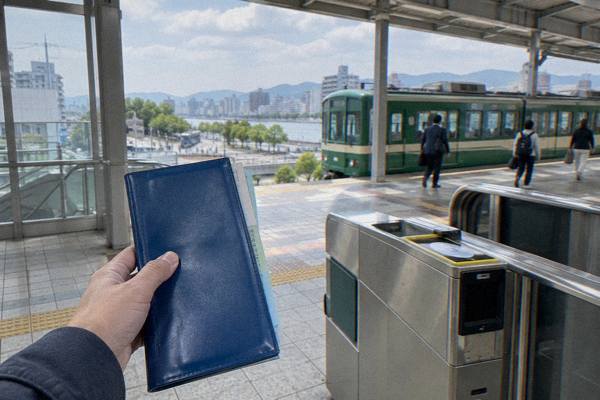
Hiroshima To Fukuoka And Nagasaki
Hiroshima is about an hour from Fukuoka's Hakata Station, and Nagasaki sits about two and a half to three hours further west with one or two transfers. This guide sets out the fares, the routes and how to plan the trip.
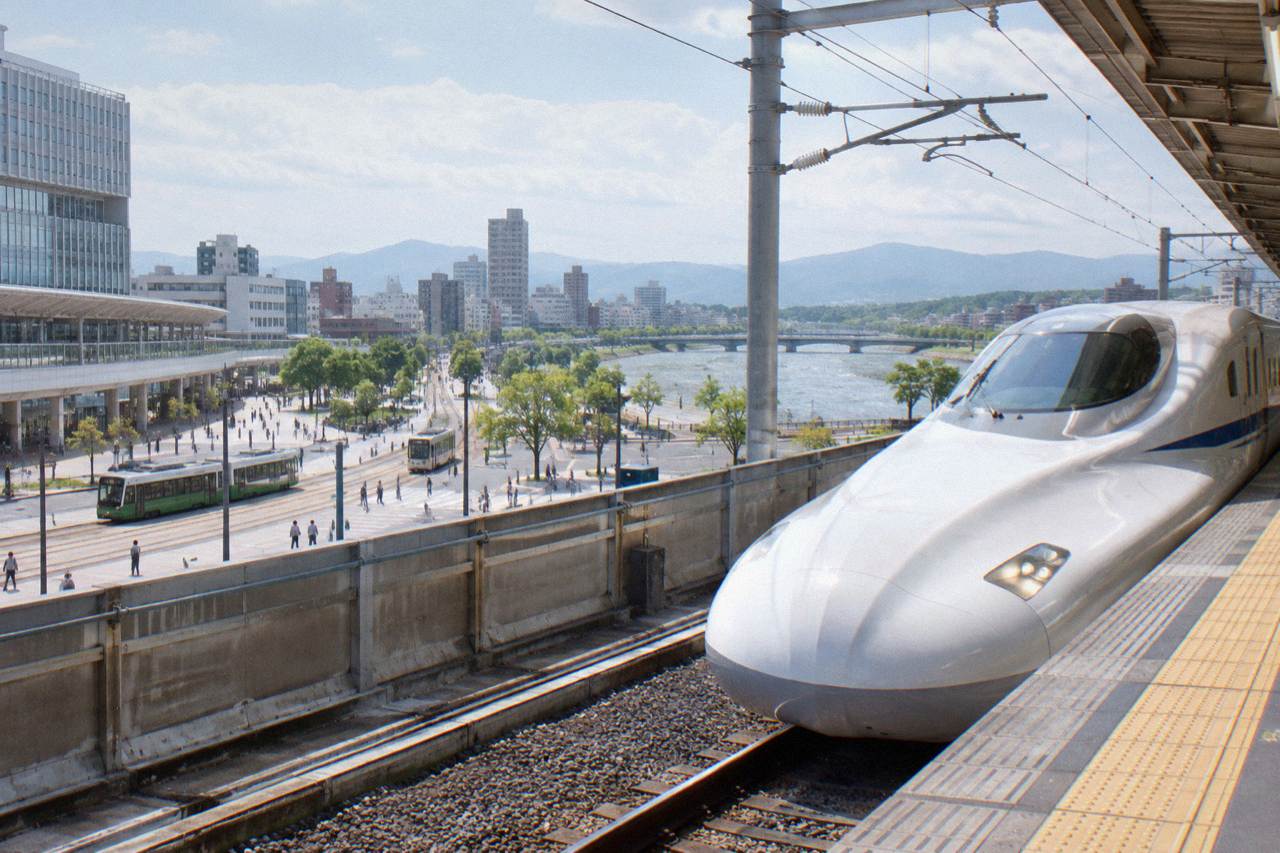
The fastest Shinkansen from Hiroshima to Hakata in Fukuoka takes about 1 hour 1 minute and costs 8,570 yen unreserved. Hiroshima to Nagasaki takes as little as about 2 hours 38 minutes with transfers, reported at 13,870 yen.
This guide sets out the fares, the train services, the discount ticket options and how the three cities fit together in a single itinerary.
Before the rail details, one framing point. Hiroshima is a city in Hiroshima Prefecture on the Seto Inland Sea, and both Fukuoka and Nagasaki lie to its west along the Kyushu side of the network. Everything in this page runs west from Hiroshima Station. If the planning stage is earlier than that, the guides to getting around Hiroshima and where to stay in Hiroshima cover the city end first.
How Do You Travel From Hiroshima To Fukuoka?
Take the Sanyo Shinkansen from Hiroshima Station to Hakata Station, Fukuoka's main rail hub, about 280 km away. The fastest Mizuho or Nozomi services take about 1 hour 1 minute, Hikari or Sakura trains are slower, and the Kodama serves all stations. An unreserved seat costs 8,570 yen, while a reserved standard seat is 9,630 yen on a Nozomi or Mizuho and 9,100 yen on a Hikari or Sakura.
Fukuoka's main rail hub is Hakata, and the same line serves the return direction with identical regular fares, with the Hiroshima to Hakata unreserved fare at 8,570 yen.
The Sanyo Shinkansen has both reserved and unreserved cars. A reserved standard seat on a Nozomi or Mizuho from Hiroshima to Hakata is 9,630 yen at the regular fare, and on a Hikari or Sakura the standard reserved fare is 9,100 yen, per the fare listing for the line. The unreserved fare of 8,570 yen applies regardless of train type. Green Car travel on the Nozomi or Mizuho is listed at 13,290 yen regular fare.
Reservations can be made through the JR West online train reservation service for the Sanyo and Kyushu Shinkansen, with booking open up to one month in advance from 10:00 am Japan time.
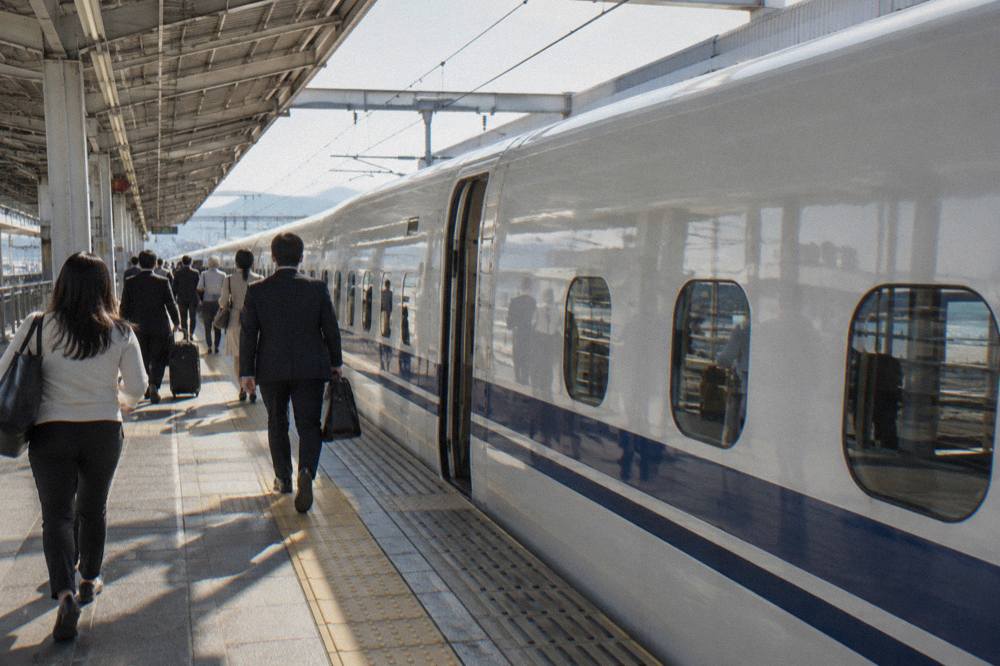
| Service | Hiroshima To Hakata Time | Notes |
|---|---|---|
| Mizuho or Nozomi | About 1 hour 1 minute | Fastest services on the line |
| Hikari or Sakura | Longer than the fastest services | Reserved fare 9,100 yen |
| Kodama | Longest, all stations | Serves intermediate stops |
What Does The Hiroshima To Fukuoka Shinkansen Cost?
A regular one-way unreserved seat from Hiroshima to Hakata costs 8,570 yen, a reserved standard seat on Nozomi or Mizuho costs 9,630 yen, and the same reserved seat on Hikari or Sakura costs 9,100 yen, per the line's fare listing. A Green Car seat on Nozomi or Mizuho lists at 13,290 yen. For temporary visitors holding a passport, the JR West Sanyo-Shinkansen one-way discount ticket from Hakata to Hiroshima costs 6,300 yen for an adult, which is the direction the discount listing publishes.
The discount ticket is worth understanding in both directions even though the listing publishes it from Hakata. It requires passport and temporary-visitor status, it is not available to Japanese nationals, it is valid all year, and one change is allowed with fees. Against the 8,570 yen regular unreserved fare, the 6,300 yen one-way ticket is a clear saving on the corridor it covers.
| Fare Type, Hiroshima To Hakata | Regular Fare |
|---|---|
| Unreserved seat, any train | 8,570 yen |
| Reserved standard seat, Nozomi or Mizuho | 9,630 yen |
| Reserved standard seat, Hikari or Sakura | 9,100 yen |
| Green Car, Nozomi or Mizuho | 13,290 yen |
| Sanyo-Shinkansen one-way discount ticket, adult, temporary visitor | 6,300 yen |
A one-day city option, the 1-Day Visit Hiroshima Tourist Pass, is for the city itself, not this corridor.
How Do You Travel From Hiroshima To Nagasaki?
There is no single through train from Hiroshima to Nagasaki; the trip works as two bookings or one through-fare. The reported route runs on the Sanyo Shinkansen, fastest Mizuho or Nozomi, to Hakata, then continues with 2 transfers, often at Takeo Onsen onto the Kamome Shinkansen, taking as little as about 2 hours 38 minutes in total, reported at 13,870 yen. A general planning range for the fastest Hiroshima to Nagasaki journeys is about 2.5 to 3 hours via Hakata.
The Hiroshima to Hakata leg is the corridor described above, with all its fare options. From Hakata, the Kyushu side of the journey continues toward Nagasaki, and the reported fastest combinations involve the limited-express or Kamome services with the transfer pattern that route search returns. Nagasaki's own memorial museum and the city's sites are covered from the comparison angle in the Hiroshima or Nagasaki guide.
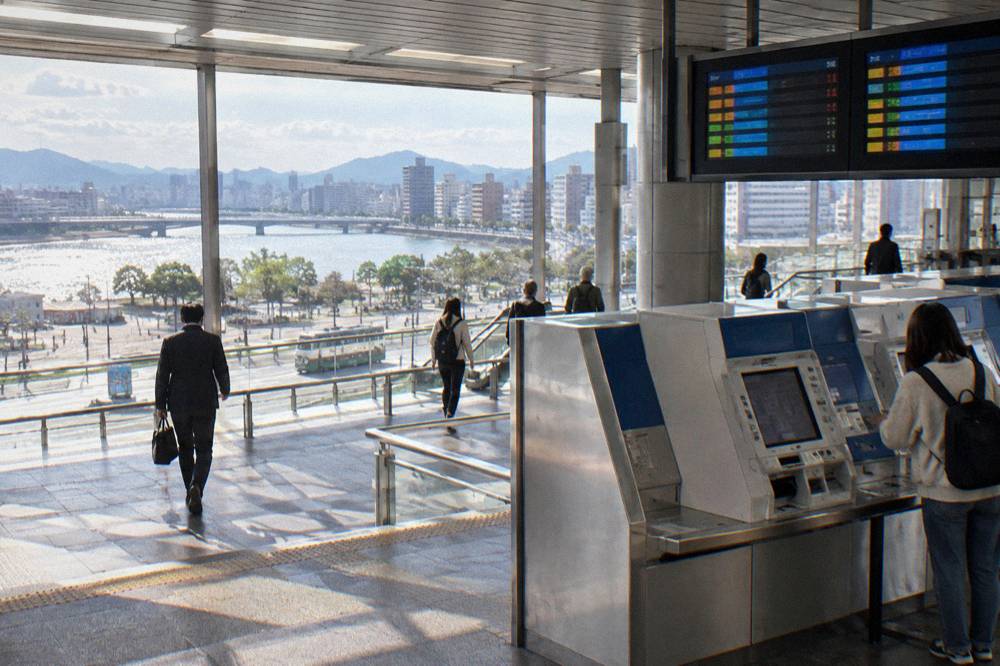
Hakata Station is a large interchange. The station has Shinkansen tracks 11 to 16 alongside the conventional lines, with multiple ticket gates including the Central and North Transfer Gates, as reported in the JR West station document. Transfer time between the Shinkansen and conventional parts of the station is part of any Nagasaki connection, and the published minimum connection times in route searches account for it.
| Leg | Route | Reported Time |
|---|---|---|
| Hiroshima to Hakata | Sanyo Shinkansen, fastest Mizuho or Nozomi | About 1 hour 1 minute |
| Hakata to Nagasaki | Transfer at Takeo Onsen onto Kamome, as reported | Remainder of about 2 hours 38 minutes total |
| Hiroshima to Nagasaki, whole journey | Via Hakata with 2 transfers | As little as about 2 hours 38 minutes, reported at 13,870 yen |
Hiroden streetcars make reaching the departure point easy. The trams are reported to stop inside the Hiroshima Station building at second-floor level, a change dated 3 August 2025 within the new structure that opened in March 2025. Fares have been flat since 1 February 2025, so every line, including the Miyajima line, costs 240 yen per adult and 120 yen per child.
Travelers arriving by air can connect directly. The airport limousine bus reaches the Hiroshima Station Shinkansen exit in about 50 minutes, at 1,500 yen adult and 750 yen child from Bus Stop 2, and IC cards are accepted. The same service also stops at the Hiroshima Bus Center in about 55 minutes at the same fare, boarding from Stop 1.
One budgeting note: the seven-day ordinary Japan Rail Pass is reported to rise to 53,000 yen on 1 October 2026, so confirm the current price when planning the Nagasaki trip.
Should You Visit Hiroshima Or Nagasaki For The Peace Memorials?
Both cities hold atomic-bomb memorials and both museums charge 200 yen general adult admission: the Hiroshima Peace Memorial Museum lists 200 yen for college students and up with high school students at 100 yen, and the Nagasaki Atomic Bomb Museum lists 200 yen for visitors 15 and older with high school students and below free. The two museums keep different calendars, with Hiroshima closing 30 and 31 December and mid-February, and Nagasaki closing 29 to 31 December.
The two cities are not duplicates, and the honest answer is that the Shinkansen link makes visiting both realistic rather than choosing. The Hiroshima museum's hours run from 7:30 am to 7:00 pm across March to July and September to November, extending to 8:00 pm in August and to 9:00 pm on 5 and 6 August, and shortening to 6:00 pm close from December to February. Nagasaki opens 8:30 am to 5:30 pm through April and September to March, and 8:30 am to 6:30 pm from May to August, with entry cut off half an hour before close in each case. A same-day museum visit in either city therefore needs the closing time checked against the arrival train. Other pages covering the same trip are gathered on Hiroshima Travel Guide.
| Item | Hiroshima Peace Memorial Museum | Nagasaki Atomic Bomb Museum |
|---|---|---|
| General adult admission | 200 yen, college and up | 200 yen, age 15 and up |
| Student admission | High school 100 yen, junior high and younger free | High school and below free, student ID required |
| Group rate | 160 yen for groups of 30 or more | Group rates abolished |
| Closures | 30 and 31 December, mid-February | 29 to 31 December |
| Summer evening hours | To 9:00 pm on 5 and 6 August | To 8:00 pm on 7 to 9 August |
The guided tour with the Itsukushima Shrine and ferry crossing pairs the park side of the city with Miyajima in one booked day, which suits a schedule that leaves for Fukuoka the following morning. Check availability.
Can You Combine Hiroshima, Fukuoka And Nagasaki In One Trip?
Yes, the three cities chain naturally westward: Hiroshima to Hakata is about 1 hour 1 minute by the fastest Shinkansen, and Hiroshima to Nagasaki is as little as about 2 hours 38 minutes reported with transfers, so a Hiroshima, Fukuoka, Nagasaki sequence needs only two rail days. The corridor is about 280 km from Hiroshima to Hakata, and the Sanyo-Shinkansen one-way discount ticket at 6,300 yen covers a qualifying adult trip on it for temporary visitors. The order can run either way.
The decision that shapes the itinerary is where Miyajima sits. The island is reached by a JR train of about 25 to 30 minutes from Hiroshima Station to Miyajimaguchi, reported at 420 yen one way, followed by the roughly 10-minute ferry. The JR West Miyajima Ferry one-way adult fare is 200 yen, with the 100 yen Miyajima visitor tax charged separately on entering the island, and the Japan Rail Pass covers the JR train and the JR ferry but not the visitor tax. All of this is detailed in the Hiroshima to Miyajima guide.
A workable shape is two nights in Hiroshima with a Miyajima day between them, then the morning Shinkansen to Hakata, a night or two in Fukuoka, and the onward connection to Nagasaki before returning east. Travellers arriving from the Kansai side can read the Osaka to Hiroshima and Kyoto to Hiroshima guides for the inbound leg, and the Hiroshima trip cost guide for budgeting the whole route.
What Does The Region's Weather Mean For Planning?
The Japan Meteorological Agency station normals for Hiroshima, 1991 to 2020, show July as the month with the highest rain total at 279.8 mm and January the lowest at 46.2 mm, with August the warmest at a mean daily high of 32.8 °C and January the coolest at a mean daily low of 2.0 C. Rain totals fall from July's 279.8 mm to 131.4 mm in August.
The rail corridor itself is rarely the constraint; the Shinkansen runs regardless of seasonal rain. The Itsukushima Shrine's corridor floorboards have gaps that let high-tide pressure through, and the shrine's admission page advises comfortable shoes, which matters more in the wet months.
| Month | Mean High °C | Mean Low °C | Rain mm |
|---|---|---|---|
| January | 9.9 | 2.0 | 46.2 |
| April | 19.8 | 10.1 | 141.0 |
| July | 30.9 | 24.1 | 279.8 |
| August | 32.8 | 25.1 | 131.4 |
| October | 23.7 | 14.9 | 109.2 |
| November | 17.7 | 8.9 | 69.3 |
For month-by-month framing on the Hiroshima end, the best time to visit Hiroshima and Hiroshima weather guides carry the full normals table, and the autumn colour around Miyajima's Momijidani Park, roughly 700 maple trees with typical peak colour from 10 to 30 November, is covered in the Miyajima autumn leaves guide.
What Do Local Transport And Entry Fees Add To The Budget?
Within Hiroshima the Hiroden streetcar charges a flat 240 yen adult and 120 yen child fare on every line including the Miyajima line, Itsukushima Shrine charges 300 yen adult admission, and the Miyajima Ropeway lists 2,000 yen adult return, so a Miyajima day adds these local fares, entry fees and the 100 yen visitor tax item by item rather than as a bundle. The 100 yen Miyajima visitor tax applies on each island entry. These figures come from the operator pages themselves.
The breakdown matters because the Shinkansen fare is only the intercity part. In Fukuoka and Nagasaki the equivalent local costs sit outside this page's figures, but the Hiroshima end is fully documented: the Peace Memorial Museum at 200 yen, Shukkeien garden at 350 yen adult with school students free since 14 April 2025, and the Hiroden 1-day streetcar pass at 700 yen adult covering all lines. The Visit Hiroshima Tourist Pass at 1,000 yen for one day covers streetcars, ferries and buses, and the Hiroden 1-day streetcar and ferry pass at 1,000 yen adds the Matsudai Kisen ferry crossing to Miyajima.
| Item | Adult Figure |
|---|---|
| Hiroden streetcar, any line, flat fare | 240 yen |
| Hiroden 1-day streetcar pass | 700 yen |
| Visit Hiroshima Tourist Pass, 1 day | 1,000 yen |
| Hiroden 1-day streetcar and ferry pass | 1,000 yen |
| JR ferry to Miyajima, one way | 200 yen |
| Miyajima visitor tax, per entry | 100 yen |
| Itsukushima Shrine admission | 300 yen |
| Miyajima Ropeway, return | 2,000 yen |
| Peace Memorial Museum | 200 yen |
| Shukkeien garden | 350 yen |
One dated note on the Hiroshima end: the Hiroden tram now enters the Hiroshima Station building on its second floor, a change reported since 3 August 2025, which shortens the transfer between the streetcar and the Shinkansen platforms. The Hiroshima Station guide covers the layout in detail.
Which Rail Pass Or Discount Ticket Pays Off On This Route?
The Sanyo-Shinkansen one-way discount ticket at 6,300 yen adult undercuts the 8,570 yen regular unreserved Hiroshima to Hakata fare for eligible temporary visitors, and the five-day JR Hiroshima Yamaguchi Area Pass at 15,000 yen and the Kansai Hiroshima Area Pass at 17,000 yen suit longer regional routes rather than a single one-way trip. Eligibility requires a passport and temporary-visitor status, with one change allowed and fees. The discount ticket is valid all year.
The arithmetic is simple enough to run before booking: compare the discount ticket against the regular unreserved fare for each qualifying leg, and weigh a regional pass only when the itinerary adds the Yamaguchi coast, the Kansai side or multiple Miyajima crossings. The JR ferry and JR train to Miyajimaguchi are covered by the Japan Rail Pass while the 100 yen visitor tax never is. The reservation window for JR West online booking runs to one month ahead from 10:00 am JST, which sets the latest decision point for either a pass or the discount ticket.
If the Yamaguchi coast is part of the plan, book a regional rail pass here.
For the Miyajima day that precedes the train west, the visitor tax detail repeats across every entry to the island: 100 yen each time, collected with the ferry ticket, preschool children exempt. The shrine keeps seasonal hours, from 6:30 am to 6:00 pm between 1 March and 14 October and closing progressively earlier into winter, so a late ferry back still leaves evening viewing of the Great Torii from the shore.
Common Questions About Hiroshima To Fukuoka And Nagasaki
How Long Is The Train From Hiroshima To Fukuoka?
The fastest Mizuho or Nozomi Shinkansen covers the about 280 km from Hiroshima to Hakata in approximately 1 hour 1 minute, with Hikari, Sakura and Kodama services taking longer.
How Much Is The Shinkansen From Hiroshima To Fukuoka?
The regular one-way fare is 8,570 yen unreserved, 9,630 yen reserved on Nozomi or Mizuho, 9,100 yen reserved on Hikari or Sakura, and 13,290 yen in the Green Car. Eligible temporary visitors can use the 6,300 yen Sanyo-Shinkansen one-way discount ticket.
How Do You Get From Hiroshima To Nagasaki?
Take the Sanyo Shinkansen to Hakata, then continue toward Nagasaki, as reported with a transfer at Takeo Onsen onto the Kamome Shinkansen, for a total journey reported as little as about 2 hours 38 minutes at 13,870 yen.
Is Hiroshima Or Nagasaki Better For A Peace Memorial Visit?
The practical details matter here. The Hiroshima Peace Memorial Museum extends its August hours to 9:00 pm on 5 and 6 August, and the Nagasaki Atomic Bomb Museum admits high school students and below free, so the difference is practical rather than a ranking.
Does The Japan Rail Pass Cover The Ferry To Miyajima?
Yes, the Japan Rail Pass covers the JR train to Miyajimaguchi and the JR West Miyajima Ferry, but not the 100 yen Miyajima visitor tax, which is charged separately on entering the island.
Can You Do Hiroshima And Fukuoka In One Day?
Yes on paper, since the fastest link is about 1 hour 1 minute each way, but a same-day return leaves little time in either city; an overnight in Fukuoka keeps the rail spend and the sightseeing in balance.
The through-fare arithmetic, the discount ticket and the transfer pattern at Hakata are the three things worth locking in before anything else on this route, and everything above rests on the operator and station figures as listed.