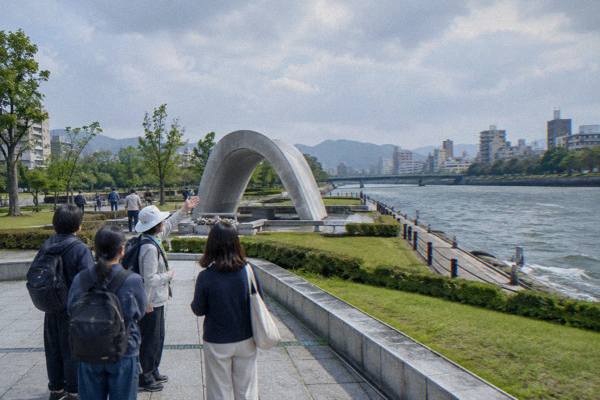
Hiroshima History For Visitors: 1589, 1945 And The Rebuilt City
Founded as a castle town by Mori Terumoto in 1589 and rebuilt after the atomic bombing of 6 August 1945, Hiroshima is a city on the Seto Inland Sea where the Peace Memorial Park, the castle grounds and the streets downtown each tell a different century.
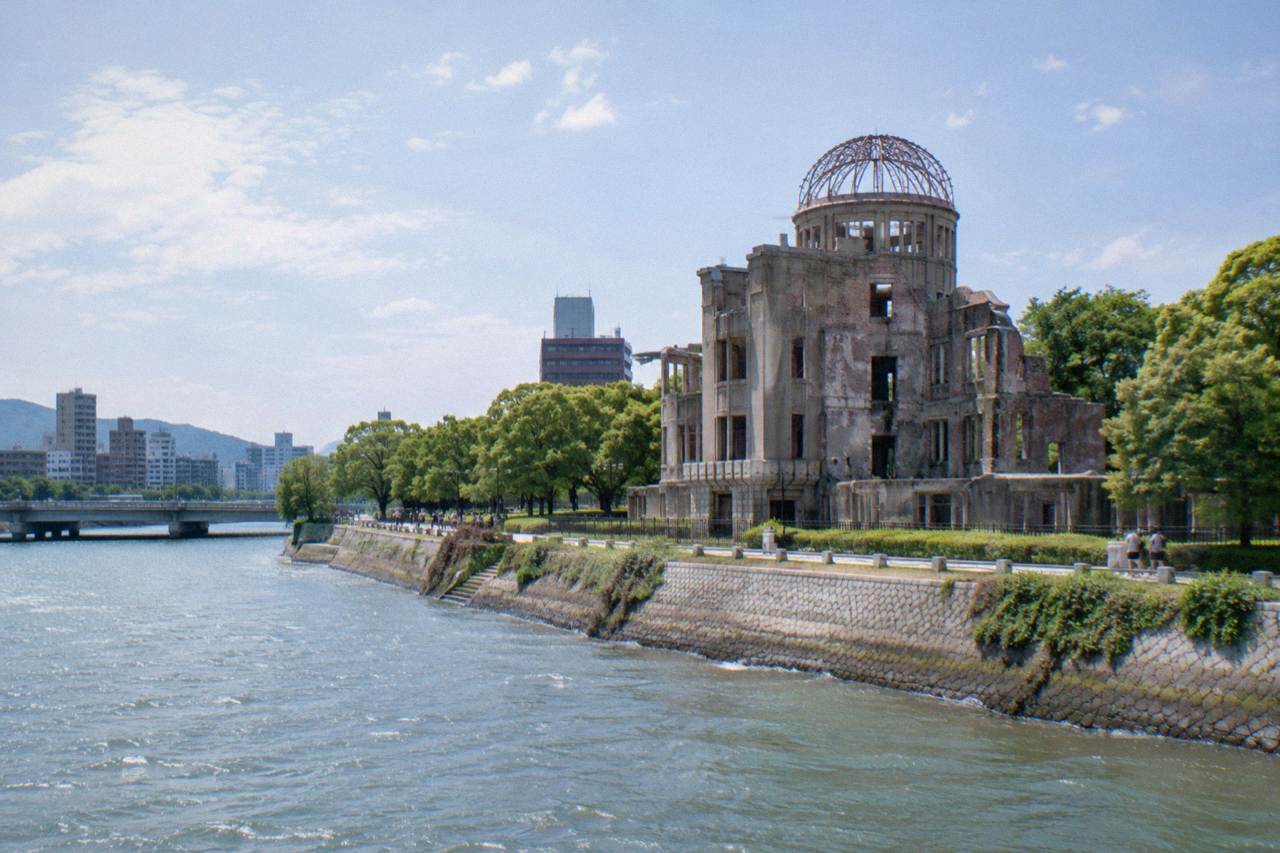
Hiroshima's history for visitors centers on three chapters: Mori Terumoto's castle founded in 1589, the atomic bombing at 8:15 a.m. on 6 August 1945, and the recovery that followed, from streetcars running again three days later to the Peace Memorial Museum opened in 1955.
The city's own tourism pages and the Hiroshima Prefecture peace site carry the dates and figures below, and this guide reports them as those sources give them. Read it before you visit and the Peace Memorial Park, the castle grounds and the streets downtown will each tell you a different century.
When Was Hiroshima Founded As A Castle Town?
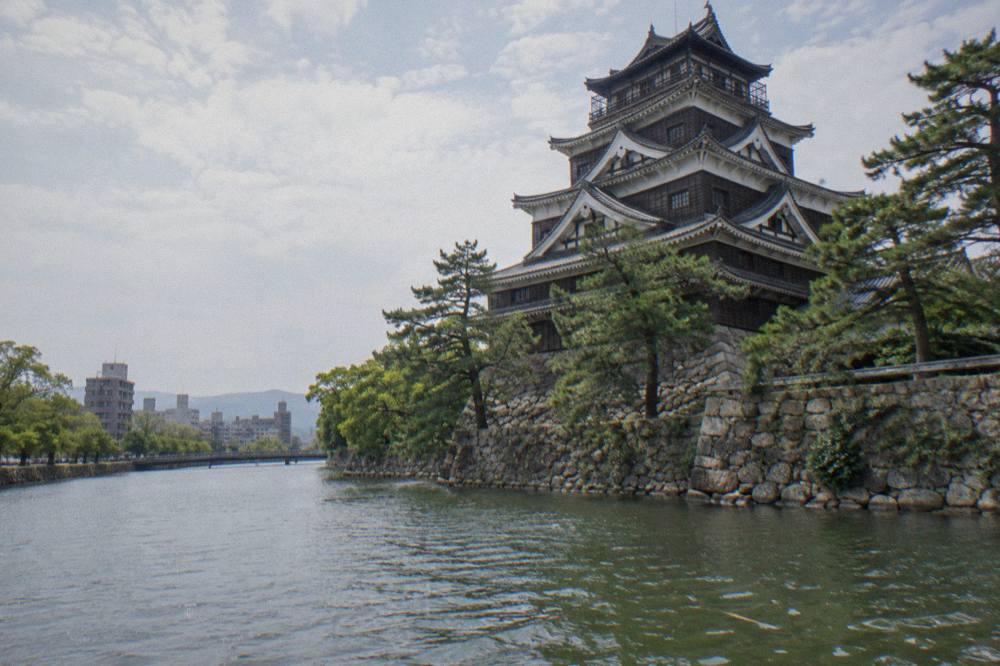
Hiroshima's history as a castle town began in 1589, when the warlord Mori Terumoto started construction of Hiroshima Castle on the Ota River delta, and the build took about two years to complete, according to the Hiroshima Prefecture reconstruction page. The castle site was designated a national historic site in 1953, and the original keep was designated a former national treasure in 1931.
That founding date makes Hiroshima a relatively young city by Japanese standards, a deliberate political creation rather than a settlement that grew around a shrine or a port. The city's tourism history page records the founding year plainly, and the prefecture's English reconstruction page adds the construction span of about two years. For more on the city, see the Hiroshima Travel Guide.
Three dated layers from the official pages frame everything a visitor sees at the castle site today.
| Year | Event | Source detail |
|---|---|---|
| 1589 | Mori Terumoto begins Hiroshima Castle | Construction took about two years |
| 1931 | Original keep designated a former national treasure | City history page |
| 1953 | Castle site designated a national historic site | City history page |
The keep that stands inside the moat now is not the 1589 structure, and the story of what happened to the original is one of the clearest ways this city's two histories, the castle town and the bombing, connect. That fuller story sits further down this page in the castle section.
Who Ruled Hiroshima Before 1945?
From 1619 the Asano clan held the Hiroshima Domain, with Asano Nagaakira becoming lord that year, and the family ruled for 12 generations across about 250 years, according to the city's own history page. In 1888 the Imperial Japanese Army's Fifth Division was established in the city, and Ujina Port was completed in 1889, turning Hiroshima into a military and shipping hub.
The Asano centuries gave the city its stable Edo-period identity as a castle town of warehouses, merchant streets and samurai quarters on the delta islands. The two dates of 1888 and 1889 changed its character: a garrison and a modern port moved Hiroshima into the national story, and by the years before 1945 it was a substantial city. The prefecture's page puts the pre-bombing population on 6 August 1945 at an estimated 350,000, a figure that includes military personnel and commuters, not just residents.
For a visitor, this layer of history explains the geography before the 1945 layer explains the memorials.
| Year | Ruler or institution | What changed |
|---|---|---|
| 1589 | Mori Terumoto | Castle founded, town follows |
| 1619 | Asano Nagaakira | Asano rule begins, 12 generations |
| 1888 | Fifth Division | Army garrison established |
| 1889 | Ujina Port | Port completed, city expands |
The chapters after 1889 are the ones the rest of this page covers, and they are the reason most people come. A guided day that pairs the city's memorials with Miyajima covers both sides of its history in one outing; the options below are the site's featured picks for exactly that.
What Happened In Hiroshima On 6 August 1945?
The atomic bomb was dropped on Hiroshima at 8:15 a.m. on 6 August 1945 and detonated nearly 600 meters above Shima Hospital, according to the Hiroshima Prefecture peace site. The bomb fell for approximately 43 seconds before detonating, and an estimated 140,000, plus or minus 10,000, people had died in the city by the end of December 1945.
The prefecture's reconstruction page supplies the physical facts as well: ground temperatures near the hypocenter reached 3,000 to 4,000 degrees Celsius from the heat rays, and maximum wind speeds at the hypocenter reached 440 meters per second from the blast. The city and the prefecture present these figures without embellishment, and this guide does the same. The events are stated, dated and sourced; nothing here needs adjectives.
| Fact | Figure | Attribution |
|---|---|---|
| Detonation time | 8:15 a.m., 6 August 1945 | Prefecture page |
| Detonation height | Nearly 600 meters | Prefecture page |
| Fall duration | About 43 seconds | Prefecture page |
| Hypocenter ground heat | 3,000 to 4,000 degrees Celsius | Prefecture page |
| Hypocenter wind speed | 440 meters per second | Prefecture page |
| Deaths by end of December 1945 | 140,000, plus or minus 10,000 | Prefecture page |
The annual Peace Memorial Ceremony is held on 6 August from 8:00 a.m. to about 8:50 a.m. in the park, with about 7,000 seats plus about 2,200 indoor seats at the nearby International Conference Center, per the city's English page. The ceremony page on this site, Hiroshima August 6 Peace Ceremony, covers attending it in detail.
How Did Hiroshima Recover After The Bombing?
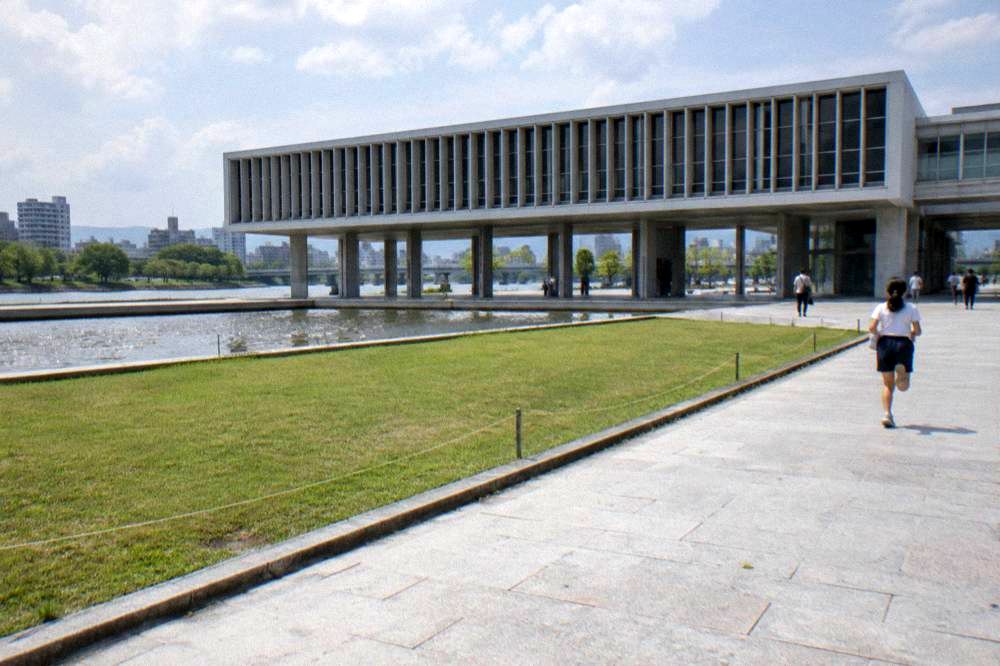
Recovery in Hiroshima began within days: the Sanyo Line railway between Hiroshima and Yokogawa reopened on 8 August 1945, partial streetcar operations resumed on 9 August, and the electric water pump at Ushita Water Supply Station restarted on 10 August, all according to the prefecture's reconstruction page. The Hiroshima Peace Memorial City Construction Law followed in 1949, and the Peace Memorial Museum's display halls were completed in 1955.
Those first three reopenings, two days, three days and four days after the bombing, are the facts the prefecture's page leads with, and they explain something a visitor feels in the city today: Hiroshima kept functioning as a city while it became a memorial. The 1949 construction law is the legal instrument that set the city's course as a peace memorial city, and it is the reason the park occupies the central riverside land it does.
The streetcars that resumed on 9 August 1945 still run: the Hiroden network charges a flat fare of 240 yen for adults and 120 yen for children on all lines, including the Miyajima line, and a one-day pass costs 700 yen, with a streetcar-and-ferry version covering Miyajima at 1,000 yen. Getting around the rebuilt city on the same network that carried it through 1945 is one of the quiet connections between the two halves of its history, and Getting Around Hiroshima covers the lines and passes.
| Date | Recovery step |
|---|---|
| 8 August 1945 | Sanyo Line reopens, Hiroshima to Yokogawa |
| 9 August 1945 | Partial streetcar operations resume |
| 10 August 1945 | Ushita water pump restarts |
| 1949 | Peace Memorial City Construction Law enacted |
| 1955 | Peace Memorial Museum display halls completed |
A private guided day through the memorial city and Miyajima gives the recovery story a shape: a local guide walks you through what 1949 and 1955 built, then out to the island shrine that predates all of it.
What Can Visitors See Of The Bombing History Today?
Visitors to Hiroshima can see the A-Bomb Dome from outside its fence at no fee, per the city's page, and enter the Peace Memorial Museum for 200 yen as an adult, with high school students at 100 yen and junior high and younger free, per the museum's own information page. The museum is open 7:30 to 19:00 from March to July and September to November, 7:30 to 20:00 in August, and 7:30 to 18:00 from December to February.
Those hours come from the museum's practical page, which also lists the closings: 30 and 31 December, and a mid-February exhibit change. Visitors aged 65 and over pay 100 yen with a passport. Extended early-morning and evening slots require an online reservation, again per the museum page.
The site's etiquette guide, Hiroshima Etiquette At The Peace Park, and the museum guide, Hiroshima Peace Memorial Museum, cover the practical side of a visit in full.
| Period | Museum hours |
|---|---|
| March to July | 7:30 to 19:00 |
| August | 7:30 to 20:00, to 21:00 on 5 and 6 August |
| September to November | 7:30 to 19:00 |
| December to February | 7:30 to 18:00 |
| Closures | 30 and 31 December, mid-February exhibit change |
A reported figure gives the scale of interest: the Peace Memorial Museum recorded 2,580,926 visitors in fiscal 2025, its third consecutive record year, with 945,618 foreign visitors, as reported from Japanese news coverage of the museum's counts.
What Happened To Hiroshima Castle?
The original Hiroshima Castle keep collapsed due to the atomic bomb on 6 August 1945, as reported from the city's history pages, and the current reinforced-concrete keep was rebuilt in 1958, modeled on the pre-bombing appearance as part of the Hiroshima Reconstruction Exposition. The rebuilt keep closed to the public permanently on 22 March 2026, after 68 years, so visitors today see the exterior and grounds only.
The closure, dated 22 March 2026 on the city's page, ends interior viewing of a building that had served as a museum for over six decades and drew about 330,000 visitors in fiscal 2019, as reported from city coverage. A Sannomaru history museum is reported as planned for 1 June 2027 on the same city pages, and until then the castle site is a grounds-and-walls experience: moat, stone base and the 1958 exterior.
The castle's arc is the city's arc in miniature: founded 1589, designated a former national treasure in 1931, destroyed in 1945, rebuilt in 1958, and now entering its next chapter. A fuller practical treatment of visiting the site is on Hiroshima Castle, and the question of its current status is answered directly on Is Hiroshima Castle Open.
For travellers comparing the two atomic-bomb cities, the castle contrast matters: Hiroshima rebuilt its keep in concrete while Nagasaki's story centers elsewhere. The site's comparison page, Hiroshima Vs Nagasaki, works through the differences for a visitor deciding between them.
Where Does Hiroshima's History Meet Miyajima?
Miyajima carries a history older than the city itself, and Itsukushima Shrine charges 300 yen for adult entry, 200 yen for high school students and 100 yen for elementary and junior high students, per the shrine's admission page. The Great Torii's restoration finished in December 2022, with some corridor and pagoda repair reported as still under way while the shrine stays open.
The shrine's own page gives the hours by season: 6:30 to 18:00 from 1 March to 14 October, 6:30 to 17:30 from 4 January to the end of February and again from 15 October to 30 November, and 6:30 to 17:00 in December, with New Year days listed separately. A combined ticket covering the shrine and the Treasure Hall costs 500 yen adult, 300 yen high school and 150 yen for younger students. The shrine's page also notes the corridor floorboards have gaps that allow high-tide water pressure through, so comfortable shoes are the practical recommendation.
The Mount Misen ropeway above the shrine costs 2,000 yen return for adults, runs 9:00 to 16:00 with last descent at 16:30, per its fare page, and the Miyajima Visitor Tax of 100 yen is charged separately on entering the island, per the JR ferry page. The island's full treatment is on Miyajima, and the crossing itself is covered in Hiroshima To Miyajima.
| Miyajima sight | Entry figure | Source page detail |
|---|---|---|
| Itsukushima Shrine | 300 yen adult | Shrine admission page |
| Combined shrine and Treasure Hall | 500 yen adult | Shrine admission page |
| Mount Misen ropeway | 2,000 yen adult return | Ropeway fare page |
| Miyajima Visitor Tax | 100 yen on entry | JR ferry page |
Tide shapes every visit to the torii: it can be walked to at low tide and appears to float at high tide, and the site's tide and timing pages, When Is Low Tide At Miyajima and What Is The Best Time To Go To Miyajima, cover the practical planning.
How Should You Plan A History-Focused Visit To Hiroshima?
A history-focused visit to Hiroshima works best across at least two days: one for the Peace Memorial Park, the museum at 200 yen adult entry and the A-Bomb Dome, and one for the castle grounds, Shukkeien garden at 350 yen adult entry and the ferry to Miyajima, with the Hiroden flat fare of 240 yen connecting them all. Season shapes the plan, from an average March temperature of 9.5 degrees to 28.5 degrees in August, per Japan Meteorological Agency station normals.
Shukkeien's own page gives 9:00 to 18:00 from 16 March to 15 September and 9:00 to 17:00 the rest of the year, with school students free since 14 April 2025. The climate normals below, Japan Meteorological Agency station data for 1991 to 2020, frame the choice of month, and the site's season guides go deeper: Best Time To Visit Hiroshima, Hiroshima Weather, Hiroshima Cherry Blossom and Miyajima Autumn Leaves.
| Month | Average temperature | Rainfall | Average daily high |
|---|---|---|---|
| January | 5.4°C | 46.2 mm | 9.9°C |
| April | 14.8°C | 141.0 mm | 19.8°C |
| July | 27.2°C | 279.8 mm | 30.9°C |
| August | 28.5°C | 131.4 mm | 32.8°C |
| November | 12.9°C | 69.3 mm | 17.7°C |
Where to base yourself follows the same logic: the station area for the Shinkansen and streetcars, or the Peace Park side for the memorials on foot, a choice the where to stay guide works through. The money side, from the 200 yen museum to the 240 yen tram, is in the trip cost guide, and arriving by rail is covered in Tokyo To Hiroshima, the Osaka to Hiroshima guide and the Kyoto to Hiroshima guide.
An evening in the rebuilt city rounds out a history day well. The food and drink culture that grew back after 1945, okonomiyaki layered on downtown griddles, is part of the same recovery story, and the what to eat guide together with Hiroshima Okonomiyaki cover it. The site's featured pick for the evening half of the day is a guided izakaya night walk through those streets: Check availability.
For a fuller first visit, Things To Do In Hiroshima lists the whole set, and this page you are reading supplies the history underneath it. More of the city's current life, food scene and festivals is on Hiroshima Today and the festivals and events guide.
One adjustment for the castle day: the keep closed to visitors permanently on 22 March 2026, leaving the grounds and exterior, with a history museum planned for the Sannomaru area in 2027.
On Miyajima, a 100 yen visitor tax applies separately on arrival, and preschool children are exempt. The JR ferry crossing takes about 10 minutes and sails at roughly 15 minute intervals, with a first departure near 6:25 and a last around 22:00, and a Japan Rail Pass covers the ride. Itsukushima Shrine charges adults 300 yen, or 500 yen combined with the Treasure Hall, and its corridor floorboards sit with deliberate gaps to relieve high-tide pressure, so comfortable shoes help.
Common Questions About Hiroshima History
When Was Hiroshima Founded?
Hiroshima's history as a castle town began in 1589, when Mori Terumoto initiated construction of Hiroshima Castle on the Ota River delta, and the build took about two years, according to the Hiroshima Prefecture reconstruction page.
What Happened To The Original Hiroshima Castle?
The original keep, designated a former national treasure in 1931, collapsed due to the atomic bomb on 6 August 1945, as reported from the city's history pages. A reinforced-concrete replacement, modeled on the pre-bombing appearance, was rebuilt in 1958.
Can You Go Inside Hiroshima Castle Now?
No. The rebuilt keep closed to the public permanently on 22 March 2026 after 68 years, so visitors see the exterior and grounds only. A Sannomaru history museum is reported as planned for 1 June 2027.
How Many People Died In Hiroshima By The End Of 1945?
An estimated 140,000 people, plus or minus 10,000, had died in Hiroshima by the end of December 1945 due to the atomic bombing, according to the Hiroshima Prefecture peace site.
How Quickly Did Hiroshima Recover Basic Services In 1945?
Per the prefecture's page, the Sanyo Line railway reopened on 8 August 1945, partial streetcar operations resumed on 9 August, and the electric water pump at Ushita Water Supply Station restarted on 10 August, two, three and four days after the bombing.
How Much Does The Peace Memorial Museum Cost?
Admission is 200 yen for adults, college and up, 100 yen for high school students, free for junior high and younger, and 100 yen for visitors aged 65 and over with a passport, per the museum's own information page.