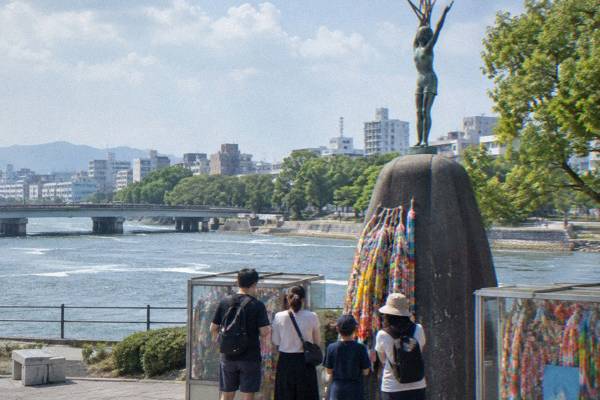
Hiroshima In Summer: Heat, August 6 And Island Beaches
Hiroshima in summer is hot and humid, with August 6 carrying the year's most important ceremony, and the Seto Inland Sea islands offering the nearest swimming.
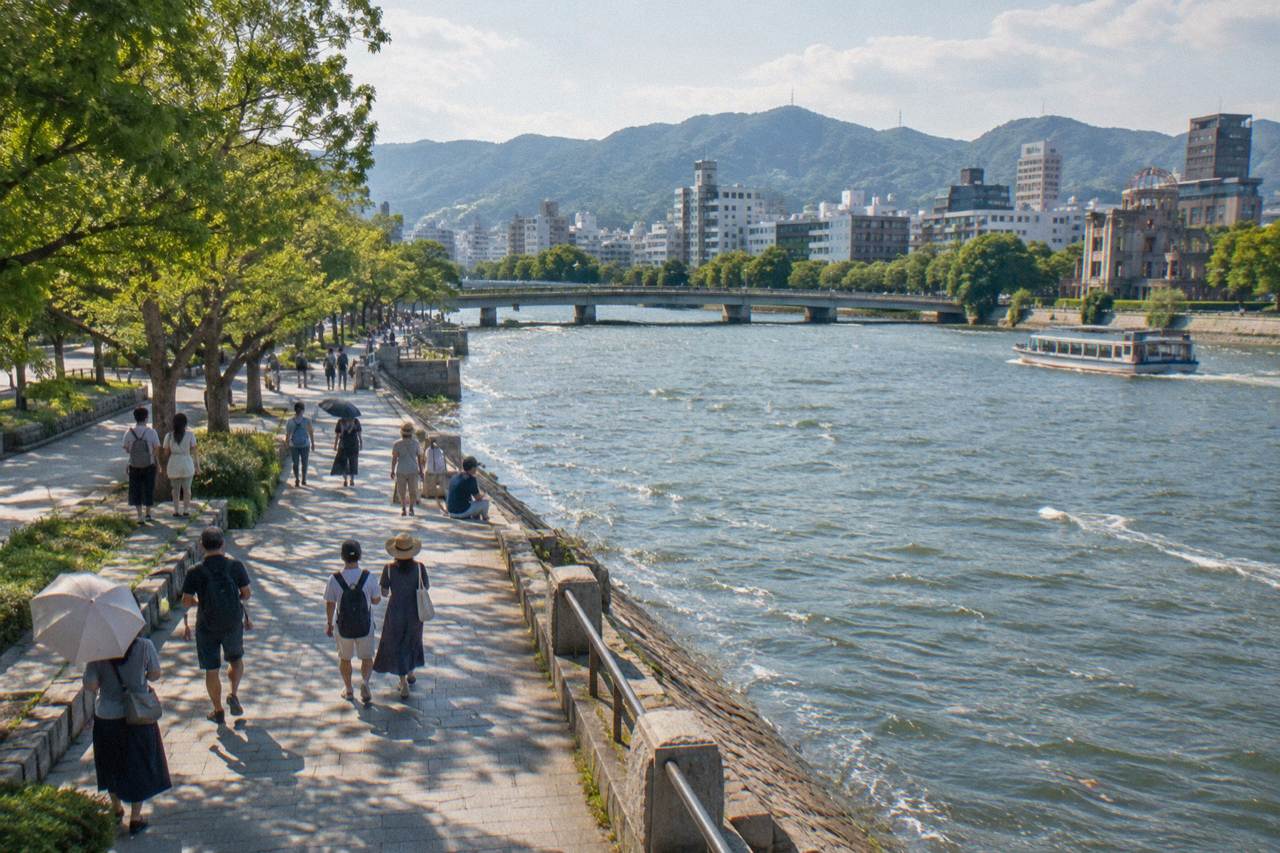
Hiroshima averages about 32.8 °C daytime highs in August with high humidity, the August 6 Peace Memorial Ceremony runs from 8:00 to 8:50 in Peace Memorial Park, and the nearest swimming beaches are on Etajima island or Okunoshima, not Miyajima.
The Japan Meteorological Agency (JMA) 1991-2020 station normals for Hiroshima put the average August daily high at about 32.8 °C, and the city's Peace Memorial Ceremony, the lantern floating on the Motoyasu River, and the beach season on nearby islands all sit inside that heat. This page gathers what the official pages and station data actually say about a Hiroshima summer, from tide and rain to ceremony timing and swim options.
How Hot Does Hiroshima Get In Summer?
Hiroshima's average daily high climbs from about 27.2 °C in June to about 30.9 °C in July and about 32.8 °C in August, then eases to about 29.1 °C in September, according to the Japan Meteorological Agency (JMA) station normals for 1991-2020. Overnight lows in midsummer average about 24.1 °C in July and 25.1 °C in August.
Humidity is the defining feature, not the number on the thermometer alone. Reported figures for early August give a normal average temperature of 29.1 °C with a daily maximum of 33.5 °C, a minimum of 25.7 °C and relative humidity of 69 percent. By late August the reported averages shift down slightly, to 27.8 °C mean, 32.1 °C maximum and 24.4 °C minimum, with humidity still around 69 percent. In practical terms, mornings are already warm, afternoons are heavy, and shade and water matter more than pace.
The summer also has a wet ramp. June averages about 226.5 mm of rain, July about 279.8 mm, and then August drops sharply to about 131.4 mm, the JMA normals show. So the deepest humidity and rain coincide in July, while August, though hotter on average, is drier than the month before it. September brings about 162.7 mm again as autumn rain returns.
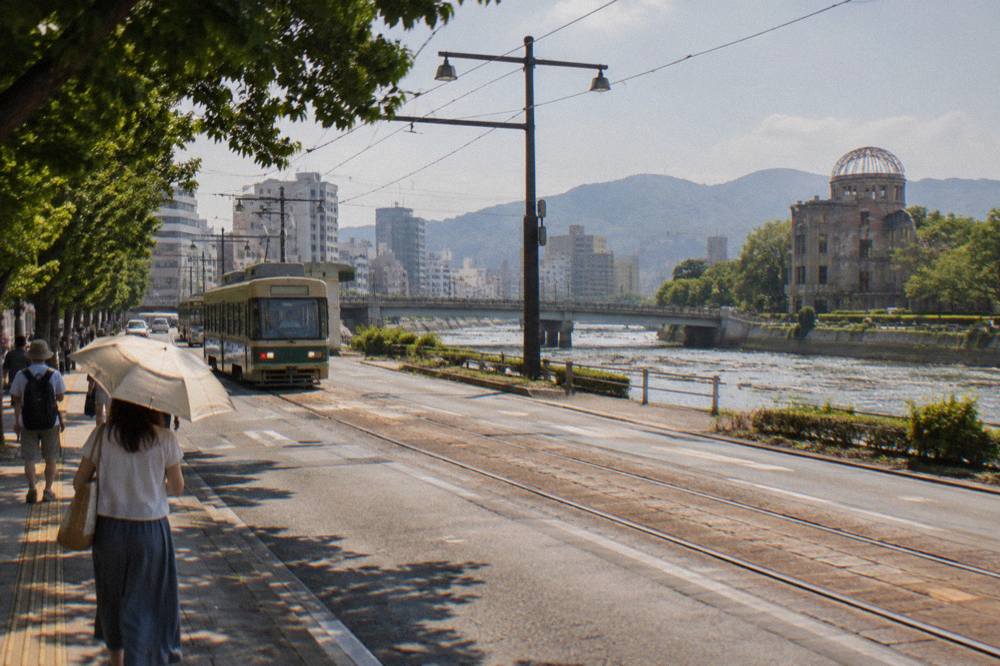
Is August A Good Time To Visit Hiroshima?
August is the most demanding month for weather and the most meaningful month for history: the heat averages about 32.8 °C by day, but August 6 brings the Peace Memorial Ceremony, the one-minute silent prayer at 8:15 am, and the evening lantern floating on the Motoyasu River. Anyone planning around the ceremony needs an early start, because park entry is restricted between 5:00 and 9:00 am on the day.
The trade-off is real. The Peace Memorial Museum extends its hours in summer: the museum's own practical-information page lists March to July opening as 7:30 to 19:00, August as 7:30 to 20:00, and until 21:00 on August 5 and 6, with September to November back to 7:30 to 19:00. Longer evening hours help visitors shift sightseeing away from the warmest part of the day. Admission is 200 yen for adults, 100 yen for high school students, and free for junior high school students and younger, per the museum's page.
For a wider view of when to come and how the seasons compare, see the site's best time to visit Hiroshima guide and the month-by-month Hiroshima weather breakdown. If you are weighing districts for a summer base, the tram and walkability factors matter more in the heat, and where to stay in Hiroshima covers the station, downtown and Peace Park options.
What Happens On August 6 In Hiroshima?
The Hiroshima Peace Memorial Ceremony at Peace Memorial Park includes a one-minute silent prayer and the ringing of the Peace Bell at exactly 8:15 am, the moment the atomic bomb was dropped on the city. The city's English page states that about 7,000 seats are available in the main venue, plus about 2,200 indoor seats for a simultaneous broadcast.
The ceremony is open to the public, with no tickets and no advance registration required, the city's page confirms. Entry to the venue begins at 6:00 am, and entry to the park itself is restricted between 5:00 am and 9:00 am. No parking is available at the park for the ceremony, so the city directs visitors to public transport. From Hiroshima Station, Hiroden tram Line 2 or Line 6 reaches the Genbaku Dome-mae stop in about 25 minutes, and the Maple-Loop sightseeing bus from the Shinkansen exit reaches it in about 20 minutes.
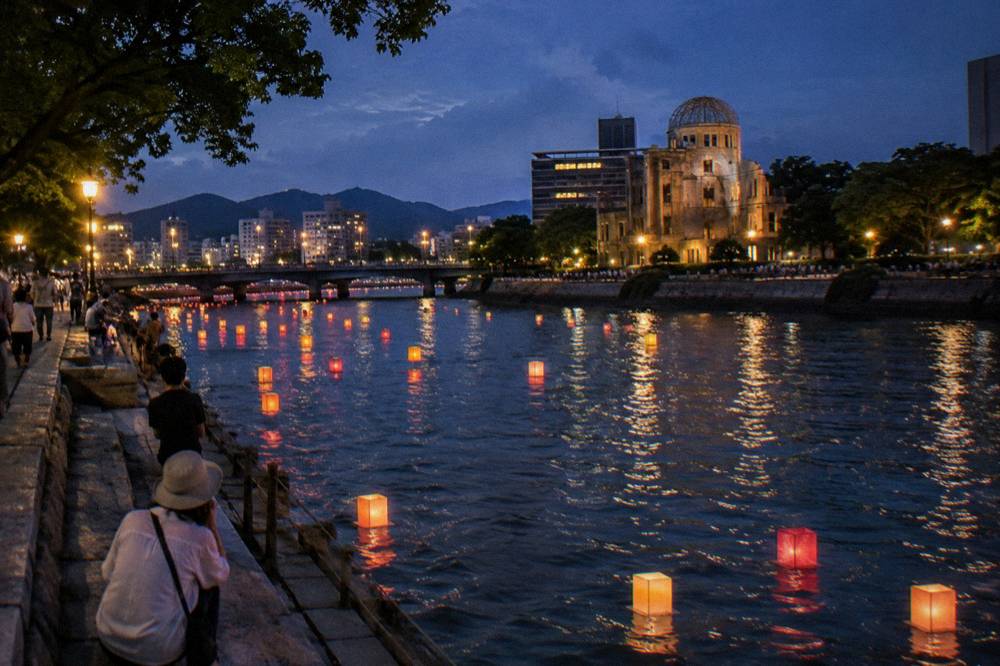
In the evening, the lantern floating ceremony takes place on the Motoyasu River riverside in Peace Memorial Park, facing the Atomic Bomb Dome. Lantern sales open at 7:00 am and end at 8:30 pm, floating runs from 6:00 pm to 9:00 pm, and each lantern costs 1,000 yen, cash only. Viewing is free; only purchased lanterns carry a charge. The event began around 1947 as a memorial by bereaved families floating handmade lanterns on the river, and a music ceremony accompanies the floating from 6:00 pm to 9:00 pm.
| Item | Detail |
|---|---|
| Ceremony date and time | August 6, 8:00 am to 8:50 am |
| Silent prayer and Peace Bell | 8:15 am |
| Venue | Peace Memorial Park |
| Main venue seating | About 7,000 seats |
| Indoor broadcast seating | About 2,200 seats at the International Conference Center Hiroshima |
| Park entry restriction | 5:00 am to 9:00 am |
| Attendee entry from | 6:00 am |
| Tickets | None required, open to the public |
The full day, including etiquette and how to plan the morning, is covered in the site's dedicated August 6 Peace Ceremony guide. Behaviour at the park follows the same respectful basics year-round: quiet, no loud behaviour, and photography that respects the setting.
How Humid And Wet Is A Hiroshima Summer?
Hiroshima summers are wet, with July the rainiest month at about 279.8 mm on average, June about 226.5 mm, September about 162.7 mm, and August about 131.4 mm, all from JMA 1991-2020 station normals. Those months carry close to half the annual total of about 1,572.2 mm, and August, averaging a high of 32.8 °C, is hotter but drier.
| Month | Average High °C | Average Low °C | Average Rain Mm |
|---|---|---|---|
| June | 27.2 | 19.8 | 226.5 |
| July | 30.9 | 24.1 | 279.8 |
| August | 32.8 | 25.1 | 131.4 |
| September | 29.1 | 21.1 | 162.7 |
The pattern shapes planning more than any single figure. July combines the year's heaviest rain with steadily climbing heat, while August is hotter but drier. The indoor options that carry a summer visit through a downpour are listed in the site's rainy-day coverage, and the Hiroshima museums page covers which of them hold up in any weather. On a wet afternoon, an okonomiyaki counter in Okonomimura is the classic Hiroshima answer, and the site's Hiroshima okonomiyaki guide explains how the layered local style differs from the Osaka one.
Can You Swim Near Hiroshima In Summer?
Miyajima does have a swimming beach, Tsutsumigaura Nature Park on the island's northeast coast, and the other nearby option is the Etajima island beaches, reachable by ferry from Ujina Port in 30 to 45 minutes. The official beach season in Hiroshima Prefecture runs from mid-July to mid-August. The season is short and it ends for a natural reason: jellyfish, particularly box jellyfish, typically arrive around mid-August, around Obon, and often end the swimming season, regional beach guides report.
Anyone planning a swimming day should place it in the mid-July to mid-August window rather than at the end of August.
Okunoshima's practical details are straightforward. The ferry from Tadanoumi Port takes approximately 15 minutes, with 15 weekday and 17 weekend or holiday departures. Vehicles are not allowed on the island, so visitors use the port parking lot on the mainland. During summer the beach facilities include toilets, showers, changing rooms, a shop, and rentals for seats and tubes. The beach is a 5-minute walk from Kyukamura Okunoshima.
| Swimming Option Near Hiroshima | Getting There | Season Notes |
|---|---|---|
| Etajima island beaches | Ferry from Ujina Port, 30 to 45 minutes | Closest swimming beaches to the city |
| Okunoshima beach | Ferry from Tadanoumi Port, about 15 minutes | 9:00 to 17:00 during the sea opening period |
| Miyajima | Not a swimming destination | Sacred shrine island, no swimming beaches |
| Prefecture-wide beach season | Varies by beach | Mid-July to mid-August, umi-biraki |
Is Miyajima Worth Visiting In Summer?
A JR ferry from Miyajimaguchi reaches the island roughly every 15 minutes on a crossing of about 10 minutes, and a tide cycle decides whether the Great Torii stands in water or on sand. The JR West Miyajima Ferry costs 200 yen one way for adults, plus a 100 yen Miyajima visitor tax collected with the outbound ticket.
The tide point deserves emphasis because it is the island's whole visual logic: at low tide the Great Torii can be walked to, and at high tide it appears to float. Some JR ferry departures from Miyajimaguchi between 9:10 and 16:10 take a route passing close to the gate, so the crossing itself can double as a viewing platform. First departure from Miyajimaguchi is at 6:25 and the last from Miyajima is at 22:14, with daytime sailings roughly every 15 minutes.
Getting to Miyajimaguchi from Hiroshima takes about 30 minutes on the JR Sanyo Line at 420 yen, or about 70 minutes on the Hiroden streetcar for the flat 240 yen adult fare. Itsukushima Shrine charges 300 yen for adults, 200 yen for high school students and 100 yen for elementary and junior high students, with a combined ticket covering the Treasure Hall at 500 yen for adults. Summer hours, from March 1 to October 14, are 6:30 to 18:00 per the shrine's admission page. The shrine's corridor floorboards have deliberate gaps that let high-tide water pressure through, so comfortable shoes are the practical choice.
| Miyajima Summer Item | Figure |
|---|---|
| Itsukushima Shrine adult admission | 300 yen |
| Combined ticket with Treasure Hall, adult | 500 yen |
| Mount Misen ropeway, adult return | 2,000 yen |
| Ropeway operating hours | 9:00 to 16:00, last descent 16:30 |
| JR ferry adult one way | 200 yen |
| Miyajima visitor tax | 100 yen, preschool children exempt |
| JR Sanyo Line, Hiroshima to Miyajimaguchi | About 30 minutes, 420 yen |
| Hiroden streetcar to Miyajimaguchi | About 70 minutes, 240 yen flat adult fare |
The Mount Misen ropeway runs 9:00 to 16:00 with last descent at 16:30, at 2,000 yen return for adults and 1,100 yen one way. For the full crossing, tide and shrine picture, see the site's Hiroshima to Miyajima guide. The Miyajima tour page covers a full island day, and the Itsukushima Shrine page details the shrine itself.
For a cooler indoor stop on the island, book a Miyajima Aquarium ticket here.
What Should You Pack For A Hiroshima Summer?
Pack for heat and humidity above all: the essentials are a high-SPF sunscreen, a hat, a refillable water bottle, breathable clothing, a compact umbrella that handles both sun and sudden rain, and comfortable walking shoes, because the average August day runs from about 25.1 °C overnight to about 32.8 °C by mid-afternoon and July carries about 279.8 mm of rain.
Cash matters too: the lantern floating on August 6 is cash only for lanterns, at 1,000 yen each, and small shops on Miyajima's Omotesando still work best with yen in hand. The site's page on whether you need cash in Hiroshima covers the payment picture.
| Item | Why It Matters In A Hiroshima Summer |
|---|---|
| Sunscreen and hat | Average August highs about 32.8 °C, sunny afternoons |
| Refillable water bottle | Humidity reported around 69 percent in early August |
| Compact umbrella | July averages about 279.8 mm of rain; sudden bursts |
| Comfortable walking shoes | Shrine corridor floorboard gaps; riverside and island paths |
| Cash in yen | Lanterns on August 6 are 1,000 yen, cash only |
| Light layers | Museums and ferries run air conditioning against 30-plus C days |
Clothing advice for the island specifically, including what suits shrine and temple visits, is in the site's what to wear to Miyajima island page.
Which Summer Passes And Tours Make Sense In Hiroshima?
A regional rail pass makes sense when the summer plan strings together Hiroshima, Miyajima and the coastal towns, because the 5-day Hiroshima-Yamaguchi Area Pass costs 15,000 yen for adults and 7,500 yen for children aged 6 to 11, and the Kansai-Hiroshima Area Pass at 17,000 yen adds reserved Sanyo Shinkansen seats between Shin-Osaka and Hiroshima plus the JR West Miyajima Ferry.
Inside the city, the Hiroden-only day pass costs 700 yen for adults, the streetcar-and-ferry version costs 1,000 yen, and the Visit Hiroshima Tourist Pass runs 1,000 yen for one day, 1,500 yen for two and 2,000 yen for three days, covering trams, city buses and Miyajima ferries. Both JR West regional passes require a passport with a Temporary Visitor stamp for purchase and use, and up to two children aged 1 to 5 travel free per adult pass holder. The full pass arithmetic, including when a pass loses to single tickets, is worked through in the site's JR pass for Hiroshima page.
For a five-day loop that takes in Miyajima, Kure, Iwakuni and the sake district of Saijo, the Check availability link beside the 5-day JR Hiroshima Yamaguchi Area Pass page shows the operator's live price. On the history side, a guided walk through the Peace Memorial Park comes in a range of formats, and the site's Peace Park walking tour page compares the options.
What Else Is There To Do In Hiroshima In Summer?
Summer evenings in Hiroshima run late and run on food and light: the Peace Memorial Museum stays open until 20:00 in August and until 21:00 on August 5 and 6, the lantern floating and its music ceremony fill the Motoyasu riverside from 6:00 pm to 9:00 pm on August 6, and the city's night districts keep the rest of the season going.
The Hiroshima at night guide maps the evening city, and the Hiroshima festivals and events page lists the wider summer calendar beyond August 6. For the eating side of a hot evening, what to eat in Hiroshima covers okonomiyaki, oysters and the summer standards, and Hiroshima nightlife covers the bars of Nagarekawa and Yagenbori.
Two practical summer notes close the picture. The Hiroden flat fare is 240 yen for adults and 120 yen for children on every line, including the Miyajima line, since February 1, 2025, and streetcars run at 10 to 15 minute intervals on main lines, so waiting in the heat stays short. And the Miyajima visitor tax of 100 yen applies even when a rail pass covers the ferry itself; it is collected separately on entering the island, with preschool children exempt.
Common Questions About Hiroshima In Summer
How Hot Is Hiroshima In August?
The Japan Meteorological Agency 1991-2020 station normals give Hiroshima an average August daily high of about 32.8 °C and an average overnight low of about 25.1 °C, with relative humidity reported around 69 percent in early August.
Can You Swim At Miyajima?
No. Miyajima has no swimming beaches because it is a sacred shrine island. The closest swimming beaches to Hiroshima city are on Etajima island, a 30 to 45 minute ferry ride from Ujina Port, and Okunoshima also has a beach operating from 9:00 to 17:00 during the sea opening period.
What Time Is The Peace Memorial Ceremony On August 6?
The ceremony runs from 8:00 am to 8:50 am at Peace Memorial Park, with the one-minute silent prayer and Peace Bell at exactly 8:15 am. Attendee entry begins at 6:00 am, park entry is restricted between 5:00 am and 9:00 am, and no tickets are required.
When Does Beach Season Run In Hiroshima Prefecture?
The official beach opening season, umi-biraki, runs from mid-July to mid-August. Jellyfish, particularly box jellyfish, typically arrive around mid-August and often end the swimming season.
Is August Rainy In Hiroshima?
August averages about 131.4 mm of rain on the JMA 1991-2020 normals, which is drier than July at about 279.8 mm and June at about 226.5 mm. July, not August, is the wettest month of the Hiroshima year.
How Much Does The Lantern Floating Cost On August 6?
Viewing is free. Each lantern floated on the Motoyasu River costs 1,000 yen including tax, payment is cash only, sales run from 7:00 am to 8:30 pm, and floating runs from 6:00 pm to 9:00 pm.