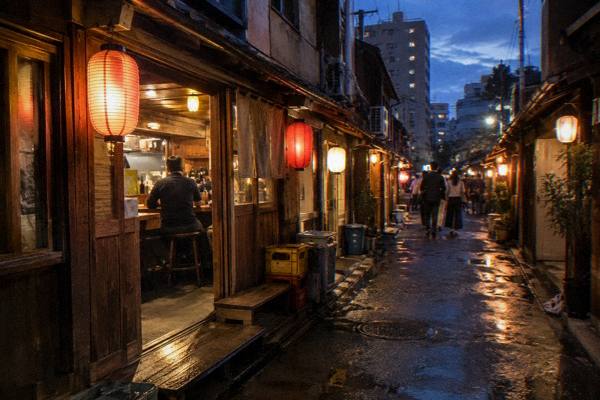
Hiroshima Nightlife: Bars, Izakaya And Late Counters
Hiroshima nightlife runs late and concentrated: Nagarekawa's alleys hold more than 1,500 venues, Ekinishi pours retro standing bars until 02:00, and a full night out typically costs 5,500 to 7,000 yen per person.
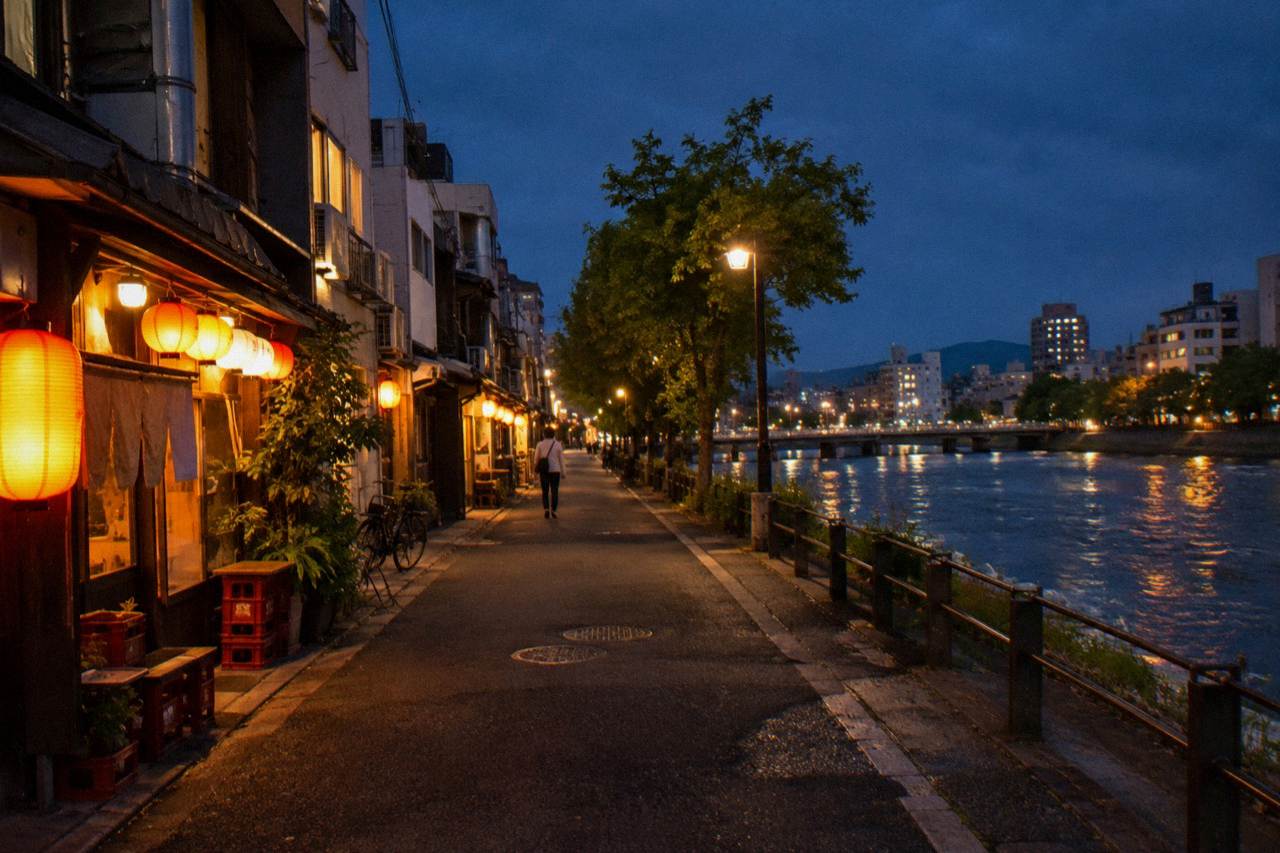
Yes. Nagarekawa is Hiroshima's main nightlife district, with over 1,500 venues across a few blocks; bars take last orders around 02:00 and close by 03:00, and a typical night out costs 5,500 to 7,000 yen per person.
Hiroshima nightlife is real, dense and late: the Nagarekawa district alone packs more than 1,500 venues into roughly four to six blocks of multi-tenant buildings, with signage stacked five stories high over narrow alleys. This guide covers where the city drinks, what a night out costs, which counters stay open past midnight, and how to get back to your hotel once the trams stop. The city of Hiroshima sits on the Seto Inland Sea, and its evening culture is built around izakaya counters, oyster bars and okonomiyaki grills rather than a single strip of clubs. For daytime planning around a big evening, start with things to do in Hiroshima or the Hiroshima Travel Guide homepage.
Does Hiroshima Have A Nightlife?
Yes, and it is concentrated and late. Nagarekawa is Hiroshima's main nightlife district, holding over 1,500 venues including bars, izakayas and clubs inside roughly four to six blocks of multi-tenant buildings. Most bars and izakayas there take last orders around 02:00 and close by 03:00, with some extending to 04:00 or 05:00 on weekends.
That density surprises visitors who arrive expecting a quiet memorial city. The scene splits neatly into types: izakaya counters for food-first evenings, standing bars in Ekinishi for a Showa-era retro mood, cocktail bars with no cover charge, and a small number of clubs that open only on weekends and holiday eves.
The evening usually starts with food. If you are planning a first visit more broadly, the guide to a night-oriented itinerary of Hiroshima carries the fuller evening walk.
Want the evening's food and culture woven together? Book a nighttime food and culture tour here.
Where Are The Best Going-Out Areas In Hiroshima?
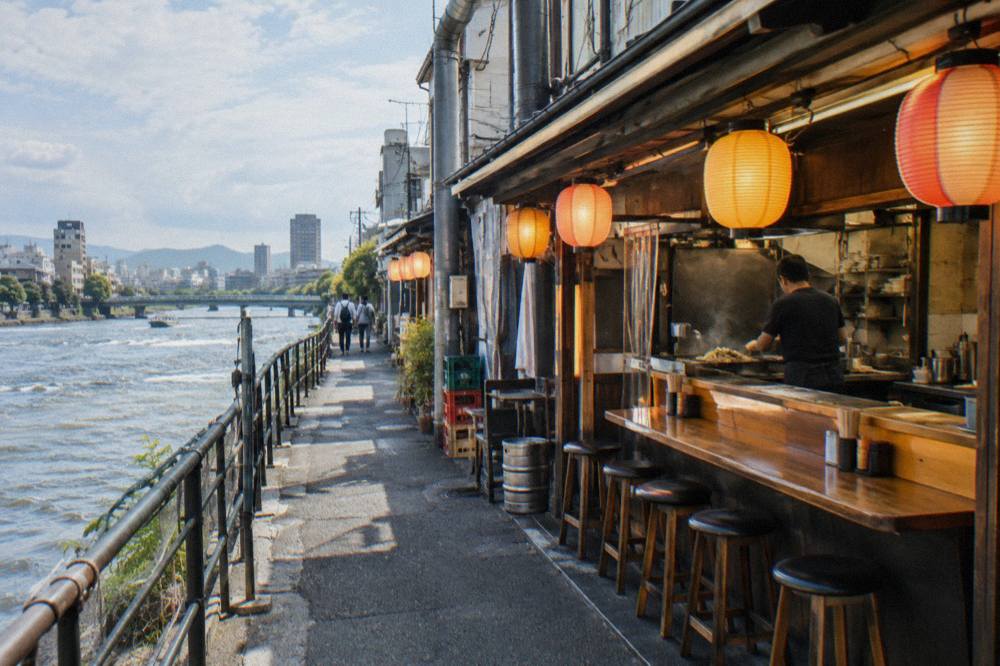
Nagarekawa is the centre of Hiroshima nightlife, with Ekinishi west of Hiroshima Station for tiny retro standing bars, Yagenbori for the latest izakaya counters, and Tatemachi and Horikawacho for cocktail and music bars. Ekinishi sits a 5 to 12 minute walk west of the station and holds 30 or more small bars and izakayas, many cash-only and open until 01:00 or 02:00.
Each district has a distinct job on a night out. Nagarekawa is the volume play: dozens of buildings, alleys, clubs and late ramen, all walkable together. Ekinishi is the opposite, low, narrow and nostalgic, where you buy a single drink standing up and move on. Yagenbori sits between the two moods, with seafood izakayas and late counters running to roughly 03:00. Tatemachi and Horikawacho supply the quiet end of the night, cocktail bars with no cover and small plates.
| District | Position | Character | Typical Late Hour |
|---|---|---|---|
| Nagarekawa | South of Kamiyacho, central | Over 1,500 venues in multi-tenant buildings, bars, izakayas, clubs | Last orders 02:00, close 03:00, some to 04:00 or 05:00 weekends |
| Ekinishi | 5 to 12 minute walk west of Hiroshima Station | Retro Showa-era alleys, 30+ tiny standing bars, many cash-only | Until 01:00 or 02:00 |
| Yagenbori | Between Nagarekawa and the station area | Seafood izakayas and late counters | To roughly 03:00 |
| Tatemachi | Central, next to Nagarekawa | Cocktail and music bars, no-cover rooms | Around 03:00 |
| Horikawacho | Central | Classic cocktail bars, small covers via otoshi | 02:00 to 02:30 |
A reasonable first night is one district, not all of them. Pick Nagarekawa if you want choice and noise, Ekinishi if you want two quiet drinks and an early night, Yagenbori if dinner runs long. For hotels, see the Nagarekawa and Yagenbori guide and where to stay in Hiroshima: staying central puts you a short walk or one tram from all five areas.
If your nights are booked but your days are open, a guided structure works well in this city, and a private guided day such as the Hiroshima and Miyajima Private Guided Tour Check availability pairs the Peace Park and the island before an evening on the counters. Two other ways to spend daylight hours around a night out:
What Does A Night Out In Hiroshima Cost?
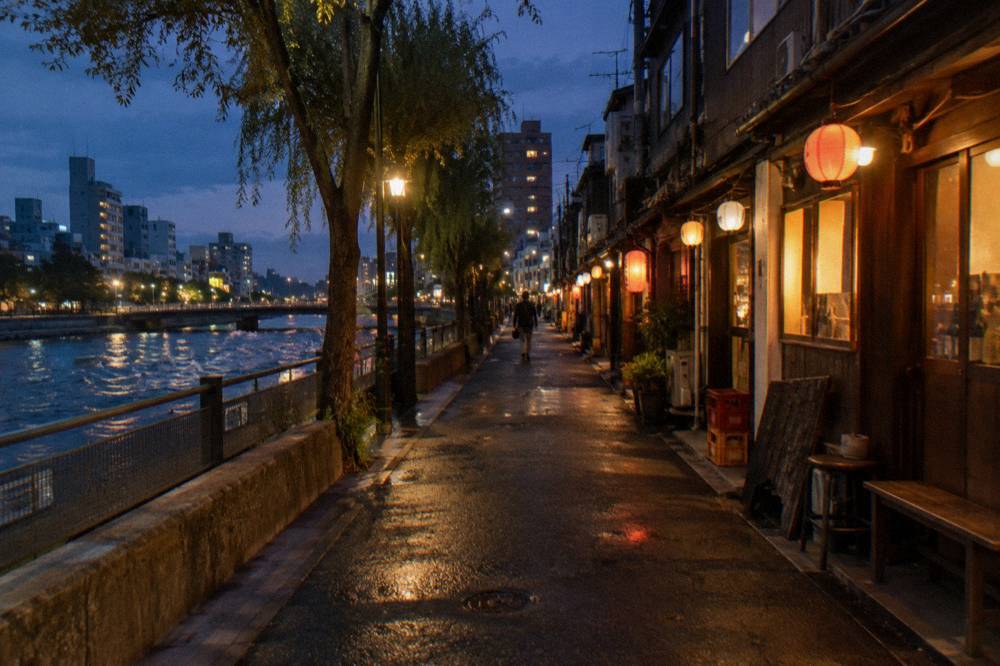
A solid night out in Hiroshima typically costs 5,500 to 7,000 yen per person including drinks, according to local nightlife listings. A single cocktail at a central bar runs 1,000 to 1,400 yen with no cover, beer-and-skewer counters sell skewers at 150 to 350 yen each, and a full yakiniku set with wagyu runs about 4,800 yen.
The budget bands are wide because the district spans everything from a 600 yen beer at an international bar to a 2,200 yen signature cocktail. The cheapest reliable structure is izakaya food plus one or two drinks; the expensive one is club doors and premium cocktails stacked together. Table covers appear as otoshi, a small seated snack charged automatically at some cocktail bars at around 800 yen, so a "cover" at a Hiroshima bar is usually food you can eat.
| Spend | Typical Figure | What You Get |
|---|---|---|
| Cheap drink, international bar | 600 to 900 yen | Beer or highball at an English-speaking counter |
| Cocktail at a music bar | 1,000 to 1,400 yen | No cover, CD-backed bar |
| Signature cocktail, seated bar | 1,400 to 2,200 yen | Plus about 800 yen otoshi |
| Yakitori skewers | 150 to 350 yen each | Standing or counter seating |
| Full yakiniku set | About 4,800 yen | Wagyu set at a late grill |
| Whole evening | 5,500 to 7,000 yen | Food and drinks per person |
Cash still matters. For the cash-versus-card question, see whether you need cash in Hiroshima.
How Late Do Hiroshima Bars And Izakayas Stay Open?
Most bars and izakayas in Nagarekawa take last orders around 02:00 and close by 03:00, with some extending to 04:00 or 05:00 on weekends. Typical bar hours in central Hiroshima run from 18:00 or 19:00 until 01:00 or 02:00, while the latest izakayas in Yagenbori run to about 03:00, and late ramen and shot bars run to 03:00 or 05:00 on Friday and Saturday.
The shape of the night matters more than any single closing time. If you are eating late, the ordering deadline is the number to watch: a counter with last orders at 02:30 stops the kitchen before the room closes.
| Venue Type | Opens | Last Orders / Close |
|---|---|---|
| Central izakaya | Evening | Typical close 01:00 to 02:00 |
| Yagenbori late izakaya | Evening | Roughly 03:00 |
| Oyster bar, Ebisucho | Evening | Last orders 03:00 |
| Green onion izakaya, Nagarekawa | Evening | Last orders 02:30 |
| Cocktail bar, Horikawacho | 19:00 | 02:00 to 02:30 |
| Music bar, Nagarekawa | Evening | Last orders 04:30 |
| International bar, Nagarekawa | Evening | Last orders 04:30 weekends |
| Karaoke box, central | 24 hours | After-midnight rates |
How Do You Get Home After Midnight In Hiroshima?
Most Hiroden streetcar and JR services stop between 23:30 and 00:15, with the last Hiroden tram from Hacchobori toward Hiroshima Station leaving at 23:32, so after that you walk or take a taxi. Taxis apply a 20 percent late-night surcharge after 22:00, which makes a central hotel the cheapest base for a late night.
The tram cut-off is the single most important planning fact for the evening. Nagarekawa, Yagenbori, Tatemachi and Horikawacho all sit within walking range of central hotels, but Hiroshima Station is a tram ride away, and after 23:32 that ride becomes a surcharged taxi. Staying near the action, covered in where to stay in Hiroshima, converts the late-night problem into a ten-minute walk. The flat tram fare is 240 yen for adults on every Hiroden line, including the Miyajima line, if you ride earlier in the evening.
| Transport | Last Service Or Cost | Notes |
|---|---|---|
| Hiroden tram toward station from Hacchobori | Last departure 23:32 | Flat 240 yen adult, 120 yen child |
| Hiroden and JR general last services | Between 23:30 and 00:15 | Check the night you travel |
| Taxi surcharge | 20 percent after 22:00 | Applies citywide |
| Walk, Nagarekawa to central hotels | Short | Safest late option |
What Should You Eat Late At Night In Hiroshima?
Okonomiyaki is the late-evening staple of Hiroshima, served from layered grills at counters across the bar districts, alongside oysters at Ebisucho counters with last orders at 03:00, green-onion dishes in Nagarekawa, skewers at 150 to 350 yen, and wagyu yakiniku sets at about 4,800 yen running until 04:00.
The late-food geography tracks the drinking geography. Okonomiyaki counters near the bar streets absorb the first wave after dinner; seafood izakayas in Yagenbori, including one serving Seto Inland Sea seafood daily until 02:00, hold the middle of the night; skewer stalls and oyster bars take the last shift. Oysters are the region's shellfish signature, served grilled, fried or raw at counters specialising in Hiroshima-sourced stock, and the broader food guide covers what to eat in Hiroshima beyond the midnight hours.
One honest caution from the listings: dish prices in this guide come from nightlife listings, not from restaurant menus, and individual counters vary.
Which Late Counters And Bars Are Worth Finding In Hiroshima?
Listed standouts include an oyster bar in Ebisucho with Hiroshima-sourced oysters and last orders at 03:00, a green-onion specialist in Nagarekawa with last orders at 02:30, a seafood izakaya in Yagenbori open until about 02:00, a 6,000-CD cocktail bar in Tatemachi with drinks at 1,000 to 1,400 yen, and an English-speaking international bar in Nagarekawa with drinks at 600 to 900 yen.
These rooms each have a clear slot in a night. The CD bar suits the second drink; the international bar suits a first night in the city when language matters; the oyster and green-onion counters suit a food-led group; the yakiniku room running to 04:00 suits the very end of the night.
| Venue | District | Speciality | Hours And Prices |
|---|---|---|---|
| Kadode | Yagenbori | Seto Inland Sea seafood, grilled cow shoulder | Daily to 02:00 |
| Negian | Nagarekawa | Green onion dishes | Last orders 02:30 |
| Kaki-hiyokkoshoten | Ebisucho | Hiroshima oysters | Last orders 03:00 |
| Yakiniku Babachan | Not listed | Wagyu sets | To 04:00, sets about 4,800 yen |
| MAC Bar | Tatemachi | 6,000+ CDs, cocktails | 20:00 to 03:00, closed Sundays, drinks 1,000 to 1,400 yen |
| Friendz | Nagarekawa | English-speaking international bar | Last orders 04:30 weekends, drinks 600 to 900 yen |
| Bar Alegre | Horikawacho | Classic cocktails | 19:00 to 02:30, closed Mondays, 800 yen otoshi |
| Sound Bar 111 | Nagarekawa | House and R&B | Last orders 04:30, weekend cover 1,500 to 2,500 yen with a drink |
| Yatai Sakaba Ichan | Central | Skewers, full meals | To 03:00, skewers 150 to 350 yen |
| Hachiya | Yagenbori | Hiroshima Prefecture ingredients | To about 03:00, 4,000 to 6,000 yen per person |
Is Hiroshima Safe At Night?
Hiroshima is generally a safe city at night by the standards of Japanese cities, with nightlife concentrated in walkable central districts, but the practical risks are transport-related: trams stop between 23:30 and 00:15, taxis add a 20 percent surcharge after 22:00, and many Ekinishi standing bars are cash-only, so plan the ride home and carry yen.
Standard city cautions apply everywhere: keep an eye on drinks, agree taxi routes in advance, and note that clubs with door charges, at 2,000 to 3,500 yen including drink tickets, are the main place a budget quietly inflates. The fuller picture, including emergency and practical advice, sits in is Hiroshima safe.
Weather shapes the walk home more than safety does. July averages 279.8 mm of rain in the Japan Meteorological Agency station normals, and January lows average 2.0 degrees, so an umbrella or a coat changes the night between seasons; the Hiroshima weather guide carries the month-by-month figures.
Does Hiroshima Have Clubs And Karaoke?
Yes, in small numbers. Club G in Nagarekawa opens only on weekends and holiday eves with a door charge of 2,000 to 3,500 yen including drink tickets, Sound Bar 111 plays house and R&B with last orders at 04:30 and a weekend cover of 1,500 to 2,500 yen, and Big Echo karaoke in Hiroshima offers 24-hour rooms with after-midnight pricing of 600 to 900 yen per 30 minutes per person plus a drink minimum.
Club culture here is weekend-only rather than nightly, which concentrates everyone into Friday and Saturday. Karaoke fills the gap on weeknights: a 24-hour box means the night does not end when the last bar calls time, and the after-midnight per-person rate is predictable enough to budget.
Can You Combine Miyajima With A Nightlife Evening In Hiroshima?
Yes, if the island comes first: the JR ferry from Miyajima back to Miyajimaguchi runs until about 22:14, the crossing takes about 10 minutes, and the JR Sanyo line then returns toward Hiroshima, leaving the Nagarekawa counters reachable the same evening. The Miyajima visitor tax of 100 yen applies on entry to the island and does not affect the return.
The practical version is a late-afternoon island visit, an early okonomiyaki or anago-meshi dinner near the pier, and the ferry back before the last sailing. Once in the city, the evening districts are a short tram ride from the station side, and the last tram toward the station from Hacchobori at 23:32 still leaves room for a drink or two in between. The full transport breakdown, including fares and the two ferry operators, is in Hiroshima to Miyajima.
One caution on sequencing: an island day plus a Nagarekawa night is a long day, and the trams end before the bars do. Book a central hotel, or drop the plan to one drink instead of five.
What Should First-Timers Know About Hiroshima Nightlife?
First-timers should stay central, start with okonomiyaki or an izakaya counter before the bars, carry cash for the smallest standing rooms, watch the 23:32 last tram from Hacchobori, and expect most rooms to take last orders around 02:00 and close by 03:00, with weekend stragglers running to 04:00 or 05:00.
The first-night structure writes itself. Eat early in Okonomimura, walk south into Nagarekawa, take one drink each at two or three different rooms rather than settling in one, and finish with ramen or karaoke if the night runs long. English-speaking staff are listed at the international bars, but the smallest counters work best with a translation app and a willingness to point. Dress codes are not a feature of this scene; comfortable shoes matter more than anything else.
Three more pieces fit around the evening. Rainy nights have a full plan in the Hiroshima rainy day guide, the seasonal side of an evening walk is in the best time to visit Hiroshima, and the city's food identity beyond midnight snacks starts with Hiroshima okonomiyaki.
If you would rather lock the daytime hours in before the evening starts, these are three reliable ways to spend the day first:
Common Questions About Hiroshima Nightlife
Does Hiroshima Have A Nightlife?
Yes. Nagarekawa is the main nightlife district, with over 1,500 venues across roughly four to six blocks, and most bars take last orders around 02:00 and close by 03:00, with some running to 04:00 or 05:00 on weekends. Ekinishi, Yagenbori, Tatemachi and Horikawacho add standing bars, late izakayas and cocktail rooms to the same central area.
What Time Do Bars Close In Hiroshima?
Typical bar hours in central Hiroshima run from 18:00 or 19:00 until 01:00 or 02:00. The latest izakayas in Yagenbori run to about 03:00, an oyster bar in Ebisucho takes last orders at 03:00, and late ramen and shot bars run to 03:00 or 05:00 on Friday and Saturday.
What Is The Last Tram In Hiroshima?
The last Hiroden tram from Hacchobori toward Hiroshima Station departs at 23:32, and streetcar and JR services generally stop between 23:30 and 00:15. After that you walk or take a taxi, and taxis add a 20 percent surcharge after 22:00.
How Much Does A Night Out In Hiroshima Cost?
A solid night out typically costs 5,500 to 7,000 yen per person including drinks. Individual anchors include cocktails at 1,000 to 1,400 yen at a no-cover music bar, skewers at 150 to 350 yen, and wagyu yakiniku sets at about 4,800 yen.
Is Nagarekawa Worth Visiting?
Yes, if you want density and choice: the district packs over 1,500 venues into narrow alleys with signage stacked five stories high, covering izakayas, bars and weekend clubs. It is walkable from central hotels, which matters because the last tram leaves Hacchobori at 23:32.
Do Hiroshima Bars Accept Credit Cards?
Card acceptance can vary, so carry yen for the smallest rooms. The tram fare is also a flat 240 yen for adults if you are riding earlier in the evening.
A night out in Hiroshima rewards a little planning: eat first, stay central, watch the 23:32 tram, and let the alleys of Nagarekawa do the rest.