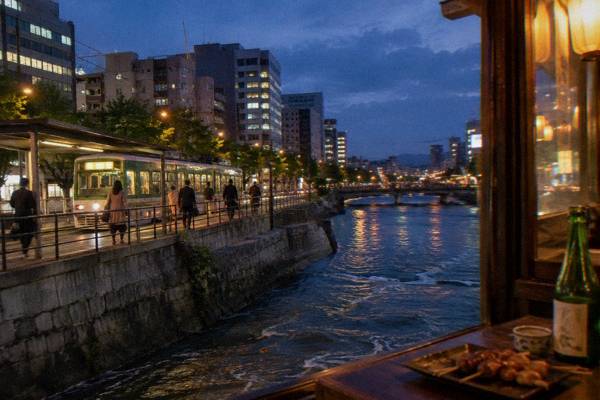
Best Restaurants In Hiroshima By Neighbourhood
Hiroshima's food scene is organised by district, from the okonomiyaki floors of Okonomimura to the izakaya alleys of Ekinishi and the oyster kitchens of Miyajima.
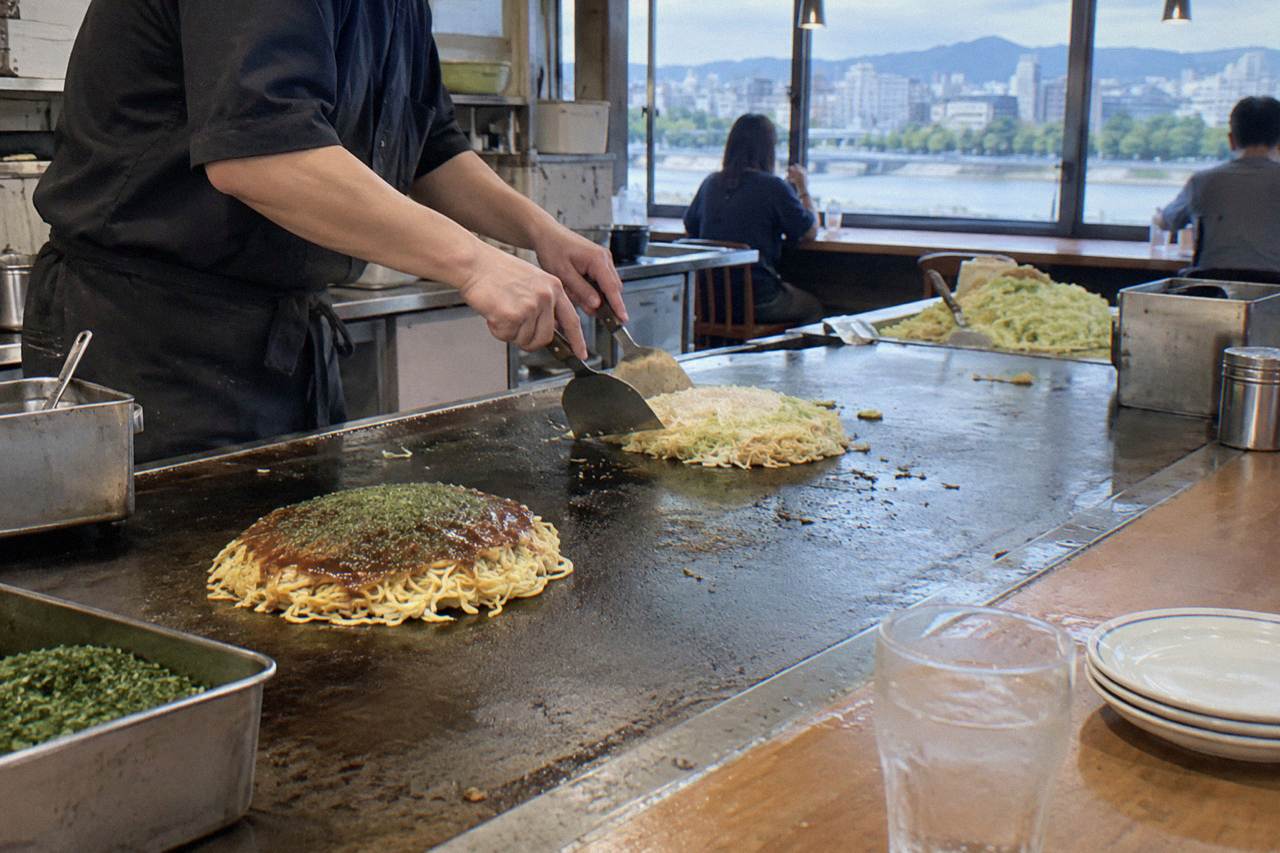
The main eating districts in Hiroshima are Okonomimura and Shintenchi for okonomiyaki, Hondori and Hacchobori for arcade dining, Nagarekawa for nightlife and izakaya, Ekinishi west of Hiroshima Station for preserved-old-building bars, and Miyajima Island for oysters and anago-meshi. The Hiroden streetcar flat fare is 240 yen for adults on every line, so moving between districts is cheap and simple.
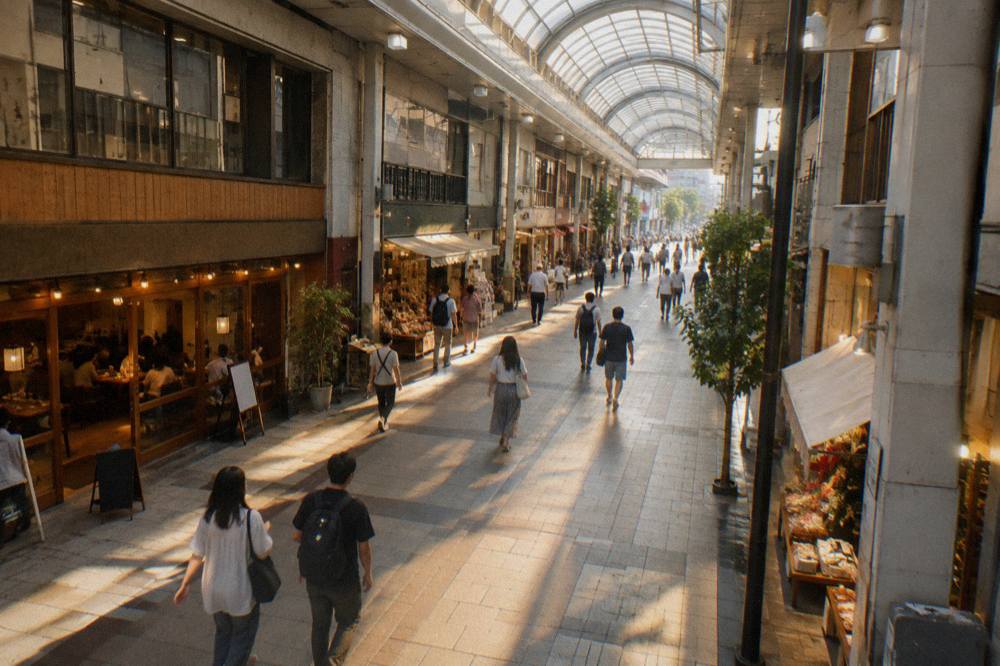
Hiroshima, the prefectural capital on the Seto Inland Sea, eats by district rather than by single restaurant row, and the layout of the city makes that easy to work with. Hondori Shopping Street is a 577-meter covered arcade in central Hiroshima City lined with stores, souvenirs, cafes and restaurants, and it runs east from the edge of the Peace Memorial Park area toward the Kamiyacho intersection where multiple Hiroden streetcar lines cross. The Hiroden streetcar connects all of these on a flat fare of 240 yen for adults and 120 yen for children, on every line, including the Miyajima line, with the island's oyster and anago-meshi kitchens on Miyajima This guide walks the districts in the order a hungry visitor would realistically meet them, with the dishes to look for in each and the transport facts that hold the plan together. Start with the district map at things to do in Hiroshima if you want the wider sightseeing picture around the meals.
Which District Of Hiroshima Should You Eat In?
In Hiroshima, covered-arcade dining and casual chains cluster in Hondori and Hacchobori, izakaya and late-night drinking in Nagarekawa, preserved-old-building bars west of Hiroshima Station in Ekinishi, and oysters, anago-meshi and momiji manju on Miyajima Island, each reached cheaply on the 240-yen flat-fare Hiroden streetcar network that crosses the whole city.
Each district has a distinct job. Okonomimura concentrates the city's signature dish in one building: it is located at 5-13 Shintenchi, Naka-ku, and holds 23 okonomiyaki restaurants on floors 2 to 4, with individual business hours varying by store. Hondori is the daytime and early-evening layer, a 577-meter pedestrian arcade where restaurants sit among souvenir shops and cafes, running from near Peace Memorial Park eastward to the Kamiyacho crossing. Nagarekawa takes over after dark as the main nightlife and izakaya hub of Naka-ku. Ekinishi, west of Hiroshima Station, is the compact alternative, over 40 izakaya serving local dishes in retro alleyways of preserved buildings.
Miyajima is the one district that needs a ferry. For where to sleep relative to all of this, the neighbourhood breakdown in where to stay in Hiroshima pairs closely with the eating map.
| District | Area | What to eat there | Character |
|---|---|---|---|
| Okonomimura | Shintenchi, Naka-ku | Hiroshima-style okonomiyaki | 23 restaurants across floors 2-4 of one building |
| Hondori | Central Naka-ku | Cafes, casual dining, snacks | 577-meter covered pedestrian arcade |
| Nagarekawa | Naka-ku, south of Hondori | Izakaya food, late-night eating | Main nightlife hub with hundreds of bars |
| Ekinishi | West of Hiroshima Station | Izakaya dishes, local specialities | Over 40 venues in preserved old buildings |
| Hacchobori | Between the station and Hondori | Late-night shopping and eating | Don Quijote store open until 5:00 a.m. on selected nights |
| Miyajima Island | Hiroshima Bay | Oysters, anago-meshi, momiji manju | Reached by streetcar plus a 10-minute ferry |
Why Is Okonomimura The Home Of Hiroshima-Style Okonomiyaki?
Okonomimura is a four-story building at 5-13 Shintenchi in Naka-ku, Hiroshima, holding 23 okonomiyaki restaurants on floors 2 to 4, with stalls typically open roughly 11:00 to 22:00 daily and dishes from 800 to 2,200 yen depending on toppings, and the building has operated for over 40 years counting its earlier stall eras, completed in its current form in 1992.
The building's format is the point. Rather than one restaurant, a visitor chooses among 23 independent kitchens, each with its own griddle, its own style and its own regulars, spread over three floors. Business hours vary by store, so a floor walked at 11:00 and the same floor walked at 21:00 are different experiences. Prices run from 800 to 2,200 yen depending on toppings, which makes Okonomimura one of the more predictable food budgets in the city.
Hiroshima-style okonomiyaki itself is layered rather than mixed: the dish is built in stages on the griddle, and its local identity is strong enough that it carries the city's name in most descriptions. The deeper background on the dish, its layers and its etiquette sits in Hiroshima okonomiyaki. Visitors who want to make the dish rather than only eat it can look at the okonomiyaki cooking class options, including the OKOSTA experience in Hiroshima City, which offers a Hiroshima okonomiyaki making experience with vegetarian options available.
What Should You Eat Around Hondori And Hacchobori?
Around Hondori and Hacchobori in central Hiroshima the eating is arcade-based and casual: Hondori is a 577-meter covered pedestrian street, its eastern end sits a 15 to 20 minute walk or a short tram ride from Hiroshima Station on lines 1, 2 or 6 to Hacchobori stop, and Hacchobori itself keeps late options including a Don Quijote store across 6 floors, including basement, open until 5:00 a.m. on Wednesdays, Fridays, Saturdays, Sundays and national holidays.
Hondori's usefulness for eating is its shape. A single covered street means rain never interrupts a food walk, and the arcade's restaurants, cafes and snack shops sit between souvenir stores, so a day of sightseeing and a day of eating share the same corridor. The arcade ends at the Kamiyacho intersection, where multiple Hiroden streetcar lines cross, which makes leaving in any direction straightforward. From Hiroshima Station, the Hiroden streetcar to Hondori stop takes about 15 minutes on lines 1, 2, or 6; reported travel times from the station to Hondori run from roughly 13 to 21 minutes depending on the route, with no transfers.
The two districts blend into one walkable band. For how the same corridor fits a day of sightseeing, see Hiroshima in one day.
Is Nagarekawa The Best Nightlife District In Hiroshima?
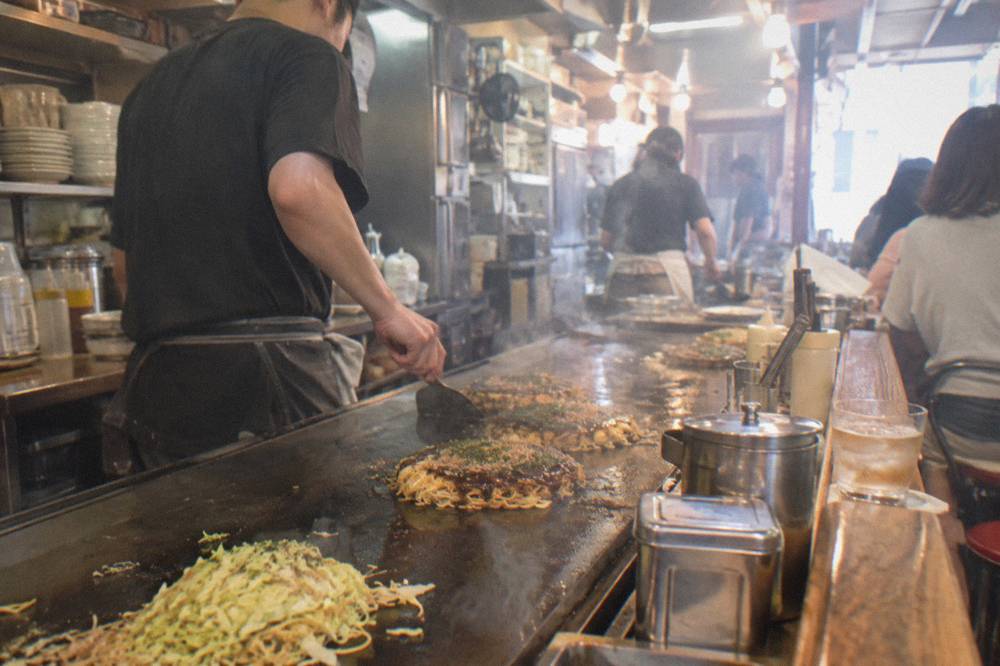
Nagarekawa, a district of bars and eateries just south of Hondori in the city center of Hiroshima, needs no itinerary, only a starting point, since the alleys between the main streets carry as much as the streets themselves. Nearby Yagenbori, whose smaller alleys hold a denser, narrower strip of bars, lies within walking distance of the arcade.
Getting home is the practical question, and the answer is timing. Hiroden streetcars on main lines run at intervals of 10 to 15 minutes, and the last streetcars from the Hiroshima Station area typically depart somewhere between 22:00 and 23:00 depending on the line and direction. An evening that runs past the last tram means a walk or a taxi back to a hotel, which is one reason the where to stay in Hiroshima decision and the eating plan are worth making together.
| Getting around the food districts | Figure | Source basis |
|---|---|---|
| Hiroden flat fare, adult | 240 yen | All lines, since 1 February 2025 |
| Hiroden flat fare, child | 120 yen | All lines, since 1 February 2025 |
| Hiroden one-day streetcar pass | 700 yen adult, 350 yen child | Covers all lines for one calendar day |
| Streetcar and ferry one-day pass | 1,000 yen adult | Streetcars plus Matsudai Kisen ferry |
| Visit Hiroshima Tourist Pass | 1,000 yen 1 day, 1,500 yen 2 days, 2,000 yen 3 days | Foreign visitors, includes coupon book |
| Streetcar frequency, main lines | 10 to 15 minutes | Line 2 and other main lines |
| Last streetcars from station area | Around 22:00 to 23:00 | Varies by line and direction |
What Makes Ekinishi Different From Downtown Hiroshima Dining?
Ekinishi, the area west of Hiroshima Station, is different because it is a compact walkable cluster of over 40 izakaya serving unique local dishes inside preserved old buildings, a 10 to 15 minute walk from the station, which gives it a smaller, more enclosed feel than the wide nightlife sprawl of Nagarekawa across the city centre.
The preserved buildings are the distinction. The area's position a short walk west of Hiroshima Station also makes it the natural first or last meal of any trip; the station area itself has its own eating layer, covered in Hiroshima Station.
For arriving travellers with an evening to fill, Ekinishi answers the oldest travel question, where to eat near the station, without a streetcar ride. For everyone else, it is the counterweight to the arcade: smaller, quieter in scale, and built for lingering. The same district logic applies to the Saijo sake district east of the city, where Hiroshima Prefecture's 47 sake breweries include the cluster in Saijo District, Higashi-Hiroshima City, and a sake-brewery day trip pairs naturally with an izakaya evening back in Ekinishi.
Where Do You Eat Oysters And Anago-Meshi Near Hiroshima?
On Miyajima, reached by JR ferry from Miyajimaguchi, the Omotesando approach street between the pier and Itsukushima Shrine carries the island's oyster kitchens and momiji manju shops, while anago-meshi, grilled eel over rice, is the island's other signature plate.
Miyajima's food identity is tied to the water it sits in. The full picture, including where the island's kitchens sit in a visit plan, is in Miyajima and the Miyajima tour guide.
The routing facts matter more here than anywhere else in this guide, because the island closes earlier than the city. The JR ferry from Miyajimaguchi runs roughly every 15 minutes during daytime hours, with first departures around 6:25 from the mainland side and the last sailing back around 22:00; on illumination event evenings in autumn, the last JR ferry back to Miyajimaguchi leaves at 10:14 p.m. The island also charges a Miyajima Visitor Tax of 100 yen per person, collected on entry, with preschool children exempt. The full timetable and fare detail sits in Hiroshima to Miyajima.
A half-day guided island walk handles the routing and the ordering for visitors who would rather not plan the ferry maths themselves: the Miyajima Island Half-Day Tour with Guide runs 4 hours on the island itself, and Check availability for current dates.
| Miyajima eating trip, cost by item | Figure | Notes |
|---|---|---|
| Hiroden streetcar to Hiroden-Miyajimaguchi | 240 yen adult flat fare | About 66 minutes on line 2 from central Hiroshima |
| JR ferry, Miyajimaguchi to Miyajima | 10-minute crossing | Roughly every 15 minutes in daytime |
| Miyajima Visitor Tax | 100 yen | Charged on entering the island, preschoolers exempt |
| Itsukushima Shrine admission | 300 yen adult | 200 yen high school, 100 yen elementary and junior high |
| Itsukushima hours, 1 March to 14 October | 6:30 to 18:00 | Treasure Hall 8:00 to 17:00 |
How Does Sake Fit Into A Hiroshima Food Trip?
Hiroshima Prefecture's 47 breweries include those of the Saijo District of Higashi-Hiroshima City, reached by train and usually walked as a brewery-street visit, while in the city itself the Nagarekawa and Ekinishi izakaya list local brews beside the food.
The district is its own day trip, covered in Saijo sake district, and it pairs with the prefecture's food identity rather than replacing it, since the breweries' product lands on the counters of the city's izakaya the same evening. The connection runs in the other direction too: a Saijo day ends back in Ekinishi or Nagarekawa, where the poured result of the day's visit is on the menu.
For visitors structuring a full trip around food and drink rather than fitting meals between sights, the what to eat in Hiroshima guide carries the dish-by-dish map, and the seasonal angle matters too: the best time to visit Hiroshima guide aligns the eating calendar with the weather, since the Japan Meteorological Agency 1991-2020 station normals show July bringing 279.8 mm of rain in Hiroshima and January 46.2 mm.
| Food day trip from Hiroshima | Destination | Food reason |
|---|---|---|
| Saijo sake district | Higashi-Hiroshima City | Brewery street within the prefecture's 47 breweries |
| Miyajima Island | Hiroshima Bay | Oysters, anago-meshi, momiji manju |
What Does A Day Of Eating In Hiroshima Actually Look Like?
A realistic food day in Hiroshima moves with the Hiroden streetcar on its 240 yen flat fare: breakfast and coffee inside the 577-meter Hondori arcade, lunch at one of the 23 okonomiyaki restaurants inside Okonomimura from around 11:00, an afternoon snack walk east to Hacchobori or a museum visit between meals, and dinner among the hundreds of bars and eateries of Nagarekawa or the over 40 izakaya of Ekinishi west of the station, all before the last streetcars at roughly 22:00 to 23:00.
The pattern works because the districts sit in sequence along the tram lines rather than scattered. Hondori's cafes open the day in the covered arcade; Okonomimura's stalls, typically running roughly 11:00 to 22:00, carry the main meal; and the afternoon is flexible, whether that is the Peace Memorial Park at the arcade's western end, the museums, or the Shukkeien garden, whose admission is 350 yen for adults with school students free. Dinner then splits by mood: Nagarekawa for scale and noise, Ekinishi for alleys and old buildings.
The pass decision is arithmetic. A Hiroden one-day streetcar pass costs 700 yen for adults and covers all lines for one calendar day, so it pays for itself on a third ride; the streetcar and ferry version at 1,000 yen adult adds the Matsudai Kisen ferry crossing to Miyajima but not the JR ferry, which matters only on an island day. The Visit Hiroshima Tourist Pass, at 1,000 yen for 1 day, 1,500 yen for 2 days and 2,000 yen for 3 days for foreign visitors, includes a coupon book with discounts at restaurants and facilities, which is the version a food-focused trip should compare. The wider transport detail sits in getting around Hiroshima.
| A food day in Hiroshima, stage by stage | District | Transport fact |
|---|---|---|
| Morning coffee and breakfast | Hondori arcade | Covered street, no weather risk |
| Lunch, okonomiyaki | Okonomimura, Shintenchi | 23 restaurants, floors 2 to 4 |
| Afternoon snack or sightseeing | Hacchobori and Kamiyacho | Streetcar lines cross at Kamiyacho |
| Dinner, izakaya | Nagarekawa or Yagenbori | Hundreds of bars and eateries |
| Late eating near the station | Ekinishi | 10 to 15 minute walk west of the station |
Should You Take A Food Tour Or Explore Hiroshima's Districts Alone?
Both approaches work in Hiroshima, and the choice comes down to routing: the city districts are compact, flat-fare and walkable enough to explore alone on the 240-yen Hiroden network, while guided food and drink tours add value where the eating is spread across an evening of izakaya stops in Nagarekawa or combined with a Miyajima ferry day, since a guided visit removes the timetable guesswork around the island's roughly 15-minute ferry intervals and the 100-yen visitor tax.
Exploring alone suits the daytime districts. Hondori is one street, Okonomimura is one building with 23 kitchens inside, and Hacchobori and Kamiyacho sit on the same corridor; a visitor with a streetcar pass and a list of dishes can cover them in any order. The izakaya layer is different: an evening of small bars in Nagarekawa rewards local knowledge of which counter to start at, which is exactly what a guided night food walk sells.
Weather is the quiet variable in the decision. The Japan Meteorological Agency 1991-2020 normals for Hiroshima show an average daily high of 32.8 °C in August against 9.9 °C in January, with July bringing 279.8 mm of rain, so a guided interior-heavy plan carries more weight in midsummer and the rainy weeks, and the covered Hondori arcade earns its keep in any month. The Hiroshima weather guide carries the full monthly table.
Common Questions About Restaurants In Hiroshima
Where Are The Best Restaurants In Hiroshima Concentrated?
Central Hiroshima's dining zones are primarily the urban area around Hondori and Naka Ward, plus Miyajima Island. Within the city, Okonomimura holds 23 okonomiyaki restaurants on floors 2 to 4 at 5-13 Shintenchi, Nagarekawa is the main nightlife and izakaya hub, and Ekinishi west of Hiroshima Station holds over 40 izakaya in preserved old buildings.
How Much Does Eating In Hiroshima Cost?
At Okonomimura, dishes typically run from 800 to 2,200 yen depending on toppings, and stalls are roughly open 11:00 to 22:00. Getting to the food is cheap: the Hiroden streetcar flat fare is 240 yen for adults on every line, and a one-day streetcar pass is 700 yen.
Is Okonomiyaki The Dish To Order In Hiroshima?
Hiroshima-style okonomiyaki is the city's signature dish and Okonomimura is its concentrated home, with 23 restaurants in one building. Nagarekawa in Naka-ku is the main late-night district with hundreds of bars and eateries, and the Hacchobori Don Quijote store operates until 5:00 a.m. on Wednesdays, Fridays, Saturdays, Sundays and national holidays. Note that the last Hiroden streetcars typically run around 22:00 to 23:00. Yes. The Ekinishi area, a 10 to 15 minute walk west of Hiroshima Station, holds over 40 izakaya in preserved old buildings serving local dishes, and the streetcar connects the station to Hondori in about 15 minutes on lines 1, 2 or 6. Yes. Omotesando street serves fresh oysters and anago-meshi, enough to justify the trip on their own. From central Hiroshima, take a streetcar plus a 10-minute ferry; entry costs a 100-yen visitor tax charged separately, and Itsukushima Shrine admission is 300 yen for adults, though the shrine is optional on a food-only visit.Where Do You Eat Late At Night In Hiroshima?
Can You Eat Well Near Hiroshima Station?
Is Miyajima Worth Visiting Just For The Food?
Hiroshima's restaurant map is ultimately a streetcar map: one covered arcade, one okonomiyaki building, two nightlife districts on either side of the station, and one island of oyster kitchens at the end of a 10-minute ferry, all stitched together by a 240-yen flat fare and a pass system that rewards a second and third ride. Pick the district that matches the hour, order the dish the district is known for, and let the Hiroden do the rest, as the Hiroshima Travel Guide lays out district by district across the rest of its pages.